Get Full Government Meeting Transcripts, Videos, & Alerts Forever!
Get email alerts on the Property Law topic
No spam. Unsubscribe anytime.
Appeals court hears dispute over adverse possession and fiduciary duties in SRI property case
Summary
The court considered whether a corporate officer's occupancy of property satisfied adverse-possession requirements and whether fiduciary duties barred an adverse-possession claim; panel heard extended argument and took the matter under submission.
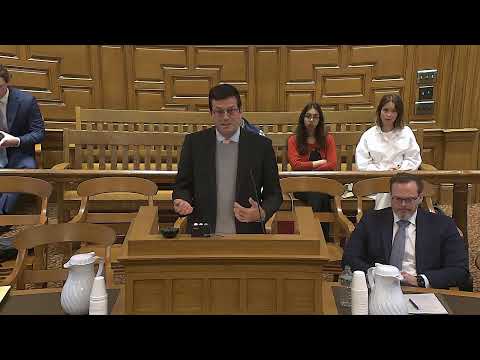
The Massachusetts Appeals Court heard argument in 24P1107 involving Swazlowski Realty Inc. (SRI) and an adverse-possession claim by a family member who lived in corporate-owned property. Joseph Lipchitz, counsel for the appellant SRI, said the Land Court erred legally by allowing a corporate fiduciary to acquire title by adverse possession and by misapplying the legal standard for permissive use that later becomes adverse.
The issue matters because it raises whether a corporate fiduciary — here, a family member and corporate officer — can, consistent with longstanding Massachusetts fiduciary principles, obtain title adverse to the corporation by long occupancy. Lipchitz told the panel the trial judge "disregarded controlling Massachusetts law in three fundamental ways" and cited Supreme Judicial Court and appeals-court precedent barring trustees or fiduciaries from divesting principals without full disclosure.
SRI's argument emphasized (1) the fiduciary relationship between the corporate officer and the closely held corporation, (2) that the occupancy began permissively and therefore required heightened notice to ripen into adverse possession, and (3) that written documents (mortgages and acknowledgments signed by the occupant) undercut any claim of continuous, hostile possession. Lipchitz said the judge relied on out-of-state analogies and failed to apply Massachusetts fiduciary principles such as those in Jackson and earlier SJC decisions.
Opposing counsel, representing the occupant (Stanley Junior), argued the Land Court applied the correct fact-intensive test for adversity — examining the character of the land, beneficiaries of use, manner of maintenance and relationship between parties — and found the parties repeatedly demanded that the occupant leave, he refused, and the family thereafter "acquiesced," allowing ongoing hostile occupation that satisfied the 20-year statutory period. The occupant's counsel pointed to testimony that family meetings in 1999 repeatedly raised the issue and that the occupant continued exclusive use thereafter.
The parties also disputed the legal effect of four mortgages and other documents in which the occupant acknowledged SRI's fee ownership; appellant SRI argued those documents show permissive use and negate adversity, while the occupant stressed the Land Court's credibility findings and parcel-by-parcel factual determinations.
After extensive argument on the interplay of fiduciary duties, tacking and permissive-use law, the panel took the matter under submission. The court did not announce a decision from the bench at the session's close.