Get Full Government Meeting Transcripts, Videos, & Alerts Forever!
Get email alerts on the Criminal Procedure topic
No spam. Unsubscribe anytime.
Massachusetts Appeals Court hears Jones appeal over jury instruction, stop and suppression issues
Summary
At oral argument in Boston, attorneys for Lorenzo Jones and the Commonwealth disputed whether pretrial rulings and an informant's later statements undermine the stop and the evidence; the panel took the matter under submission after both sides told the court Crowder/Guardado permit retrial on the gun charge.
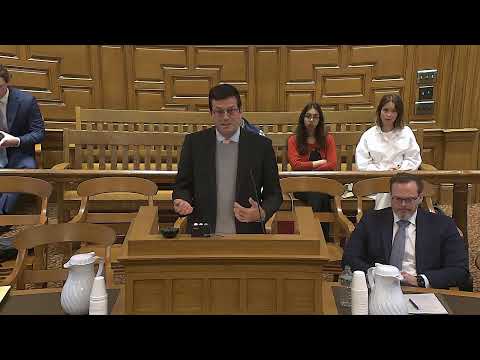
The Massachusetts Appeals Court in Boston heard argument in 24P0834, Commonwealth v. Lorenzo Jones, in which defense counsel said alternate appellate arguments could bar retrial on a gun-possession count even though the parties concede a Guardado error. Attorney Christopher de Mayo, representing Lorenzo Jones, told the three-judge panel the court should consider challenges to the sufficiency of the evidence, jury instructions and the legality of the morning stop and search.
The case matters because both sides agree Crowder/Guardado principles allow retrial on the gun charge but disagree whether other errors — including how the grand jury was presented the case and a later interview of the confidential informant — should preclude retrial. If the panel concludes those other arguments have force, it could limit what prosecutors may retry.
De Mayo argued the Commonwealth effectively narrowed the grand-jury presentation to the time of the shooting (about 2:43 a.m.), and that strategic statements by prosecutors to the grand jury and in a bill of particulars could estop the Commonwealth from pressing a theory that the gun was possessed later the same morning. "Leaving the [Guardado] issue to the side, there are some other arguments that... would, in my opinion, bar retrial," De Mayo said. He also pressed a sufficiency argument tied to DNA evidence (a small mixed profile) and the fact that a co-defendant, Tony Evans, was acquitted on related counts.
Defense counsel further argued the stop of the red Chevrolet the morning after the homicides was stale: the initial tip came the night before, the officers searched occupants and the vehicle that night, and the car seen the next morning was stopped some 12 hours later. De Mayo told the court that, on those facts, "that's not enough, especially 12 hours later," and relied on cases warning against stale tips.
The Commonwealth, represented by Ian McLean, told the panel Crowder/Guardado require resetting the retrial clock for the gun charge and that the jury-instruction issue does not trump the charging instrument. "The charge was as stated in the indictment. It was covering the entirety of the day," McLean said. On the stop and search, McLean argued the officers had a sequence of corroborated tips, knowledge of the suspects' prior firearm involvement and a significant public-safety context (two shooting incidents the prior night, including a double murder with 26 shell casings recovered) that together created reasonable suspicion for an investigatory stop.
The parties also disputed whether a later interview of the confidential informant before a different judge (Judge Ricciutti) should be treated as new factual findings that contradict the motion-to-suppress record before Judge Donatelli. De Mayo said the later CI interview undermined the police narrative; McLean responded the interview occurred nearly a decade after the events and that Donatelli had found sufficient corroboration at the time of the original motion-to-suppress hearing.
Both sides acknowledged Crowder/Guardado law permits retrial on the gun-count error, but each asked the panel to evaluate additional issues that, they contend, could alter the outcome. After extended argument, the court took the matter under submission; the panel did not announce a decision from the bench.