Lifetime Citizen Portal Access — AI Briefings, Alerts & Unlimited Follows
Council extends grocery gross-receipts provision while seeking clarity on state education tax impact; ordinance passes 9–3
Loading...
Summary
After extended debate and competing amendments, the council approved an amended gross-receipts ordinance (keeping the 2.5% rate but with a Board of Finance amendment extending a sunset to Aug. 31 pending further review) by a 9–3 vote; opponents warned the change could shift revenue burdens to property taxes if alternatives are not identified.
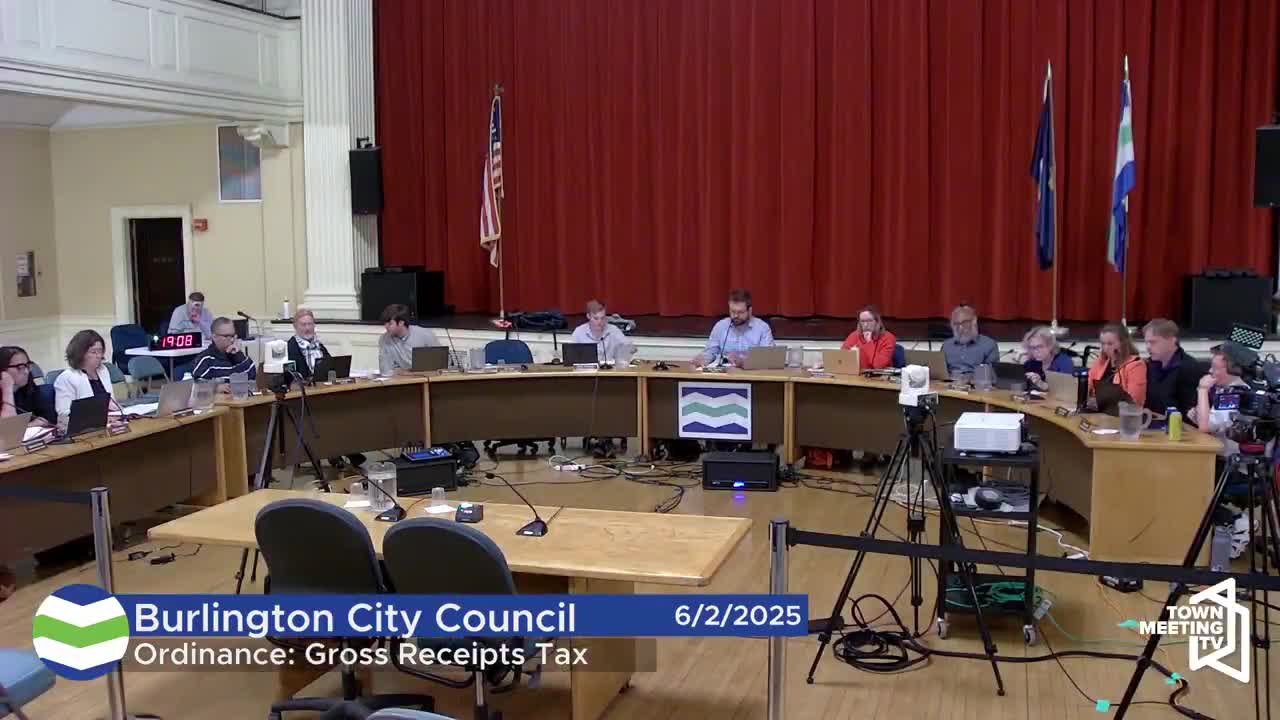
The Burlington City Council voted 9–3 on June 9 to approve a revised gross-receipts ordinance that keeps a 2.5% rate on certain grocery and restaurant receipts in place while allowing the administration and council additional time to evaluate alternatives tied to pending state-level education funding changes.
The ordinance under consideration was the outcome of a multiweek debate about whether to make last year’s temporary grocery gross-receipts increase permanent, to allow it to sunset as previously agreed, or to extend the temporary measure while the city assesses state education-tax changes that could reduce property-tax pressure for residents.
Councilor Barlow told colleagues the amendment he sponsored would give the council time to evaluate how the state education-tax legislation affects overall property-tax burdens before deciding whether to replace the gross-receipts revenue with other sources. Barlow said the extension would avoid a sudden revenue gap as the administration finalizes the FY26 budget.
Several councilors opposed extending the measure and proposed reverting to the original ordinance (which would have removed the sunset), arguing the ordinance should not be time-limited and warning that delaying a decision creates uncertainty for businesses. Councilor Bergman offered a failed amendment to revert to the original language; the amendment was tied in a 6–6 vote and therefore did not pass. The final motion—the ordinance as amended at the Board of Finance level—passed 9–3.
Council discussion focused on the timing and predictability implications for downtown businesses and on whether property-tax increases could be used to replace the gross-receipts revenue if the council chose to sunset the provision. Councilors repeatedly noted that the state’s education-tax discussions (which affect two-thirds of a property-tax bill) could change the municipal tax outlook and therefore alter the local tradeoff between consumption taxes and property taxes.
Why it matters: The gross-receipts provision raises roughly $0.7–$0.9 million (estimates in council materials varied) for FY26; whether the council keeps, sunsets or replaces the revenue has implications for business costs, municipal tax burden and budget stability.
What’s next: The ordinance as amended will be signed into law if the mayor signs it; the council and administration plan further analysis of state education-tax developments and potential municipal revenue options during June; the revised ordinance includes a revised sunset approach aligned to the council’s schedule.
Speakers quoted are taken from the council record.