Get Full Government Meeting Transcripts, Videos, & Alerts Forever!
Get email alerts on the Unemployment Insurance For Striking Workers topic
No spam. Unsubscribe anytime.
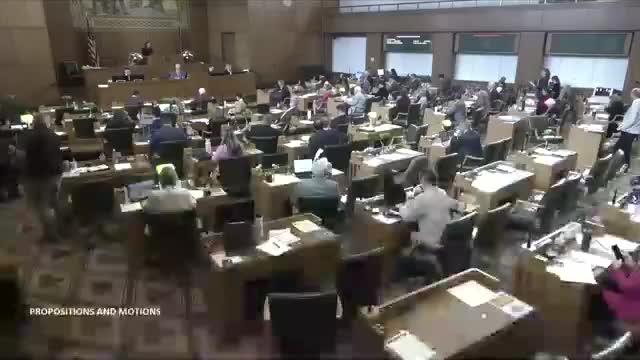
House approves law letting some striking workers claim unemployment after a waiting period
Summary
The Oregon House on Wednesday passed Senate Bill 916B, a measure that would allow some eligible workers who are engaged in a lawful strike to claim unemployment insurance after a multi-week waiting period.
The Oregon House on Wednesday passed Senate Bill 916B, a measure that would allow some eligible workers who are engaged in a lawful strike to claim unemployment insurance after a multi-week waiting period.
Supporters, led on the floor by Representative Graber, said the bill would reduce employers’ incentive to “starve out” striking workers and bring parties back to the bargaining table faster. “By allowing eligible striking workers to claim unemployment insurance if a strike persists for long enough, we remove an incentive for procedural delays,” Graber said on the floor.
Opponents — including several members representing rural districts and those who spoke for school districts and local governments — said the bill shifts costs to taxpayers and public employers, risks draining classroom resources and could change bargaining incentives. “This bill asks Oregon taxpayers to subsidize strikes, risks our competitive footing, and divert scarce education dollars,” Representative Deal said.
Nut graf: The bill changes long-standing state practice by making partial wage replacement available to striking workers under specific circumstances. Sponsors and proponents framed it as a tool to prevent protracted strikes that hurt workers, patients and students; opponents said it would create new costs for school districts and local governments that reimburse the unemployment insurance fund.
Key provisions and clarifications mentioned on the floor - Waiting/disqualification timing: The House amendments set a disqualification or waiting threshold that requires a multi‑week period before UI payments begin for striking workers. The committee expanded the original waiting period options during amendment work (members cited a 14‑day waiting period adopted in committee, and the minority report proposed a 2‑week disqualification aligned with Washington law while retaining the one‑week “waiting week” concept for eligibility). - Benefit caps: The bill includes caps tied to UI fund health (a temporary cap of 8 weeks in some scenarios was discussed; the minority report would cap benefits at 6 weeks). A statutory maximum of 26 weeks of UI per claimant remains the general limit in Oregon; SB 916B would constrain strike-related weeks under certain fund conditions. - Employer chargebacks and recoupment: The bill and subsequent House amendments clarify how unemployment payments charged to an employer may be recouped if a district later provides back pay or makeup days to striking employees. - Reporting and sunset: A minority amendment sought written reporting by the Oregon Employment Department (OED) on frequency, duration and costs and proposed a 2035 sunset; sponsors said OED will provide ad hoc and regular reports and that existing statutory and administrative safeguards will apply.
What supporters said Representative Graber and other backers argued the bill levels bargaining power between large employers and workers and protects workers from being forced back to work by economic hardship. “Workers miss rent payments, they can't pay for groceries, and their health care coverage is threatened,” Graber said in floor remarks about recent health‑care strikes. Several supporters noted that strikes are rare, public-sector strikes are subject to lengthy bargaining processes under PECPA (the Public Employee Collective Bargaining Act), and many categories of public safety employees are already strike‑barred.
What opponents said Opponents focused on fiscal risk and educational disruption. School district leaders and county associations repeatedly warned that public employers reimburse UI benefit payments dollar for dollar; opponents argued that the bill could force districts to cut staffing or programs to cover new costs. Representative Nose, who works closely with healthcare workers, said she opposed the minority report and stressed the sacrifice workers make when they strike, but others worried about shifting costs to taxpayers and the incentive effects of socializing strike costs.
Outcome and next steps Representative Elmer’s motion to substitute a minority report (a narrower alternative) failed on the floor. The house advanced SB 916B to immediate third reading and final consideration, and later announced that the measure had “received the constitutional majority” and was declared passed by the House. Sponsors said they would monitor implementation and expected the Oregon Employment Department to promulgate rules and provide reporting required by the law.
Discussion vs. formal action - Discussion only: Many members debated the likely impacts on bargaining dynamics, the UI trust fund and K–12 budgets; they expressed differing views about whether the bill would shorten or lengthen strikes. Several members asked OED‑specific implementation questions (for example how “available for work” and “actively seeking work” requirements would be applied to striking workers). - Direction/assignment: Supporters said OED would develop rules and administrative definitions, and several lawmakers said they will track implementation and return with fixes if needed. - Formal action: The House defeated a motion to adopt the minority report and ultimately passed Senate Bill 916B on final passage.
Ending: Lawmakers on both sides said they will be watching the OED’s implementation and reporting closely; several members urged follow‑up in future sessions to correct unintended impacts if they emerge.