Senate approves Department of Revenue catch‑all bill addressing forest tax, Ag employer credit and foreign earned income
Loading...
Summary
House Bill 23 39 makes technical and policy adjustments: it shifts small tract forest severance calculation and distribution dates, expands data‑sharing agreements for marijuana and psilocybin programs, clarifies S‑corporation tax-credit treatment, and limits foreign earned income for the Oregon KIDs credit.
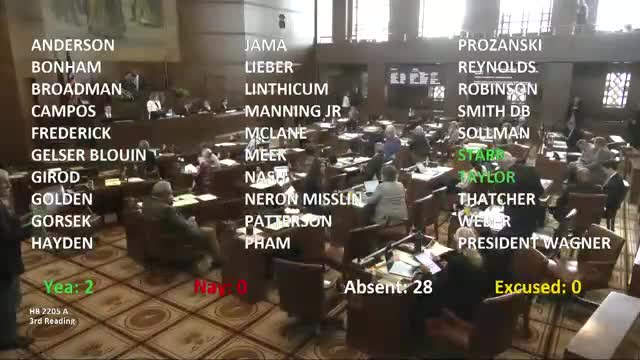
The Senate passed House Bill 23 39 on third reading, a Department of Revenue package that the sponsor described as addressing five distinct issues related to tax administration and reporting.
Senator Patterson summarized the components: changing calculation and distribution dates for the small tract forest severance tax to allow the Department of Revenue more time; expanding data‑sharing authority with the Oregon Liquor and Cannabis Commission (OLCC) and Oregon Health Authority for marijuana and psilocybin programs; repealing outdated reporting requirements; clarifying that S corporations cannot claim the agricultural employer overtime tax credit on the entity return (instead passing the credit to shareholders); and limiting foreign earned income exclusion for the Oregon KIDs credit qualification.
Nut graf: Supporters said the bill resolves technical inconsistencies, modernizes data‑sharing for tax administration, and closes a loophole that allowed taxpayers to use the federal foreign earned income exclusion to improperly qualify for the Oregon KIDs credit.
Patterson said the forest tax timing change moves calculation dates from May 1 to June 1 and distribution deadlines from May 15 to June 15. On the S‑corporation issue, she said the bill “clarifies that S corporations cannot claim the AEOTC credit on that entity return” and must pass credits through to shareholders.
The bill passed the Senate on third reading and was declared passed; the sponsor urged colleagues to support the measure as routine tax administration improvements.
Ending: The package is administrative and technical in nature; affected agencies will update processes and the Department of Revenue will implement the timing and data‑sharing changes if the governor signs the bill into law.