Get Full Government Meeting Transcripts, Videos, & Alerts Forever!
Get email alerts on the Vehicle Collision Data topic
No spam. Unsubscribe anytime.
Senate approves bill clarifying sharing of VIN‑level collision data with private services
Summary
House Bill 2,155 authorizes local law enforcement agencies to use collision information for investigations and to share VIN‑specific collision data with authorized contractors, excluding personal information, to improve vehicle‑history reporting for consumers.
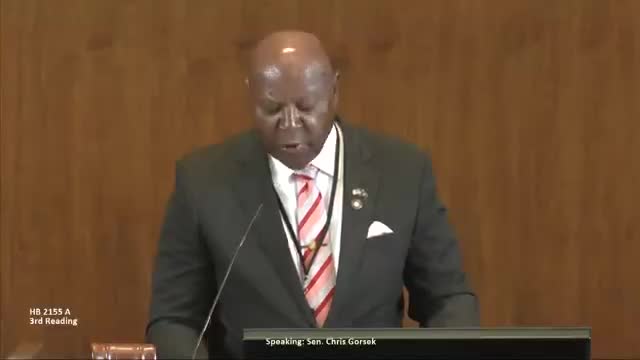
The Senate on Wednesday passed House Bill 2,155, clarifying how local law enforcement agencies in Oregon may use and share vehicle collision information collected during investigations.
Senator Gorsek, carrying the measure on the floor, said the bill permits agencies to use collision data for investigatory purposes and to furnish VIN‑specific collision information to authorized contracted service providers — while explicitly excluding personal information. “Importantly, the bill only authorizes the sharing of VIN information. It explicitly excludes the release of any personal information,” Gorsek said.
Nut graf: Supporters described the measure as providing statutory certainty to local agencies and improving consumer access to accurate vehicle histories through services that aggregate reported collision data. The bill was described on the floor as enabling partnerships like the “CARFAX for Police” program that compile collision reports and service records to reveal vehicles with hidden damage.
The bill references privacy protections in Oregon statutes (ORS 802.22 and 802.24) and authorizes government entities to enter agreements permitting data sharing with contract service providers so long as personal information is omitted.
Proponents said access to VIN‑level collision data benefits consumer safety and helps track vehicle maintenance and recalls. The measure passed unanimously out of the joint committee on transportation and passed the Senate on third reading.
Ending: The statutory changes are limited to clarifying permissible uses and sharing mechanisms for collision data; agencies and contractors will need to finalize agreements and privacy protections in practice.