Get Full Government Meeting Transcripts, Videos, & Alerts Forever!
Get email alerts on the Cco Contracts topic
No spam. Unsubscribe anytime.
Senate passes bill extending initial contract terms for Oregon CCOs to at least five years
Summary
House Bill 2205 requires Oregon Health Authority contracts with coordinated care organizations to run at least five years and standardizes contract lengths across CCOs; supporters said longer terms improve outcomes and allow community investment.
The Oregon Senate on Wednesday passed House Bill 2205, which requires initial contracts between the Oregon Health Authority (OHA) and coordinated care organizations (CCOs) to be for a term of no less than five years and directs that contract length be the same for all CCOs.
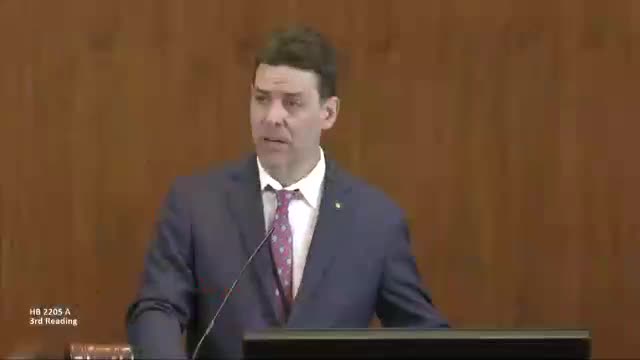
Senator Patterson, speaking on the floor, said the change aims to provide stability so CCOs can make long‑term investments in prevention, behavioral health and workforce development. “Longer contract terms allow CCOs to identify and focus on community specific needs, while still allowing for performance reviews and impact,” Patterson said.
Nut graf: CCOs administer Medicaid services for most Oregonians on the Oregon Health Plan. Lawmakers said longer, standardized contracts will let organizations better plan multi‑year projects to improve population health while preserving OHA oversight through quality metrics and community engagement requirements.
Patterson told senators the bill clarifies mechanisms for corrections and that CCO rates are set by state actuaries rather than by procurement competition. “CCOs compete on their ability to…demonstrate improved health outcomes through their ability to provide high quality community driven care,” she said.
The bill also extends current OHA‑CCO contracts to Dec. 31, 2026, unless the OHA acts to extend them further. Proponents emphasized particular benefits for rural and historically marginalized communities, which they said require time to realize returns on investments in preventive services and workforce development.
The measure passed on third reading and was declared passed after the roll call; it will proceed to enrollment for the governor.
Ending: Supporters said the change is intended to shift focus from short procurement cycles to long‑term outcomes, though implementing details and ongoing OHA oversight will determine whether the five‑year standard materially alters service delivery.