Get Full Government Meeting Transcripts, Videos, & Alerts Forever!
Get email alerts on the Transient Lodging Tax topic
No spam. Unsubscribe anytime.
House Revenue committee hears competing views on expanding uses of transient lodging tax
Summary
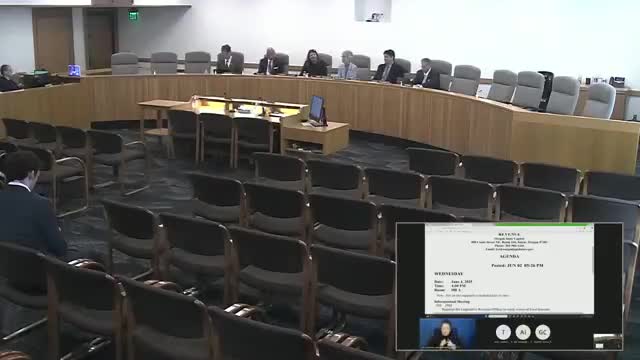
Chair Nathanson, chair of the House Committee on Revenue, opened an informational session June 4 on House Bill 3962 and the series of amendments that would change how local governments may count revenue from transient lodging taxes toward the statutorily required 70% for tourism promotion and tourism-related facilities.
Chair Nathanson, chair of the House Committee on Revenue, opened an informational session June 4 on House Bill 3962 and the series of amendments that would change how local governments may count revenue from transient lodging taxes toward the statutorily required 70% for tourism promotion and tourism-related facilities.
The bill as amended in several proposals would expand the types of spending that qualify in that 70% category to include public safety and certain infrastructure. Local officials representing Clatsop County, Bend and Albany told the committee their communities need flexibility to use existing transient lodging tax (TLT) revenue to address tourism-driven demands on law enforcement, fire response, transportation and utilities. Representatives of lodging, restaurant and destination marketing organizations told the committee broad definitional changes would undermine multiyear tourism planning and could divert funds away from promotion.
The amendments described to the committee included: the dash-2 amendment, which would expand qualifying uses to include public safety and “facilities for water, wastewater, transportation and recreation;” the dash-5 amendment, which contains the same expansion plus a sunset date of Jan. 1, 2036, and reporting requirements to the Department of Revenue beginning Sept. 1, 2027 and then every odd-numbered year (with repeal of the reporting requirement on Jan. 2, 2040); the dash-7 amendment, similar to dash-5 but excluding recreation; and a dash-8 amendment like dash-7 that would allow the League of Oregon Cities or the Association of Oregon Counties to submit required reports on behalf of local governments if requested. Committee staff said a dash-9 was posted and then removed because of an error.
Don Boone, Clatsop County manager, described his county as “one of the most tourist‑intense” in the state and said the population can triple during peak season. He said Clatsop’s local tax base and staffing are sized for year‑round residents and cannot absorb peak‑season service demands. “We need relief, and we believe that there is capacity with the resources we are already collecting to address our concerns,” Boone said, urging flexibility without raising local rates.
Eric King, city manager of Bend, said Bend relies on tourism but faces accelerating infrastructure and personnel costs that outpace conservative revenue growth. King said the city uses TLT funds for cultural and sustainability projects but “we want some increased flexibility from our transient lodging tax to support that critical infrastructure, particularly in transportation.”
Sophie Adams, economic development manager for the city of Albany, framed the amendments as filling a gap between how the current statute defines tourism‑related facilities and the infrastructure needs that actually drive visitation in many communities, including large events, sports lighting and park improvements. Adams said the bill would not force a local jurisdiction to reduce tourism promotion spending but would allow jurisdictions to decide locally how best to use restricted dollars.
Representing industry and destination organizations, Bill Perry of the Oregon Restaurant and Lodging Association warned that definitional changes could “realistically do away with a requirement that a certain percentage has to be spent on tourism.” Perry said his members would be more open to negotiating percentage changes if the industry received protections that ensured long‑term stability for tourism promotion funding.
JB Carney of Travel Lane County and Terry Hopkins of the Grants Pass Chamber of Commerce both urged the committee to preserve the stability of destination marketing funding. Carney said HB 3962 "threatens this system by diverting funds away from tourism development just when we need them most," and stressed the sector’s seasonality and workforce vulnerabilities. Hopkins said rural economies rebuild around tourism and called the existing TLT structure a long‑term investment that supports jobs and local businesses: “For us, tourism isn't a luxury. It's our new lifeline.”
Committee members asked about local relationships with destination marketing organizations (DMOs), contracting and transparency. Witnesses described a range of local approaches: some jurisdictions use contracts or RFPs with scopes of work and reporting requirements for DMOs; others rely on longstanding agreements. Committee staff and witnesses noted past litigation challenging local spending choices and said some proposed amendments include reporting provisions intended to increase transparency about rates and uses.
No formal action or vote was taken; the meeting was informational. Committee staff indicated amendments remain in motion and that the committee will continue to review posted language and testimony before any committee votes.
The committee also discussed technical details of the posted amendments, including the reported start date for the reporting requirement (Sept. 1, 2027), the reporting cadence (every odd‑numbered year), the sunset date in some amendments (Jan. 1, 2036), and the repeal date for reporting (Jan. 2, 2040). Chair Nathanson closed the informational hearing and moved to the scheduled joint Committee on Tax Expenditures meeting.