Get Full Government Meeting Transcripts, Videos, & Alerts Forever!
Get email alerts on the Youth Suicide Awareness topic
No spam. Unsubscribe anytime.
Senate approves bill creating Oregon Youth Suicide Awareness Day
Summary
The Oregon Senate passed House Bill 36 43 to designate Oct. 9 as Oregon Youth Suicide Awareness Day, with lawmakers urging ongoing investments in mental-health services and schools to prevent youth suicide.
The Oregon Senate on Wednesday passed House Bill 36 43, designating Oct. 9 as Oregon Youth Suicide Awareness Day and declaring an emergency to make the change effective immediately.
Supporters said the day will provide an annual focus on prevention, early intervention and reducing stigma around youth mental health. “Oregon Youth Suicide Awareness Day will serve as an annual opportunity to educate our communities, recognize warning signs, reduce stigma, and connect young people to professional mental health support,” Senator Starr said, quoting Representative Lucetta Elmer.
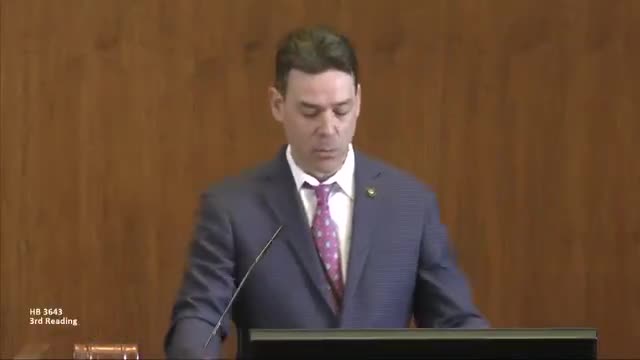
The bill was carried on the floor by Senator Starr, who told colleagues the measure came “out of heartbreak and out of hope,” and cited the McMinnville Morris family as a catalyst for the legislation. “I believe it designated day to remind us that children, teens, and young adults face challenges and pressures that we as adults sometimes overlook,” Starr said.
Nut graf: Lawmakers framed the measure as a statewide recognition intended to prompt education, awareness and connection to services. Senators across the aisle described persistent increases in youth suicide rates and urged complementary policy and budget work to expand counseling and behavioral-health capacity in schools and communities.
On the Senate floor, senators recounted testimony from families, students and providers that framed the urgency. Senator Frederick described classroom testimony that an 8‑year‑old had written how and when he intended to commit suicide; the senator said such testimony contributed to including behavioral health in the Student Success Act. “We need to...spend our time, our energy, and our money on getting counselors and behavioral health folks there,” Frederick said.
Other senators emphasized particular groups at elevated risk. Senator Lieber noted higher suicide risk among LGBTQ youth, saying they are “four times more likely to commit suicide than their peers.” Senator Gelser Blouin pointed to youth in foster care and described state postvention resources: school districts can call the Oregon Health Authority for emergency counseling and technical assistance following a loss.
Senator Bonham recounted the emotional toll on families and friends who testified in committee and at hearings and urged additional steps such as school phone policies to reduce social‑media pressure. Several senators linked the declaration day to continuing obligations: Gelser Blouin noted that Oregon’s Medicaid plan already authorizes in‑home supports for children with serious emotional disturbance but that the state has “not operationalized that” benefit.
The Senate completed a roll call and the presiding officer declared the bill passed after it “received a constitutional majority.” The bill proceeds to enrollment for the governor’s signature.
Ending: Lawmakers on the floor repeatedly framed the measure as symbolic but urged it be paired with sustained budgetary and programmatic efforts to increase counseling, crisis response and operationalization of Medicaid behavioral‑health services for children. Senator Starr and others urged members to share resources such as SafeOregon and 988 in community communications.