Get Full Government Meeting Transcripts, Videos, & Alerts Forever!
Get email alerts on the Construction Workforce Assessment topic
No spam. Unsubscribe anytime.
Consultants say Oregon needs roughly 13,000 new construction workers a year to meet housing goals; apprenticeship-ratio change flagged as contentious
Summary
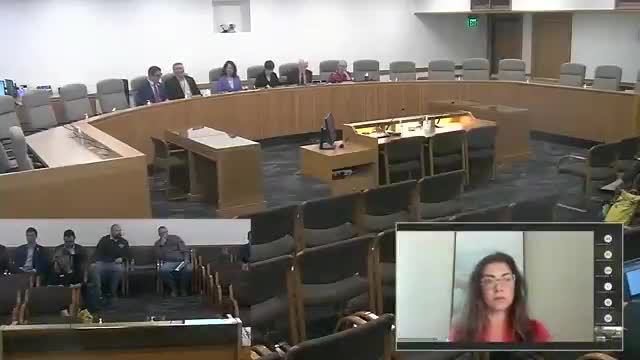
At a June 4 informational hearing, Jade Aguilar of Echo Northwest told the Senate Housing and Development Committee the state would need roughly 13,000 additional construction workers per year from 2028 to 2034 to support an ambitious housing ramp-up tied to the governor’s production goals.
Good afternoon. At a June 4 informational hearing of the Senate Housing and Development Committee, Jade Aguilar, partner and project director at Echo Northwest, told the committee the firm's recent assessment found large workforce gaps in Oregon's residential construction sector. "We would require about 13,000 additional workers every year from 2028 to 2034," Aguilar said, describing the figure as tied to the state ramp-up needed to meet the governor's housing production objectives.
The report combined census and NAICS data, a 92-company industry survey and interviews with community colleges, apprenticeship programs, workforce boards, trade unions and planning and permitting staff. The study found residential construction employment in Oregon grew about 9% annually from 2013 to 2023, compared with roughly 2% for statewide employment overall, and that about half of residential construction employees work in firms of one to five people.
Why it matters: without more workers the state will struggle to sustain an accelerated housing production plan. "Apprenticeship programs" and employee referrals were named as the most reliable pathways for producing skilled workers; respondents also cited retirements and insufficient on‑the‑job training opportunities when construction activity is low.
Echo Northwest’s headline recommendations for the committee included: revise state licensing to expand multi-skilled residential construction licenses; improve interstate reciprocity for tradespeople licensed elsewhere; coordinate data collection across agencies such as the Oregon Department of Education, the Bureau of Labor and Industries, the Housing and Energy Council (HEC), and the Oregon Employment Department; and consider limited, time-bound changes to apprentice-to-journey ratios in specific rural trades or occupations.
Aguilar described the ratio recommendation as politically sensitive. "There’s a strong feeling from folks in the trade unions that this should not be modified," she said, while also noting that other states have implemented targeted adjustments without reported safety spikes.
The report also emphasized acute shortages of building code professionals — inspectors, plans examiners and permit technicians — and recommended pilot programs and data sharing to address that gap.
The report is included in the hearing materials; the committee did not take formal action at the hearing. Chair Pham closed by thanking witnesses and saying the committee would continue the discussion in the interim and in a possible short session.
Ending: Committee members and testimony indicated broad agreement on the scale of the problem and on the need for multiple coordinated solutions, but they also flagged apprenticeship-ratio changes as a politically and operationally contentious policy choice that would require narrow, time-limited pilots and further review.