Get Full Government Meeting Transcripts, Videos, & Alerts Forever!
Get email alerts on the Dcbs Budget topic
No spam. Unsubscribe anytime.
Panel advances DCBS budget, requires reports on workers’ compensation IT and pay plan
Summary
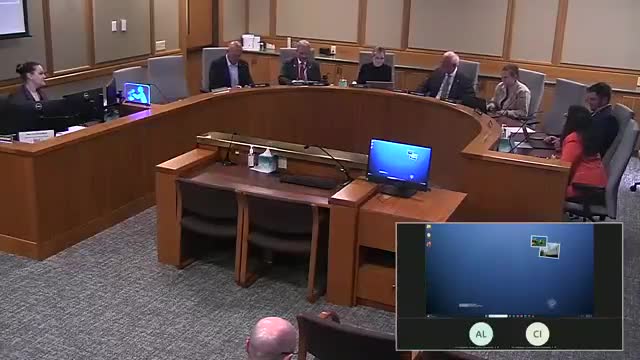
Co‑chairs Gomberg and Meek and members of the Joint Committee on Ways and Means Subcommittee on Transportation and Economic Development advanced Senate Bill 5511 on June 4, moving the Legislative Fiscal Office recommendation and the dash‑1 amendment to the full Ways and Means Committee with a due‑pass recommendation.
Co‑chairs Gomberg and Meek and members of the Joint Committee on Ways and Means Subcommittee on Transportation and Economic Development advanced Senate Bill 5511 on June 4, moving the Legislative Fiscal Office recommendation and the dash‑1 amendment to the full Ways and Means Committee with a due‑pass recommendation.
The LFO analyst told the committee the recommendation includes funding and personnel adjustments across DCBS divisions and restores a phased‑in Oregon Reassurance Program. The LFO described multiple package requests that together add one‑time and ongoing other‑funds authority for projects including the workers’ compensation information system modernization and database upgrades for the Workers’ Compensation Board.
Why it matters: SB 5511 sets the Department of Consumer and Business Services’ spending authority for the 2025‑27 biennium, affects licensing and enforcement divisions (including Oregon OSHA and the Division of Financial Regulation), and funds a program intended to reduce premiums in the individual health insurance marketplace.
Key facts and committee action
- The Legislative Fiscal Office presented a recommended DCBS budget that includes general fund, other funds, federal funds and staffing adjustments and described a 5.7% increase from the 2023‑25 legislatively approved budget and a larger increase from the department’s current service level. The LFO said the increase is driven primarily by reintroducing the Oregon Reassurance Program through a policy option package that is phased in each biennium.
- Major packages cited by the LFO include: • Package 101 — $650,000 one‑time other funds (Workers’ Compensation Board) for planning and initial implementation of a modernized board database, funded from the workers’ compensation premium assessment (payor source cited in the hearing as PAYOA). • Package 102 — $13,504,900 other funds and 3 permanent full‑time positions (2.38 FTE) for continued start‑up costs and three permanent positions for the workers’ compensation information system modernization; about $12.9 million one‑time for contracted project management, business analysis and quality management, and $506,000 ongoing for staff. • Oregon Reassurance Program funding — LFO described a large increase in other funds and federal authority to fund reassurance payments for individual market insurance plan years 2024–2025 and noted House Bill 2010 (2025) extended the program through Dec. 31, 2032; funding was described as coming from a 2% health insurer assessment and federal payments under a Section 1332 waiver agreement. • Multiple technical and pay‑equity adjustments, reclassifications approved by the Department of Administrative Services Chief Human Resources Office, and restorations to address federal fund shortfalls in agencies such as Oregon OSHA and the Building Codes Division.
- The committee adopted two budget notes directing DCBS to report back: 1) A status report on the workers’ compensation information system project during the 2026 session, including updated cost estimates for implementation, ongoing maintenance and licensing fees, and an updated timeline; the note also requires continued stage‑gate reviews and monthly status updates to DAS, the Chief Operating Office for IT (EIS), and the Legislative Fiscal Office. 2) A report to the interim Joint Committee on Ways and Means no later than January 2026 on the compensation plan restructure for the Workers’ Compensation Board covering process, positions impacted, budgetary impact and revenue sources, and whether the plan meets DAS CHRO’s standard of reasonable conformity with the state salary structure.
Committee discussion and vote
- Representative Kate asked to place concerns on the record about what she described as “lofty expenditures” and potential roll‑up costs; her remarks were noted by the co‑chairs and entered into the record.
- The committee voted without objection on the LFO recommendation and adopted the dash‑1 amendment. A roll‑call on the motion to move the measure to the full committee recorded multiple aye votes and several excused members; the motion carried.
What was not decided or remains contingent
- The LFO repeatedly stated that once the agency completes procurement (RFP) and identifies actual costs for information‑technology projects, DCBS will return with requests for additional expenditure limitation and ongoing maintenance funding. Those additional funding requests were not approved at this work session.
Ending note
The subcommittee advanced SB 5511 to the Ways and Means full committee with a due‑pass recommendation and attached two reporting requirements intended to give legislators updated cost, schedule and compensation information before further appropriations are finalized.