Get Full Government Meeting Transcripts, Videos, & Alerts Forever!
Get email alerts on the Education Accountability topic
No spam. Unsubscribe anytime.
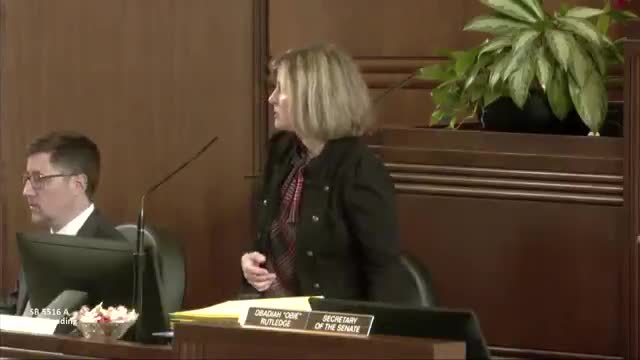
Senate passes record school fund and new accountability law after hours of debate
Summary
The Oregon Senate approved a record $11.4 billion state school fund budget and Senate Bill 141, a new accountability framework that requires districts to set growth targets and accept state coaching if they fall short. Lawmakers debated whether the state should have the authority to intervene and whether the funding levels match the new demands.
The Oregon Senate on the floor this week approved a record $11.4 billion state school fund budget for the 2025–27 biennium and passed Senate Bill 141, a new accountability and support framework for K–12 school districts.
Supporters said the twin measures pair a major investment in schools with a system to measure and improve student outcomes. "The future of Oregon depends on the success of our children today," Senate President Wagner said on the floor as lawmakers debated how to balance funding, local control and oversight.
Senate Bill 5516, the state school fund budget, was described by sponsor Senator Solman as a "record investment in public education." The joint Ways and Means Committee recommended an $11.4 billion allocation for the biennium, an 11.4% increase over the 2023–25 legislatively approved budget; counting local revenues, formula funding is projected to top $16.7 billion.
Senate Bill 141 creates a statewide framework for measuring district performance, requires districts that accept state school fund grants to set local performance targets, and authorizes escalating interventions if districts repeatedly fail to meet growth targets. Under the bill, after two years of missed targets a district must accept state coaching; after three years it must enter an intensive coaching program; and after four or more years the Oregon Department of Education (ODE) may prescribe the use of up to 25% of a district's State School Fund and Student Investment Account funding.
"This is not meant to be a punitive measure. It is put in place to offer districts that are struggling support, coaching, and needed assistance," Senator Solman said while presenting SB 141. The bill also adds new outcome metrics, including eighth‑grade math proficiency and K–2 regular attendance, and expands the entities covered to include education service districts, public charter schools, approved recovery schools and several other state education programs.
Lawmakers who supported the measures emphasized that accountability must be paired with adequate funding and supports. "When Senate Bill 141 is implemented thoughtfully with appropriate support systems, accountability fosters a culture of high expectations and data‑driven decision making that ultimately benefits students, teachers, and communities," Solman said.
Opponents said they worry the bill centralizes power in the Department of Education and risks "teaching to the test," adding administrative burden without guaranteed classroom improvements. Senator Bond, while acknowledging parts of the bill he liked, said he feared the measures could add administration rather than put more educators in classrooms. "I'm nervous about the outcome and whether or not this truly will have the impact that we say it will," Bond said. Senator Robinson also said he lacked confidence that ODE will execute the program effectively, noting he had asked the agency director what the top causes of poor outcomes were and received no single clear answer.
Supporters pointed to examples from other states, saying targeted investments and streamlined grant processes can yield measurable gains; Solman cited Louisiana’s multi‑year improvement as an example of change through focused support and streamlined implementation.
The joint committee attached $2.6 million from the statewide education initiatives account to SB 141 and established seven positions (5.75 FTE) to implement the measure. The Ways and Means report noted the state school fund budget (SB 5516) includes funding to help districts cover implementation costs tied to SB 141.
Senate passage votes: SB 5516 was declared passed with a constitutional majority; the floor record shows 27 ayes on final passage. Senate Bill 141 also passed the Senate and was declared adopted with a constitutional majority; the final floor count recorded 18 ayes.
Discussion-only items, staff roles and next steps: several senators asked for more data on how SB 141 will be operationalized, whether interim assessment timelines would give districts usable, timely feedback, and how ODE would coordinate coaching resources. Supporters and many sponsors said legislative oversight will continue as the law is implemented and that the Legislature will review outcomes in future sessions.
With passage in the Senate, SB 141 and SB 5516 will proceed through the legislative process required for final enactment and implementation. Lawmakers and advocates on both sides signaled a continued focus on monitoring how ODE uses its new authority and whether the funding measures adequately support the bill's implementation.