Get Full Government Meeting Transcripts, Videos, & Alerts Forever!
Get email alerts on the Energy Facility Siting topic
No spam. Unsubscribe anytime.
Senate committee hears divided testimony on bill to restore county land‑use weight in energy siting
Summary
Supporters of Senate Bill 1034 told the Senate Committee on Rules the measure would restore local control over siting of large wind and solar facilities after state siting decisions sometimes overrode county ordinances; renewable‑energy and climate groups warned the bill would slow projects and jeopardize state decarbonization goals.
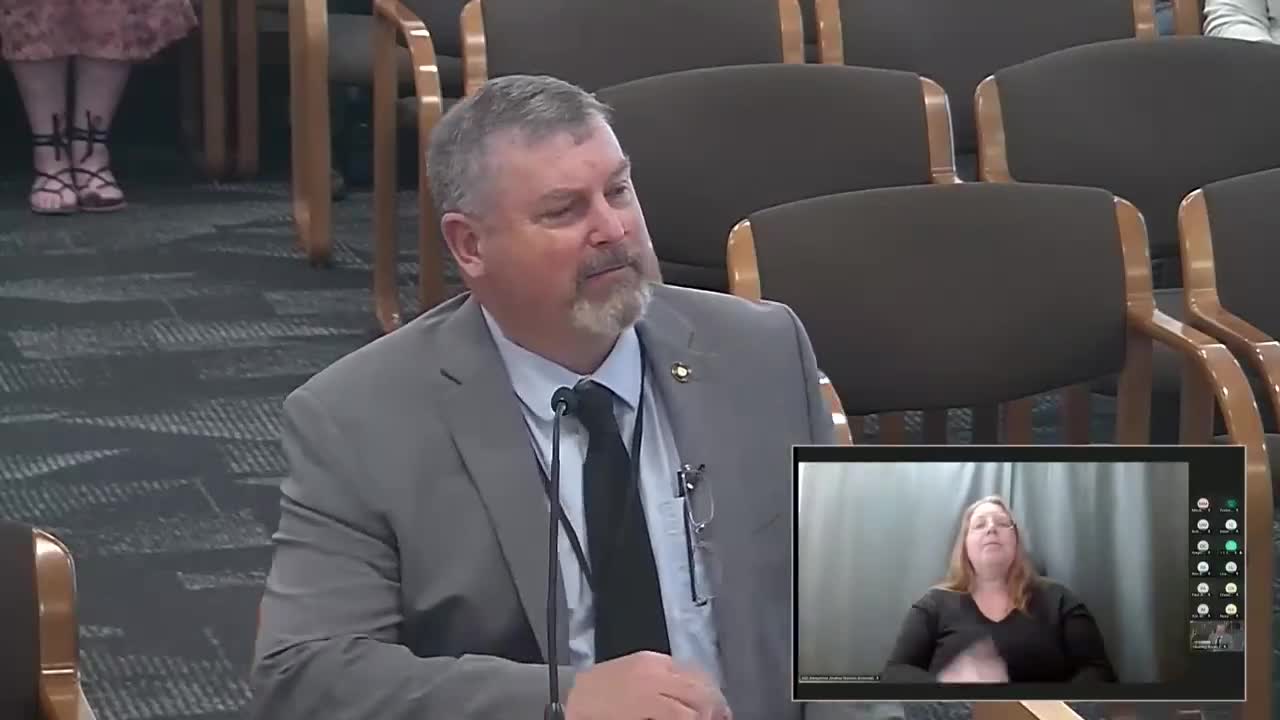
Senator Todd Nash, chairing the session, told the Senate Committee on Rules on June 5 that Senate Bill 1034 would require the Energy Facility Siting Council (EFSC) to respect local land‑use ordinances in effect when an application is filed or else work with counties to mitigate conflicts.
The bill’s sponsor and multiple county officials said the change responds to recent EFSC decisions that, they said, disregarded locally adopted siting criteria. "Local governments develop comprehensive plans, consider unique needs, and get feedback from our communities," said Umatilla County Commissioner Cindy Timmons during public testimony, urging support for SB 1034. Umatilla and other Eastern Oregon counties, speakers said, want EFSC to apply county standards that were the product of local public processes rather than approve projects that circumvent local rules.
Supporters argued the bill does not create a county veto but requires meaningful consultation and preserves a path for applicants and counties to resolve conflicts. Daniel Cairns of the Blue Mountain Alliance told the committee the change would restore the statute’s original intent and "force communication" between applicants, EFSC and local governments. Umatilla County community development director Bob Walder said his county repeatedly provided its criteria as the special advisory group and was nevertheless overridden in a recent case; he said SB 1034 would require EFSC to apply standards acknowledged by the state at the time of application.
Opponents — including renewable developers, labor unions and environmental groups — said SB 1034 and the dash‑3 amendment would add jurisdictional conflict, delay projects and raise costs. Stephanie Williams, director of government affairs for Emanate Energy, said EFSC already coordinates closely with local governments and that the bill would "add layers of jurisdiction and legal uncertainty" that could deter renewable investment. Diane Brandt of Renewable Northwest and Ben (last name provided as "Bridal" in testimony) of Oregon Environmental Council warned the committee the change could imperil Oregon’s climate and clean‑energy goals by making permitting slower and riskier.
Several witnesses described specific local rules at issue. Cindy Timmons and others said Umatilla County adopted a two‑mile setback provision after extensive local hearings; they said EFSC did not give that ordinance the effect the county expected. Several developers and trade union representatives said the EFSC process is already lengthy and rigorous and that adding new statutory barriers would curtail projects and the jobs they produce. Testimony also referenced a recent state Supreme Court decision (referred to in the hearing as the Nolan Hills case) that affected how EFSC applies statewide goals.
The committee heard detailed examples and competing policy frames: local land‑use predictability and community control versus the need to accelerate renewable generation for state climate targets. Several county officials and eastern Oregon representatives asked the committee to preserve county standards and ensure meaningful two‑way consultation; industry and environmental groups urged keeping EFSC’s ability to weigh statewide benefits against local limitations.
The committee took public testimony from more than a dozen witnesses representing counties, developers, nonprofit clean‑energy advocates, trade unions and local landowners. Chair Jared Jama (Senate Committee on Rules) said the committee would not vote on the measure that day and would hold additional work‑session discussion to consider the dash‑3 amendment and any further changes.
How the committee proceeds next will determine whether the bill is amended to broaden consultation procedures or to preserve EFSC’s ability to approve projects that deliver statewide benefits despite local conflicts.