Get Full Government Meeting Transcripts, Videos, & Alerts Forever!
Get email alerts on the Land Use Subdivision Rewrite topic
No spam. Unsubscribe anytime.
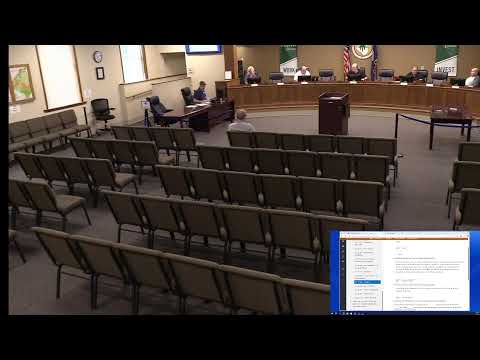
Oconee County planning commission opens review of Chapter 32 unified performance standards
Summary
At its June 2 meeting the Oconee County Planning Commission began a detailed discussion of Chapter 32 of the county code, identifying overlaps with road and zoning rules and proposing a small rewrite committee to draft redlines that would move zoning items to Chapter 38 and road standards to Chapter 26.
The Oconee County Planning Commission on June 2 opened a detailed review of Chapter 32 of the county code — the county's unified performance standards — and discussed creating a committee to draft a rewrite that would move zoning items into Chapter 38 and road standards into Chapter 26.
Commission members and staff said the chapter contains legacy language and conflicting provisions that cause confusion for applicants, reviewers and the public. "This is a chapter that seriously needs a very historical perspective," Tom Markovich said during public comment, adding that "the performance standard initially was approved in 1997" and that later changes around 2008 left mixed jurisdictional language.
The discussion centered on four recurring problems: overlapping authority between chapters, road and private-drive standards, utility and infrastructure expectations for private subdivisions, and unclear requirements for when a private road may be accepted by the county. Staff member Mister Haney, who reviewed the land development and subdivision regulations for the commission, pointed to specific wording that creates conflicts — for example, language that implies utilities are required on private drives and a reference to "needed public open space" that may not apply to gated or wholly private communities. "Utilities on private drives is not a requirement of them," Haney said, noting he would circulate proposed markup changes.
Commissioners and staff discussed several practical implications raised in the meeting: how and when a developer should indicate whether a road will be private or intended for future public acceptance; whether private bridges or culverts require posted weight limits or formal engineering review; and when clocking begins on the three-year developer obligation that can affect handover to an HOA or the county. Staff said the final plat recording or the release of a bond typically starts the clock on developer responsibilities.
Members debated process as well as content. Several commissioners argued for a small drafting subcommittee to prepare redlined changes before wider vetting. One planning commissioner proposed a three-person core team to do the initial markup and then bring that product to a larger committee for review; another commissioner cautioned that a larger, unfocused group would slow progress. "Until you have that product, you're not gonna be successful," one commissioner said about presenting changes to a broader body.
No formal ordinance amendments were adopted at the meeting. Commissioners discussed forming a rewrite committee, and Commissioner Nicks volunteered to take on part of the drafting work. The commission maintained its regular meeting schedule and confirmed its next meeting date as July 7.
The commission asked staff to return with suggested redlines, examples of where Chapter 32 overlaps with Chapter 26 and Chapter 38, and recommended ground rules for the proposed committee, including that the rewrite should move zoning-related items into Chapter 38 and road-related items into Chapter 26 where appropriate.