Get Full Government Meeting Transcripts, Videos, & Alerts Forever!
Get email alerts on the Wage Enforcement topic
No spam. Unsubscribe anytime.
N.J. labor commissioner: stop-work authority, tougher enforcement recovered millions for workers
Summary
Labor Commissioner Robert Asaro-Angelo told a Senate committee the Department of Labor has increased enforcement activity since 2018, issuing nearly 200 stop-work posters, placing 261 businesses on a public accountability list and recovering tens of millions in back wages.
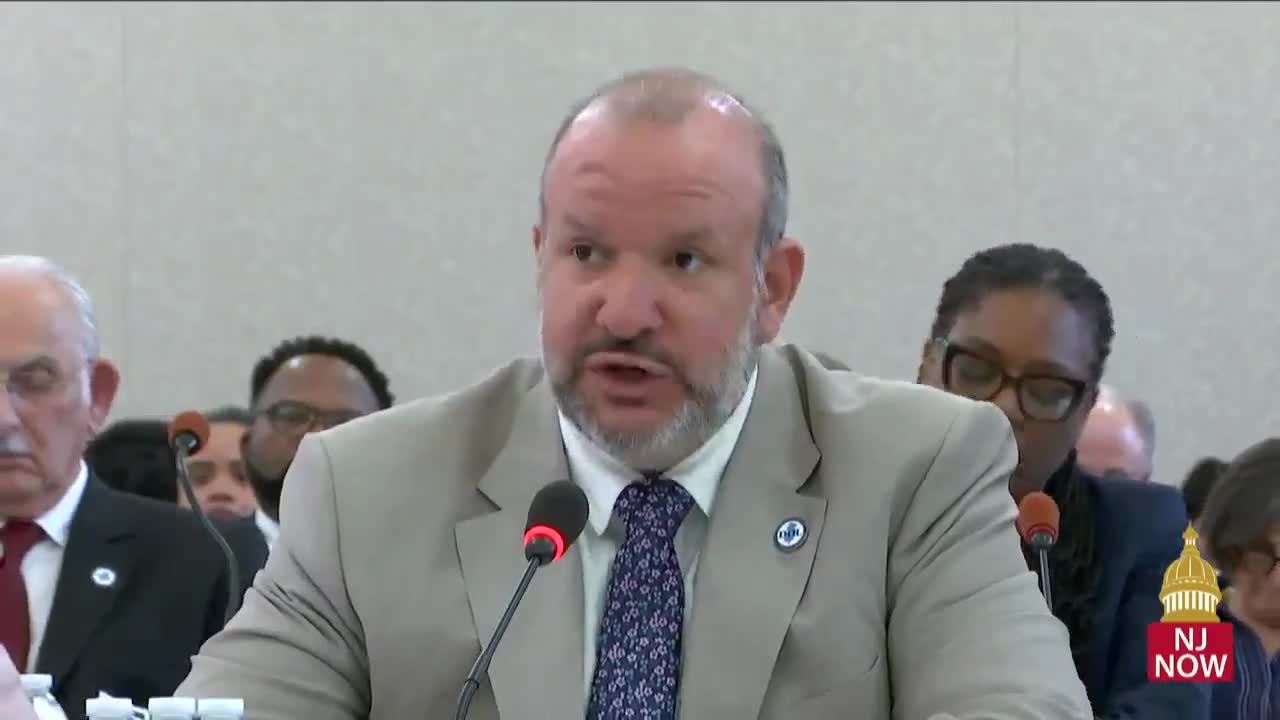
Labor Commissioner Robert Asaro-Angelo told the New Jersey Senate Labor Committee that the state has stepped up enforcement against employers who violate wage and workplace laws, using stop-work orders and public naming to recover money for workers.
Asaro-Angelo said the department has collected about $84,000,000 in wage assessments and penalties since 2018 and that in 2024 the department recovered roughly $19,000,000 in back wages. "This year alone, we've already assessed $37,000,000 in back wages for 8,500 workers," he said. He added that stop-work posters — red notices placed at worksites — have been used nearly 200 times to halt operations when employers fail to comply.
The commissioner framed the stop-work authority as a deterrent that changes the cost-benefit calculation for bad actors. "Often immediately prior to issuing a stop work order, employers come into compliance before we have to take the more drastic action of shutting them down," Asaro-Angelo said. He said 261 businesses currently appear on the department's workplace accountability list and owe about $25,000,000 in unpaid wages, fines or penalties; those firms remain publicly named and are ineligible to do business with public entities until they comply.
Committee members pressed Asaro-Angelo on how the stop-work tool is deployed and why it is not used more often. The commissioner said the department also issues a range of notices and seven-day letters that encourage compliance before a stop-work order is necessary, and that the authority is reserved for the most egregious cases.
Asaro-Angelo also described staffing and outreach changes: the department expanded its wage-and-hour investigative staff from a small team at the start of the current administration to 67 investigators and bilingual capacity in eight languages. He said the state operates an online New Jersey Wage Hub for public projects and certified payrolls and that recent laws — including a temporary workers bill of rights and a domestic workers bill of rights — have supported enforcement and recovery efforts.
The committee discussion included references to particular cases and to the department's strategy of using public naming and contract debarment as levers to secure compliance. Asaro-Angelo said the goal is stronger compliance without shutting down businesses when possible.
The committee did not take any formal vote or adopt new legal language during the hearing; senators asked for additional operational details and requested follow-up materials.
Ending note: The commissioner said enforcement will continue alongside education and outreach to help compliant employers meet the law and to protect workers who are owed wages.