
Maine webinar panel urges integrated open-space planning to protect access, habitat and resilience
Get AI-powered insights, summaries, and transcripts
Subscribe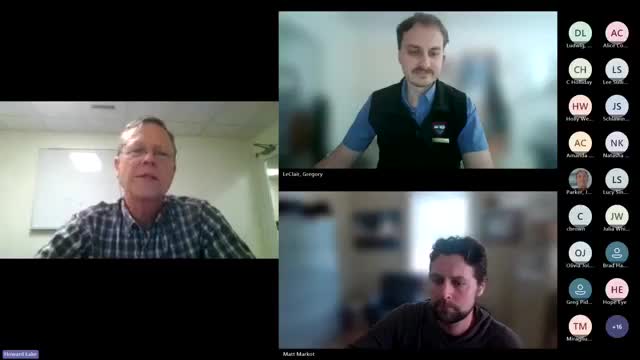
Summary
A panel hosted by the Maine Municipal Planning Assistance Program outlined practical steps for towns to map, fund and implement open-space plans, stressing public access, habitat corridors, and links to flood resilience and community health.
Greg LeClaire, municipal planning biologist with the Beginning with Habitat program at the Maine Department of Inland Fisheries and Wildlife, moderated a July webinar hosted by the Municipal Planning Assistance Program at the Maine Department of Agriculture, Conservation and Forestry on open-space planning for municipalities.
The panel — featuring LeClaire, Howard Lake, co‑chair of the Readfield Open Space Committee and representative of the Kennebec Land Trust, and Matt Marcotte, executive director of Loon Echo Land Trust — advised towns to treat open-space planning as a practical tool to protect wildlife habitat, preserve public access, and advance climate and flood resilience while guiding where development should occur.
“Open spaces are just as much about wild places and ecosystem function as it is about people and how people interact within their communities,” Marcotte said, adding that open-space planning can connect trail networks, schools and hospitals and provide alternative-transportation routes. LeClaire told participants the state mapping and Beginning with Habitat resources can help towns identify corridors and priority blocks for conservation.
Panelists described common benefits towns cite when adopting an open-space plan: protection of water quality, space for recreation and trails, support for forestry and farming economies, and community health benefits from access to green space. Howard Lake noted Readfield’s 2006 plan led to an active trails committee and a town open-space fund now worth “over a hundred thousand dollars,” which officials hope will be leveraged for acquisitions.
Speakers also outlined common barriers and tradeoffs. Marcotte said public access and municipal tax impacts are recurring concerns, and that open space must be balanced against housing and commercial development needs. “The concerns largely speak to the competing interest between open space and economic development,” he said. Lake and Marcotte both recommended forming an implementation‑focused open-space committee with a mix of municipal representatives, land trust partners and at‑large citizens to sustain momentum.
The panel reviewed tools towns can use. Experts described Maine current‑use taxation programs (tree growth, farmland, open-space enrollment) as ways to reduce tax pressure that can force land sales or development. LeClaire also called out FEMA programs that can reward keeping floodplains as open space — the Community Rating System (CRS) — and described examples where FEMA transferred remediated floodplain parcels back to communities for park or flood‑able open‑space use.
On funding and timing, Marcotte said plans can be written with minimal budget if volunteers drive the process, or funded through grants and programs such as the Community Resilience Partnership (CRP), EPA/ARPA streams, and philanthropic contributions when consultant facilitation is desired. He suggested a consultant‑facilitated plan can take roughly six months, while volunteer efforts often take about a year. Lake said Readfield used a consultant for its 2006 plan but did not specify the original cost.
Panelists offered implementation examples from their towns: Bridgton’s open-space committee prioritized small, winnable projects such as wayfinding and a hand‑carry boat launch and is reviewing town‑owned parcels for potential pocket parks; Readfield formed a trails committee soon after its plan and partnered with the Kennebec Land Trust on easements and acquisitions.
Speakers emphasized that open-space planning should be integrated with comprehensive planning and zoning to avoid fragmented outcomes. Marcotte urged towns to consider clustered subdivision designs and to update rural zoning where necessary to reduce sprawl and preserve large undeveloped blocks. Lake warned that undefined conservation conditions on subdivision parcels can create stewardship headaches for land trusts unless protections and responsibilities are clearly set in deed covenants and permits.
The session closed with practical advice for towns beginning the work: assemble a committed team of volunteers, involve atypical stakeholders (young people, trail groups, farmers, public works), partner with land trusts for technical help and fundraising, and use existing municipal programs and state resources. Beginning with Habitat maintains examples and a running list of towns with open-space plans and can share model documents.
The webinar recording and resources were announced as available on the Municipal Planning Assistance Program website; the organizers noted the next Maine Planning Basics webinar will address Shoreland zoning updates.