Get Full Government Meeting Transcripts, Videos, & Alerts Forever!
Get email alerts on the Public Safety topic
No spam. Unsubscribe anytime.
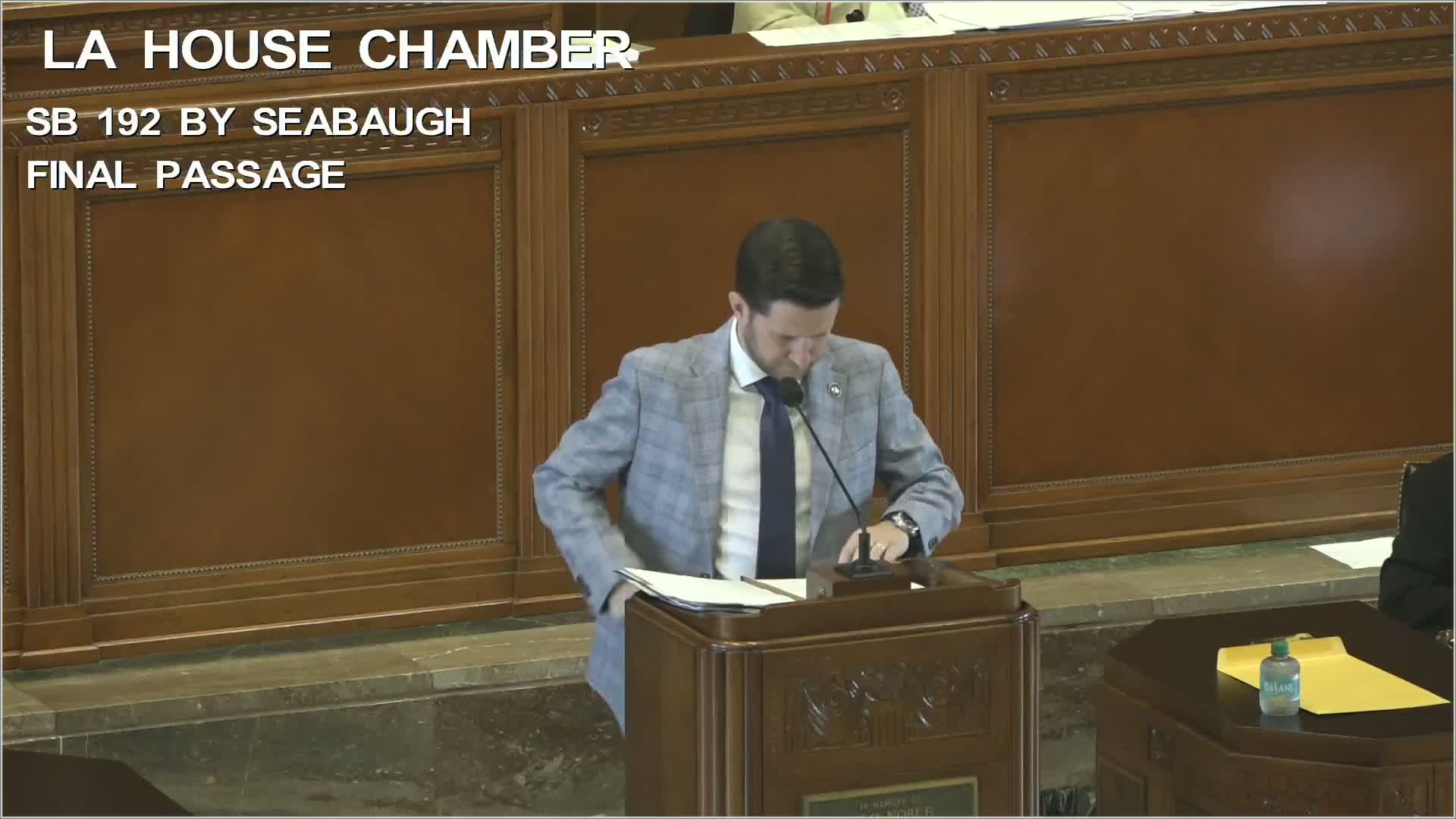
House approves bill creating tactical medical professionals, auxiliary deputies amid training and immunity debate
Summary
The House passed a bill that creates two new categories — tactical medical professionals who can accompany tactical law enforcement units and auxiliary sheriff deputies with limited training — after floor debate about training, background checks and use‑of‑force protections.
The House on Tuesday approved a measure that creates two new categories of personnel used in law‑enforcement operations: a tactical medical professional role and an auxiliary sheriff deputy classification.
The floor presentation described tactical medical professionals as licensed paramedics or physicians who could operate alongside tactical units (for example SWAT) to provide immediate medical care in high‑risk operations; sponsors compared the role to military medics. The bill also authorizes auxiliary sheriff deputies — volunteers who would complete a defined minimum curriculum rather than full post certification — to assist in certain public events and duties.
Members raised questions on the floor about training, background checks and the scope of legal protections. One member asked whether tactical medical professionals and auxiliaries would have to pass the same post‑certification training as full‑time officers; sponsors said the new roles include training requirements but not the full post academy curriculum. Sponsors also said auxiliaries and tactical medical professionals would be teamed with fully post‑certified officers and that background checks would be required.
Some members expressed concern that qualified‑immunity‑style protections and the ability to use force are being extended to personnel who will not complete full post certification, while supporters said the measure is intended as a force multiplier for resource‑strained jurisdictions and provides required training and supervision.
The House passed the bill by recorded vote, 72 ayes and 25 nays.