Get Full Government Meeting Transcripts, Videos, & Alerts Forever!
Get email alerts on the School Vaccine Exemptions topic
No spam. Unsubscribe anytime.
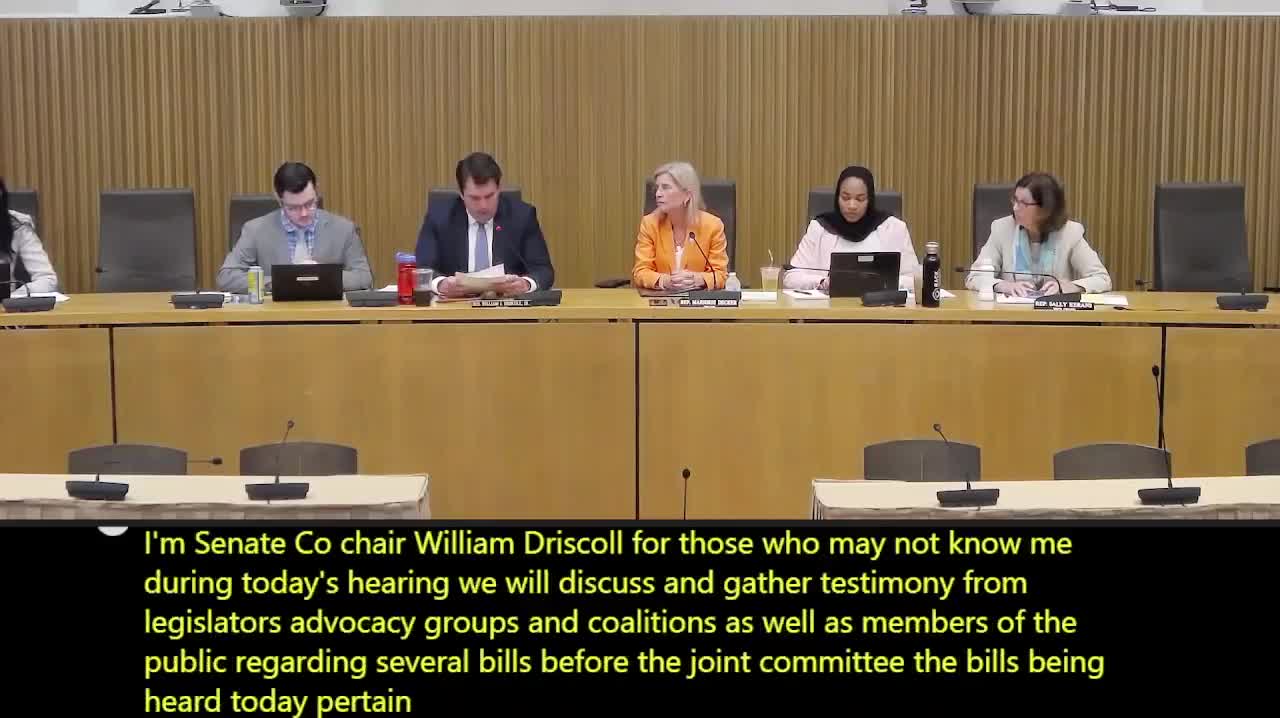
Doctors, parents clash as Massachusetts committee reconsiders removing religious vaccine exemptions
Summary
At a Joint Committee on Public Health hearing, medical groups and parents offered sharply divided testimony on bills H2554/S1557 to eliminate nonmedical (religious) vaccine exemptions for school entry; witnesses cited public-health data, legal precedent and personal injury accounts.
The Joint Committee on Public Health heard hours of testimony on bills H2554 and S1557, measures that would eliminate nonmedical (religious) exemptions to school vaccine requirements in Massachusetts.
Supporters, including pediatricians and public-health researchers, told the committee that the state’s high statewide vaccination rates mask local gaps and that removing nonmedical exemptions would raise coverage where it is lowest. Dr. Mary Beth Miyoto of Mattapan Community Health Center said local declines, not statewide averages, matter: "Five of our 14 counties fell below the 95 percent immunization threshold needed to prevent measles," she said, and cited kindergarten classrooms that have fallen below herd-immunity targets. Boston University public-health researcher Dr. Matt Mata said evidence from other states shows that removing nonmedical exemptions tends to increase uptake and protect people who cannot be vaccinated for medical reasons.
Several public-health advocates and organizations asked the committee to focus on improving reporting and outreach as well as removing broad nonmedical loopholes. Katie Blair, director of Massachusetts Families for Vaccines, told the committee she had found 64 schools with MMR rates below 95 percent and that eliminating the exemption would reduce the risk of outbreaks: "It's time for Massachusetts to do the same" as neighboring states that removed exemptions, she said.
Opponents — including many parents, religious leaders and some clinicians — said the bills would trample parental and religious liberty and could push some children out of school without improving public health. Parents and self-identified vaccine-injured citizens described life-changing adverse events they attributed to vaccines and urged lawmakers to preserve religious protections. Multiple speakers urged the committee to focus instead on the larger “noncompliant” group of students who lack records, which witnesses said outnumber religious exemptions in many communities. A number of clinicians and school nurses told the committee that exclusion protocols and existing law allow temporary action in outbreaks and that those measures already balance public health and individual rights.
Legal questions also surfaced. Several witnesses and committee members discussed recent Supreme Judicial Court decisions and precedents such as Jacobson v. Massachusetts; witnesses said constitutionality questions and state-case law bearing on parental rights should be considered in drafting any permanent change.
The committee received a mix of scientific, legal and strongly personal testimony that stretched over many hours; lawmakers did not vote at the hearing. Supporters urged a favorable report to move the bills forward; opponents asked the committee to reject or substantially narrow the proposals and to target noncompliance and reporting gaps instead.
"If there is any risk," said Dr. Miyoto, "we must take steps to prevent outbreaks where they exist. We know how to do it." Parents and other speakers countered that religious freedom and parental authority also deserve protection and that exclusionary policies would inflict real harms on children and families without addressing the larger data gaps identified by the Department of Public Health.
The committee will decide whether to report the bills out for further action; no formal action was taken during the hearing.