Get Full Government Meeting Transcripts, Videos, & Alerts Forever!
Get email alerts on the Hospital Reit Accountability topic
No spam. Unsubscribe anytime.
Committee keeps REIT accountability bill in committee after members split on remedies for troubled West Monroe hospital
Summary
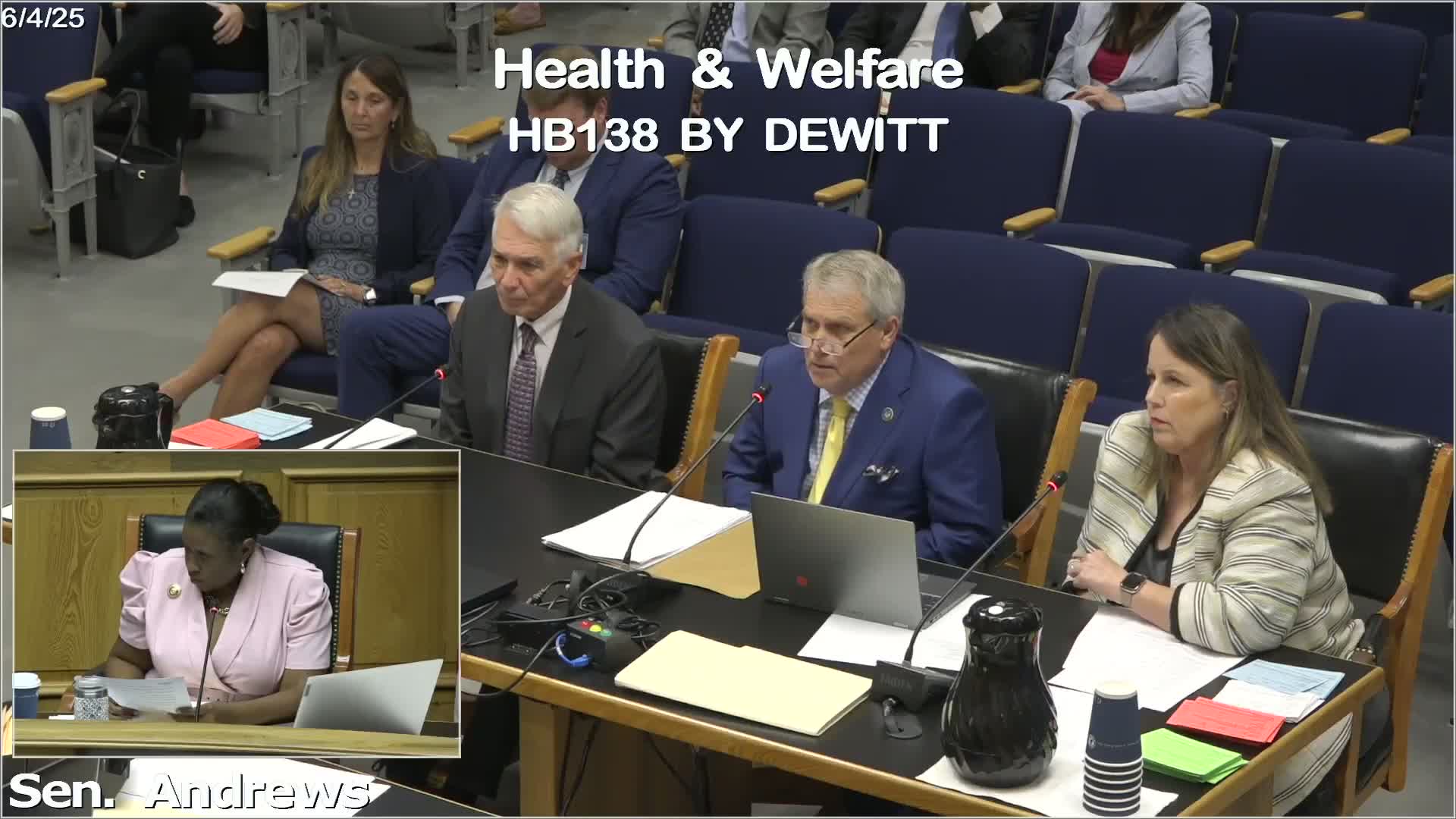
The Senate Health and Welfare Committee on Wednesday declined to advance House Bill 317, a proposal to impose financial and operational accountability on owners of hospital real estate after persistent problems at Glenwood Medical Center in West Monroe.
A bill seeking to hold hospital real‑estate owners accountable for operator failures at Glenwood Medical Center in West Monroe did not advance out of the Senate Health and Welfare Committee on Wednesday after an objection and recorded roll call.
Representative Jack Echols introduced House Bill 317 to address what he described as recurring operational failures and deferred maintenance at Glenwood after multiple operator transitions. Echols said the asset’s ownership and lease structure, in his view, prevented viable operators from entering the market and left the region’s patients and hospitals strained.
Echols told the committee patients and staff at Glenwood experienced supply shortfalls, broken equipment and intermittent security failures under the prior operator; he said local clinicians reported the hospital had been put on medical jeopardy multiple times. “All I want is a little bit of accountability for the person that owns the asset,” Echols said.
Medical Properties Trust (MPT), the real‑estate investment trust that owns Glenwood’s property, sent senior executives to testify. Ed Aldag, MPT’s chairman and CEO, described the company’s role as a landlord that acquires hospital real estate and leases it to operators; he said MPT does not operate clinical services. Aldag said MPT invested capital in the property, provided working‑capital loans and forgave rent to keep services available during Steward Healthcare’s bankruptcy process.
Mayor Matt Talbert of Sterlington spoke in support of the bill and gave a personal account: his mother received care at Glenwood and later died; he said staff repeatedly told him that the hospital’s clinical and support systems were failing. Local clinicians who sent testimony described staffing turnover and equipment gaps.
MPT executives said the property changed hands and operators through bankruptcy processes outside the company’s control and that the trust provided temporary liquidity and deferred rent during crisis periods. They told the committee they had worked with the bankruptcy court and that the court oversaw operator selection in the restructuring.
After debate senators recorded votes on a motion to report the bill favorable. The roll call produced four no votes and one yes; the motion failed and the bill was kept in committee. Sponsors said they will continue discussions with the company and local stakeholders and consider statutory alternatives.
Committee members asked MPT for additional documentation tied to operator selection, capital investments in Glenwood and any loans or rent deferrals made during the prior operator’s bankruptcy. The committee’s next meeting will give sponsors time to refine the proposal and pursue additional evidence and stakeholder input.