Get Full Government Meeting Transcripts, Videos, & Alerts Forever!
Get email alerts on the Medical Board Reform topic
No spam. Unsubscribe anytime.
Bill to reshape State Board of Medical Examiners advances after heated debate over appointments and investigations
Summary
House Bill 138, proposing changes to the composition and oversight of the Louisiana State Board of Medical Examiners, passed out of committee as amended after testimony from the surgeon general, physicians’ groups and board counsel. Lawmakers debated removal authority, investigator hiring and geographic representation.
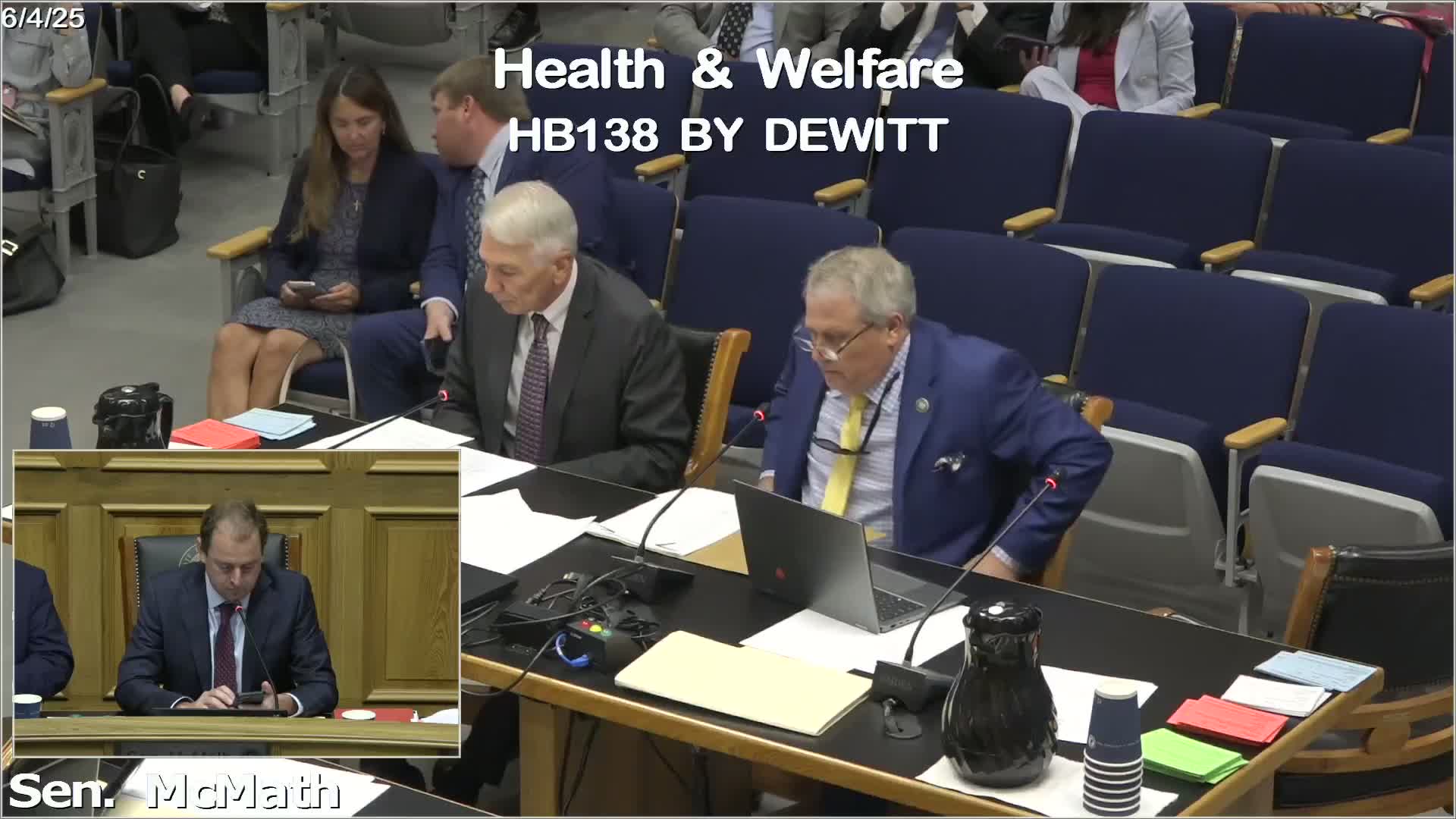
The Senate Health and Welfare Committee reported House Bill 138 as amended after extended testimony and exchanges over board appointments, investigator oversight and geographic representation.
Representative Peter DeWitt, the bill’s sponsor, said HB 138 updates an older board structure to add non‑physician representation, establish a permanent seat for a nonphysician regulated provider (initially a physician assistant) and authorize the executive director to hire a separate director of investigations. “This is not about policy, it’s about people,” DeWitt said, arguing the board should reflect Louisiana’s geographic and professional diversity.
Surgeon General Ralph Abraham supported the measure’s stated goals and told senators the board’s backlog of investigations had been a problem in prior years; he testified that when he took office there were “over 500” open investigations and that slow investigations had harmed physicians and public confidence. He said adding resources and clarifying investigative lines of authority was urgent.
Opponents — including the Louisiana State Medical Society, the Louisiana Academy of Family Physicians and an emergency physician who testified — warned against changes that could politicize the board. The medical society’s representative urged retention of continuity and independence for board members, saying they should be able to “vote their conscience” without fear that gubernatorial turnover would lead to wholesale replacement. Several physician witnesses urged preserving a consumer member and maintaining independence in investigator functions.
Committee counsel described a negotiated amendment package that corrected drafting errors, reinstated a consumer representative and removed a proposed repeal of a for‑cause removal statute; the committee adopted the amendments with a on‑the‑fly tweak requested by senators. After debate the committee called the roll; the clerk announced the committee had recorded three yes votes and two no votes and the bill was reported as amended for further consideration.
Lawmakers asked the surgeon general and board counsel to work with committee staff on language clarifying how a director of investigations should be hired and supervised, and to supply data on open investigations, case age and proposed timelines for clearing backlogs. Committee members said they would continue talks between committee and floor to refine statutory language.