Get Full Government Meeting Transcripts, Videos, & Alerts Forever!
Get email alerts on the Occupational Licensing topic
No spam. Unsubscribe anytime.
Debate over HB 509: bill to deregulate natural hair braiding divides cosmetology board, trades and lawmakers
Summary
House Bill 509, which would create a permit-based pathway for natural hair braiding and reduce cosmetology licensure barriers, prompted extensive testimony on public-safety safeguards, economic opportunity and regulatory scope. Supporters emphasized entrepreneurship and low public-health risk; opponents — cosmetology schools and board counsel —
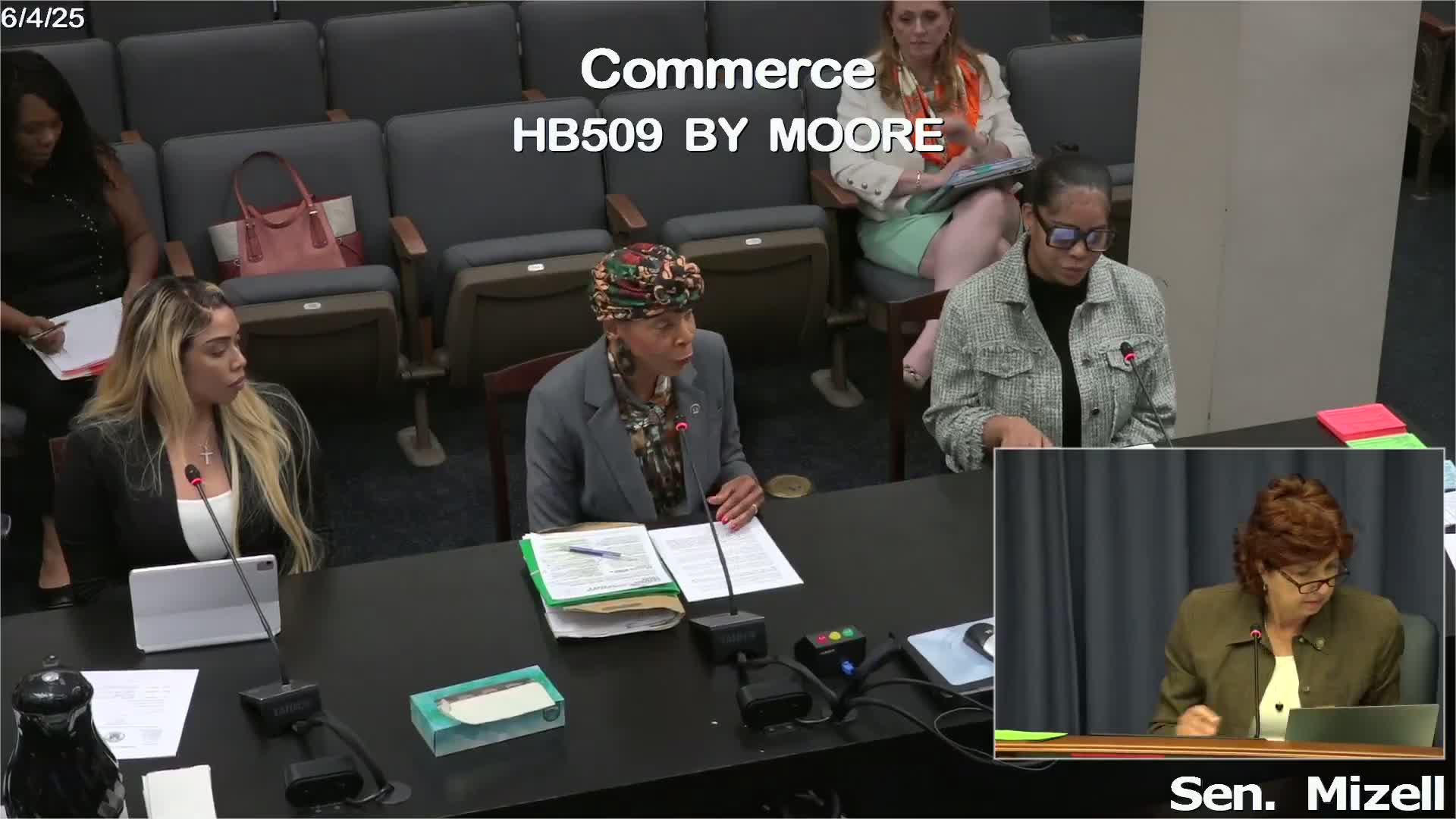
Representative Moore presented House Bill 509, aimed at creating a permit pathway for natural hair braiding and reducing regulatory barriers that supporters say prevent low-cost entrepreneurs from earning a living. The sponsor told the committee the bill had been amended after meetings with the Louisiana State Board of Cosmetology and would retain protections while offering a lower-cost compliance route.
Supporters — including the Institute for Justice, pastors and braiders — said natural hair braiding is a low-risk skill rooted in cultural practice that should not require costly, multi‑thousand‑dollar training. Kelly Curry (Institute for Justice) told the panel that many states no longer require full cosmetology training for braiders and that alternatives with short hygiene training and a written exam can protect consumers while expanding opportunity. "There is no evidence, none, that natural hair braiding presents any threat to public safety in the 37 states where licensure has been eliminated," she said.
Opponents included the Louisiana State Board of Cosmetology, cosmetology schools and licensed practitioners, who argued the bill—especially in its amended form—would permit practices beyond simple hand-braiding (extensions, shampooing, cutting and some thermal tools) and that the board's April meeting adopted a different approach than the amended bill contained. Board counsel Sherry Morris said the board approved language in principle at a board meeting but that the amendments in the bill differed from the precise board-approved approach; she also noted resource and funding questions for oversight and inspection.
Multiple insurance and professional groups filed in support or for information, and several witnesses urged specific compromises: a separate alternative-hair curriculum, an instructor credential, clear sanitation training and a licensing track for those who want to teach. Representative Moore and several supporters argued the bill includes consumer-safeguarding elements — a required safety training video, a written hygiene exam and an inspection regime — while creating an affordable permit system.
Committee members did not take a final vote on the bill during the hearing; Representative Moore asked the committee to consider the amended compromise framework. Several senators asked for additional clarifications about the scope (what devices and services are permitted), fiscal impacts on the cosmetology board and the interaction of permits with existing licensing.