Get Full Government Meeting Transcripts, Videos, & Alerts Forever!
Get email alerts on the Ethics Complaints topic
No spam. Unsubscribe anytime.
Senate committee advances bill requiring sworn complaints for ethics investigations, prompting debate over confidentiality
Summary
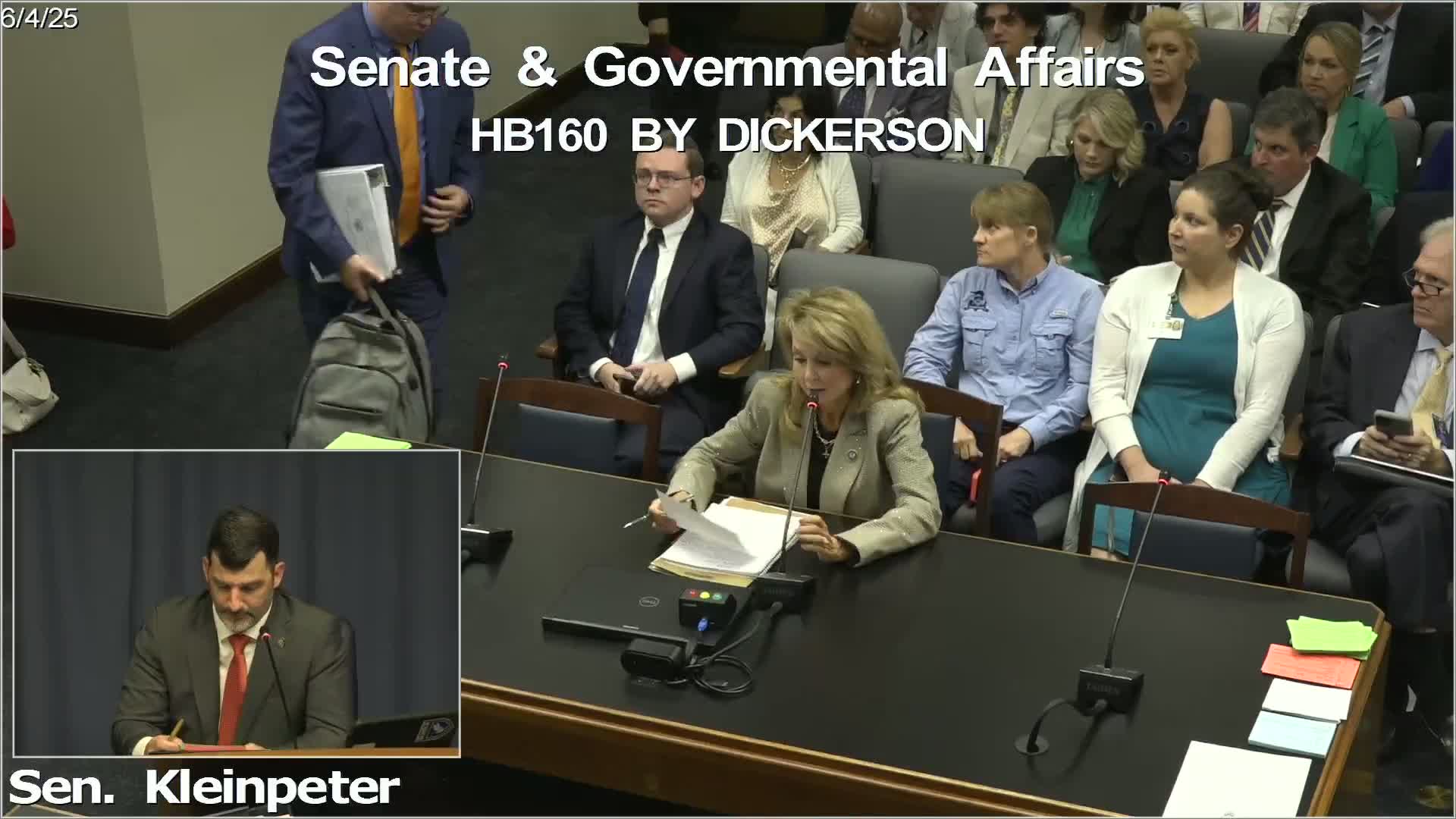
The Senate Committee on Senate and Governmental Affairs voted June 4 to report HB 160 favorably, a bill that would require complaints to the Louisiana Board of Ethics to be sworn (notarized) before an investigation may begin.
The Senate Committee on Senate and Governmental Affairs voted June 4 to report HB 160 favorably, a measure by Representative Dickerson that would require a sworn (notarized) complaint before the Louisiana Board of Ethics may open an investigation.
Representative Dickerson said the amendment is intended to prevent "spur-of-the-moment" or retaliatory filings and to give respondents clearer information about their accusers. He told the committee the bill was amended in the House to add a retaliation clause and to limit administrative agencies' ability to file complaints without restrictions.
"Once a complaint is filed, basically, the legal fees begin on your part," Dickerson said, explaining the practical toll of an unverified complaint and the benefit he believes notarization would provide to respondents.
David Bordelon, the ethics administrator, opposed the measure in committee testimony. Bordelon said the existing process allows staff to screen complaints and that disclosure of a complainant's identity before an investigation begins could "intimidate a witness or potentially alter information that's requested." He compared the investigative phase to a grand jury process and pointed to recent changes in campaign-finance confidentiality that the Legislature had enacted to protect sources.
Opponents, including the Public Affairs Research Council and other civic groups, said the requirement to file in person or to obtain a notarized sworn statement and the potential need to sue for retaliation would create costs and practical barriers that would discourage well-meaning citizens from filing legitimate complaints.
Supporters, including municipal elected officials and some former officeholders, argued the change would reduce frivolous, politically motivated filings and protect respondents and their families from prolonged stigma and leaked allegations.
After debate and a roll-call procedure, the committee reported HB 160 favorably. The record shows objections were raised during the motion, and committee members debated confidentiality, due process and the potential chilling effect on complaints.
Why it matters: The bill would change how ethics complaints are initiated in Louisiana by making sworn, notarized complaints mandatory to prompt an investigation. Proponents say the requirement will guard against frivolous accusations and reduce personal costs to respondents. Opponents say the requirement will deter whistleblowers and ordinary citizens from reporting misconduct because of added cost, travel and fear of retaliation.
What to watch next: HB 160 now advances to the full Senate. Legislators and stakeholders are likely to raise additional amendments or clarifications about confidentiality, retaliation remedies, and methods that allow remote or accessible filing while preserving protections for respondents and complainants.