Get Full Government Meeting Transcripts, Videos, & Alerts Forever!
Get email alerts on the Meeting Procedures topic
No spam. Unsubscribe anytime.
Council workshop examines meeting rules, recognition systems and public‑comment policy
Summary
Grand Junction council members and staff debated a draft meeting procedure policy that would formalize how motions, recognition and public comment are handled; staff will draft a resolution to repeal and replace existing guidance and return with implementation options for recognition systems and public outreach.
City staff and council members discussed a draft meeting procedures and public‑comment policy at a council workshop, focusing on whether to adopt a condensed, practical set of rules rather than formal parliamentary procedure.
The session, led by staff presenters identified as Mike and John, reviewed differences between the full Robert’s Rules of Order and shorter, practice‑oriented guides (sometimes called “Bob’s Rules”), and covered topics including presiding‑officer authority, time limits for speakers, points of order and methods for handling unruly audience members.
John, the staff presenter who drafted the policy text, told council the rules’ purpose is “opportunity for everybody on the council to have a voice to be able to participate and for your public to see how you do business,” and pointed to a matrix included with the draft that lists common motions and their procedural effects.
Council members raised specific concerns and suggestions: several stressed that a recognition or “light” system could make speaking opportunities more equitable for members who cannot read visual cues across a dais; others asked for clearer language on lines that give the presiding officer discretion to limit members’ remarks, worried permissive language could be misused. Several council members said they wanted a practical, readable code that matches the council’s actual practice rather than a strict parliamentary manual.
On public comment the draft proposes a standard three‑minute limit per speaker. Council discussed whether to allow rare, discretionary extensions; staff advised that a clear baseline of three minutes is easier to apply consistently and recommended any routine extensions be handled at the end of the meeting or during a separate forum. One staff presenter said the policy language should read as a firm three‑minute limit and that occasional, non‑preplanned extensions create inconsistency.
The draft also includes a provision allowing the presiding officer to limit recording devices in council chambers; a council member suggested clarifying that language (for example, “may not” vs. “may”) to avoid ambiguity. Another portion of the packet lists possible security measures for sensitive situations; council discussed metal detectors and signs prohibiting weapons but staff said such enforcement raises legal and practical issues and that any change would require broader policy discussion.
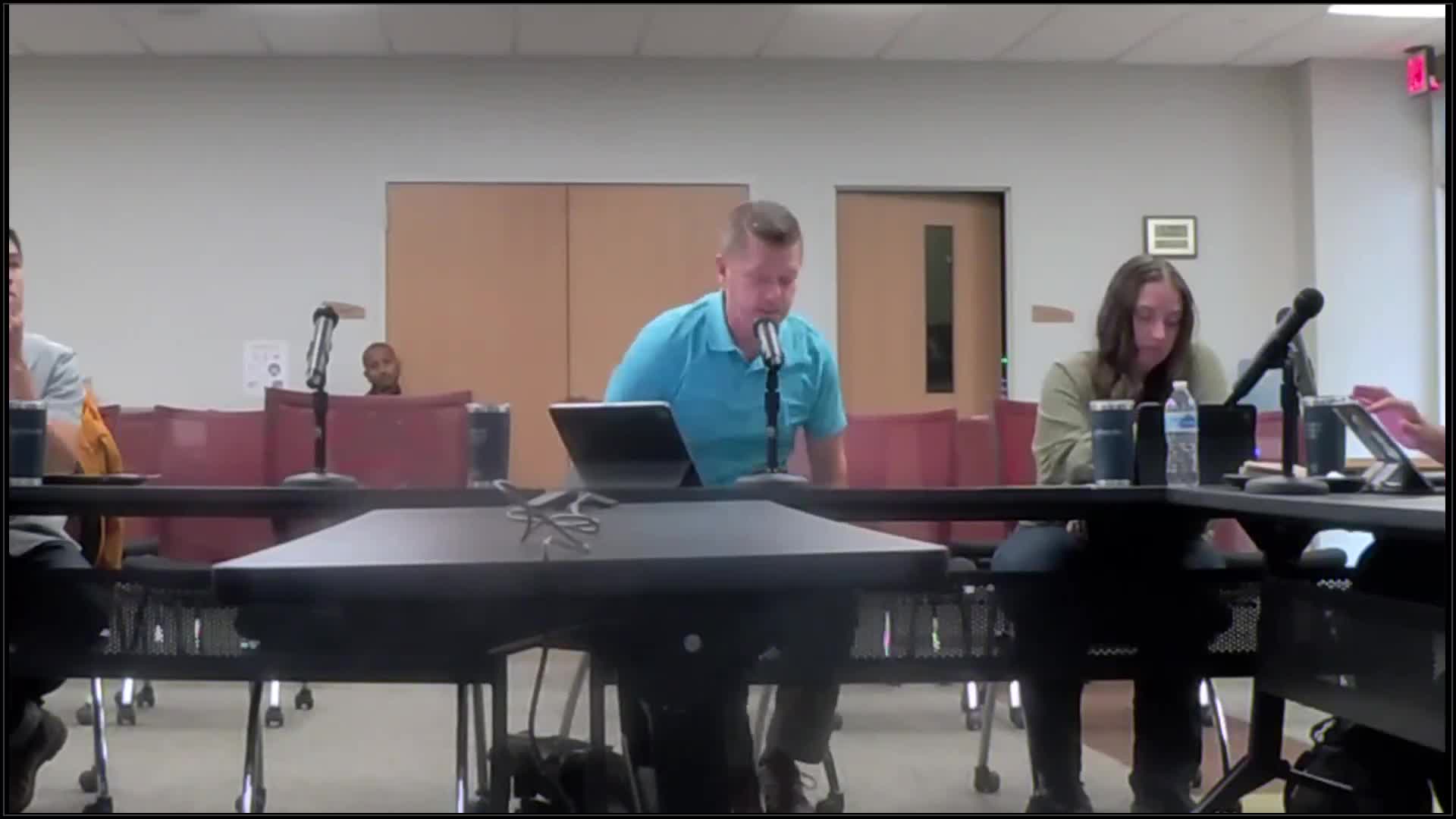
Council debated where workshops should be held; staff said workshops are often placed outside the main council dais by council preference because the informal layout aids discussion but complicates broadcast and microphone calibration. Staff described practical constraints such as microphone rigs and the Polycom camera system.
On outreach and public engagement, several council members urged more town‑hall style events and neighborhood meetings to provide dialogue beyond three‑minute public comments. Staff said communications and engagement staff will develop formats and recommendations, and council agreed staff should return with options for online listening sessions, stakeholder meetings and occasional in‑person town halls that balance accessibility and staff workload.
At the end of the discussion staff said they will assemble notes and return with formal documents. “We’ll have some notes, and Mike and John will probably put those together, and then It will come to a resolution, and it will be repealing some of the old stuff,” John said, describing a plan to bring a repeal‑and‑replace resolution forward for council consideration. No formal policy was adopted at the workshop.
Next steps identified by staff included drafting a resolution to repeal and replace existing meeting guidance, returning with clarified language on presiding‑officer discretion and search/recording rules, and researching recognition systems and outreach formats for council approval.