Get Full Government Meeting Transcripts, Videos, & Alerts Forever!
Get email alerts on the Employment Practices Liability topic
No spam. Unsubscribe anytime.
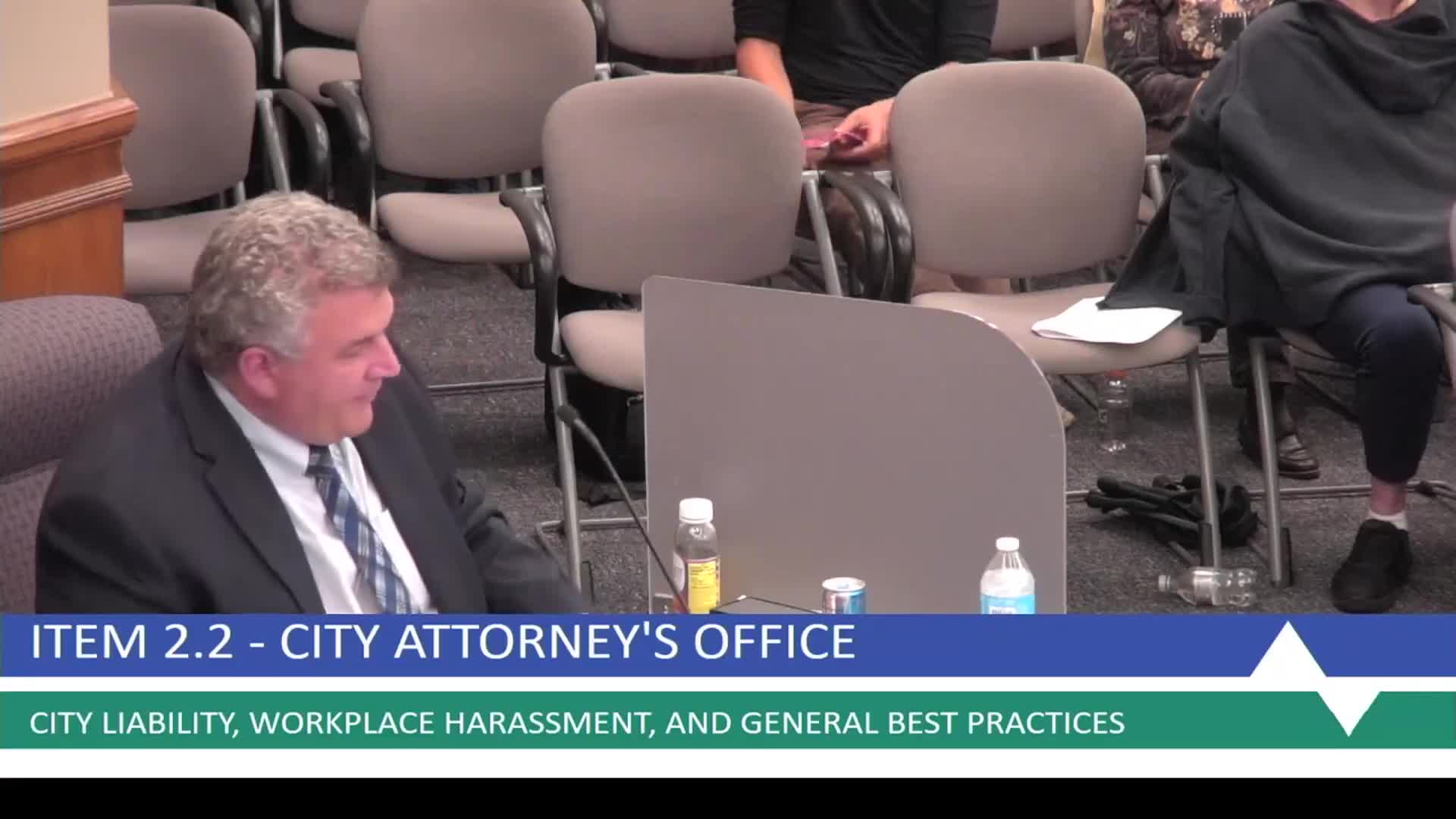
Outside insurers train Loveland council on harassment risk, recommend high standard of workplace civility
Summary
Representatives from the Colorado Intergovernmental Risk Sharing Agency and panel counsel presented employment‑practices liability and best practices, urging the council to adopt a “respectful workplace” standard above minimal legal thresholds and to use timely, consistent HR procedures for complaints involving elected officials.
Attorneys and risk‑management staff from the Colorado Intergovernmental Risk Sharing Agency (CIRSA, also called CSRSAA in the presentation) briefed Loveland City Council on employment‑practices liability, recent state law changes and best practices the city can use to reduce risk of harassment and discrimination claims.
Sam Light, CIRSA deputy executive director and general counsel, said the agency offers training resources to municipal governing bodies and emphasized that focusing only on legal thresholds for harassment can leave a public perception gap. "If that's all we're focused on is the h word," he said, organizations can fail to address broader culture; he recommended leaders set a higher standard of civility and respect that goes beyond the minimum for legal liability.
Panel counsel Peter Doherty described recent legal developments in Colorado, including the 2023 Protecting Opportunities and Workers Rights Act (the presenter called it the Power Act) that can allow liability from a single offensive instance in some circumstances. Doherty advised officials to be proactive: timely investigation and consistent corrective action are central. He noted that municipal structures—such as a city‑manager system with centralized HR—can help ensure consistent handling of complaints, and that handling allegations against elected officials is particularly sensitive.
Speakers urged clearer conduct norms and stronger expectations at the top of government to prevent disrespect from “permeating down.” They praised Loveland’s existing Administrative Rule AR‑37, which already directs the city to correct inappropriate conduct even when it does not meet the statutory definition of harassment. CIRSA staff offered resources including an elected‑officials handbook and said their training can be scheduled for governing bodies periodically.
Councilors asked whether elected officials can be removed under state law; presenters said removal is legally possible in limited circumstances for statutory municipalities but is a complex area for home‑rule cities and must be handled through charter and constitutional analysis. Several councilors asked for more frequent training—one suggested delivering training every two years after elections to reach newly elected officials—and presenters said CIRSA can provide recurring briefings.
The briefing was informational; no policy change or formal motions were taken. Staff will evaluate follow‑up training and timing with CIRSA.