Get Full Government Meeting Transcripts, Videos, & Alerts Forever!
Get email alerts on the Youth Advisory Commission topic
No spam. Unsubscribe anytime.
Loveland youth present civic-engagement push, school-safety plea and Narcan outreach to council
Summary
Members of Loveland’s Youth Advisory Commission told the City Council they increased voter outreach and social-media engagement, asked the council for a letter supporting updated school safety drills, and described a year of student Narcan education and a call to restrict flavored nicotine.
Good evening, Mayor and council: members of Loveland’s Youth Advisory Commission (YAC) told the City Council they spent the 2024–25 term recruiting and educating peers on civic engagement, school safety and substance-abuse prevention and asked for city support on two items.
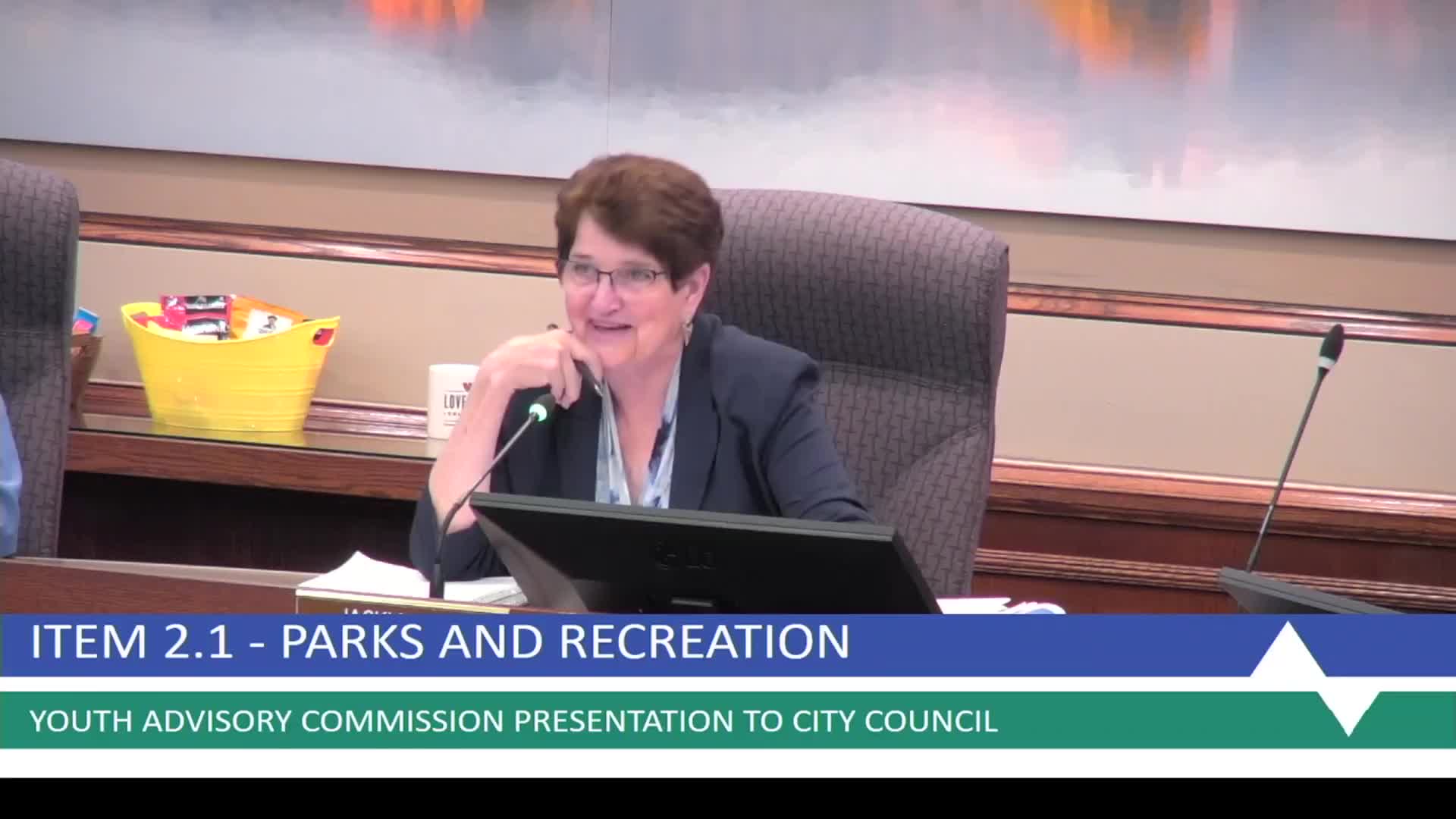
At a June study session the commission’s subcommittees said they used social media and school outreach to increase youth engagement; leaders described a year-long school-safety project and requested that the council send a letter of support to the Thompson School District urging clearer, more frequent safety drills; the substance‑abuse subcommittee outlined an opioid‑overdose education campaign and urged consideration of restrictions on flavored nicotine products.
YAC vice chair Ellie Moran said the civic engagement subcommittee focused on “increase[ing] accessibility and information around elections and the voting process for young adults and first time voters.” Chair‑elect Abby Rice said the group chose social platforms to reach peers and described growth: “Our overall engagement on our Instagram platform at lovelandjack increased by 285.7% ... resulting in a total of 23,455 profile views during this term.” Secretary Isaac Edwards provided the statistics during the presentation.
On school safety, YAC chair Kayla Chapman described student feedback collected by the commission, saying many students “don’t feel safe” because drills are infrequent and unevenly executed: “I feel like other students don’t take drills seriously, so we aren’t effectively practicing for when something happens.” Chapman and the subcommittee asked the council for a letter of support to the school board that would note gaps they found—frequency, staff training, variability in drill types and times of day—and to strengthen the commission’s ability to present its findings to the district. Several council members voiced support for endorsing YAC recommendations rather than directing the school board.
The substance‑abuse subcommittee described classroom presentations about naloxone (Narcan). Commissioner Madeline Kreuss summarized the drug’s role: “Narcan saves lives,” and explained practical points used in classroom materials: naloxone is available as a nasal spray, can reverse opioid overdose symptoms for roughly 30–90 minutes depending on the person, and is sold at pharmacies without an 18‑year age requirement. The subcommittee said it gave presentations in Thompson School District health classes, asked about school nurses’ access to naloxone and urged continued overdose‑prevention training. Council members suggested county and fire‑department programs (including a “first on the scene” training) and noted some public sources distribute naloxone free of charge.
Beyond the presentations, the substance‑abuse team asked the council to consider a municipal ban on flavored nicotine products to reduce youth initiation; YAC presenters acknowledged that prior council action had reached a first reading in a previous session but failed on second reading. Commissioners said they understand the proposal will be contentious and asked for guidance and partnership on messaging and enforcement if council pursues any action.
Council comments were uniformly complimentary about youth participation. Several council members suggested YAC present directly to the Thompson School District and offered to help with a letter or to forward YAC concerns to district leadership; one councilor volunteered to draft outreach to the district.
YAC members closed by inviting continued council partnership and summarizing next steps—presentation materials will be shared with teachers and commissioners hope the commission can use council support when meeting with the school board this fall.
The council took no formal vote on the YAC requests during the study session; members directed staff to advise on the logistics of a possible council letter to the Thompson School District and accepted the YAC presentations for city file.