Get Full Government Meeting Transcripts, Videos, & Alerts Forever!
Get email alerts on the Senate Bill 88 topic
No spam. Unsubscribe anytime.
Dozens of Ohio residents urge committee to reject SB 88, calling it discriminatory and harmful to state economy
Summary
Dozens of residents, students, business employees and civil‑liberty groups told the Ohio Senate General Government Committee they oppose Senate Bill 88, saying the measure would bar lawful immigrants, visa holders and some U.S. families from buying or keeping single‑family homes and would chill investment in the state.
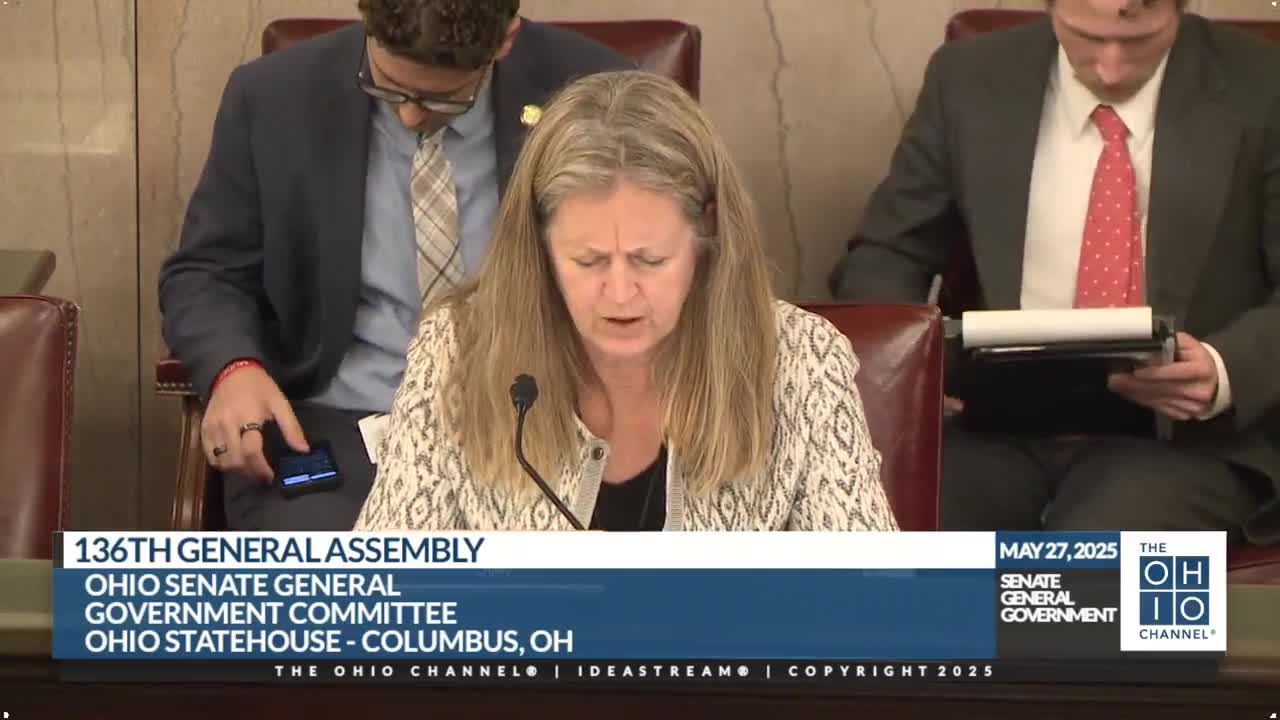
Dozens of residents, students, business employees and civil‑liberty groups told the Ohio Senate General Government Committee they oppose Senate Bill 88, saying the measure would bar lawful immigrants, visa holders and some U.S. families from buying or keeping single‑family homes and would chill investment in the state. Testimony came during the committee’s hearing on the bill, which includes a provision allowing the Secretary of State to compile a registry of entities associated with designated foreign adversaries and a 25‑mile proximity rule tied to “critical infrastructure.”
Supporters of the testimony argued the language targets people by national origin rather than conduct, risks violating federal law and the Constitution, and could force some residents to sell homes under timelines in the bill. The committee adopted an amendment (No. 4405‑1) before testimony that the chair said would ‘‘grandfather in’’ property rights and titles acquired before the bill’s effective date or before an owner is added to the secretary of state’s registry.
The witnesses who testified against SB 88 included naturalized citizens, legal permanent residents, students, university faculty, small‑business employees and representatives of civil‑liberty organizations. They highlighted shared themes: the bill’s broad sweep would affect tax‑paying workers, researchers and students; it risks undermining recruitment and retention of manufacturers and high‑tech companies; it may conflict with federal statutes such as the federal Fair Housing Act and with constitutional protections; and similar laws elsewhere have prompted litigation. Several testified that the bill’s stated national‑security rationale does not justify restrictions on individual home ownership and that federal tools already exist to address true national‑security threats.
Shotaro Sekito, who identified himself as a naturalized U.S. citizen and father, said the bill ‘‘casts too wide of a net’’ and recalled World War II internment when urging the committee to reject the measure. Students and younger witnesses, including 14‑year‑old Melody Miao, described fear and alienation they said the bill would produce for children in immigrant families. Professors and researchers described long paths to legal permanent residency or citizenship and said the bill would force science, technology, engineering and medicine talent to leave Ohio. Business and workforce witnesses pointed to Fuyao Glass America’s multimillion‑dollar investment and the potential loss of thousands of Ohio jobs if international investors or employees are discouraged.
The ACLU of Ohio and other advocacy groups warned of inevitable lawsuits if the bill advances. Gary Daniels of the ACLU said SB 88 ‘‘returns’’ to the logic of early 20th‑century alien land laws and would apply a broad, nationality‑based ban to people who have lawfully lived and worked in the state. Legal witnesses told the committee the bill raises serious equal‑protection and fair‑housing issues; one lawyer cited federal cases that have blocked similar provisions in other states.
Committee members asked procedural questions and allowed a three‑minute limit for witnesses because of the large number of people signed up. The committee clerk noted the record would contain nearly 200 written statements. No formal vote to advance or defeat the bill was taken during the hearing; the only formal committee action in public testimony was adoption of the amendment read at the start that the chair described as preserving pre‑existing property titles acquired before the bill’s effective date or before an owner is put on the state registry.
Several witnesses asked the committee to consider narrower, evidence‑based tools already used at the federal level rather than a state statute that treats people by ancestry or country of birth. They said the bill’s 25‑mile proximity definition for ‘‘critical infrastructure’’ is overly broad and could make most of the state effectively off limits to the affected nationalities. Others urged the committee to consider the long administrative delays many migrants face in obtaining U.S. citizenship—years or even decades—so a home‑ownership ban would disproportionately affect people still lawfully in the immigration process.
The hearing closed after the committee clerk noted the many written submissions and the chair moved on to other bills on the agenda.
Ending: Witnesses and advocates signaled they will continue public outreach and legal review if the bill moves forward. The committee did not hold a final vote on the measure at the hearing; any next steps will be scheduled by committee leadership.