Get Full Government Meeting Transcripts, Videos, & Alerts Forever!
Get email alerts on the Disability Registry First Responders topic
No spam. Unsubscribe anytime.
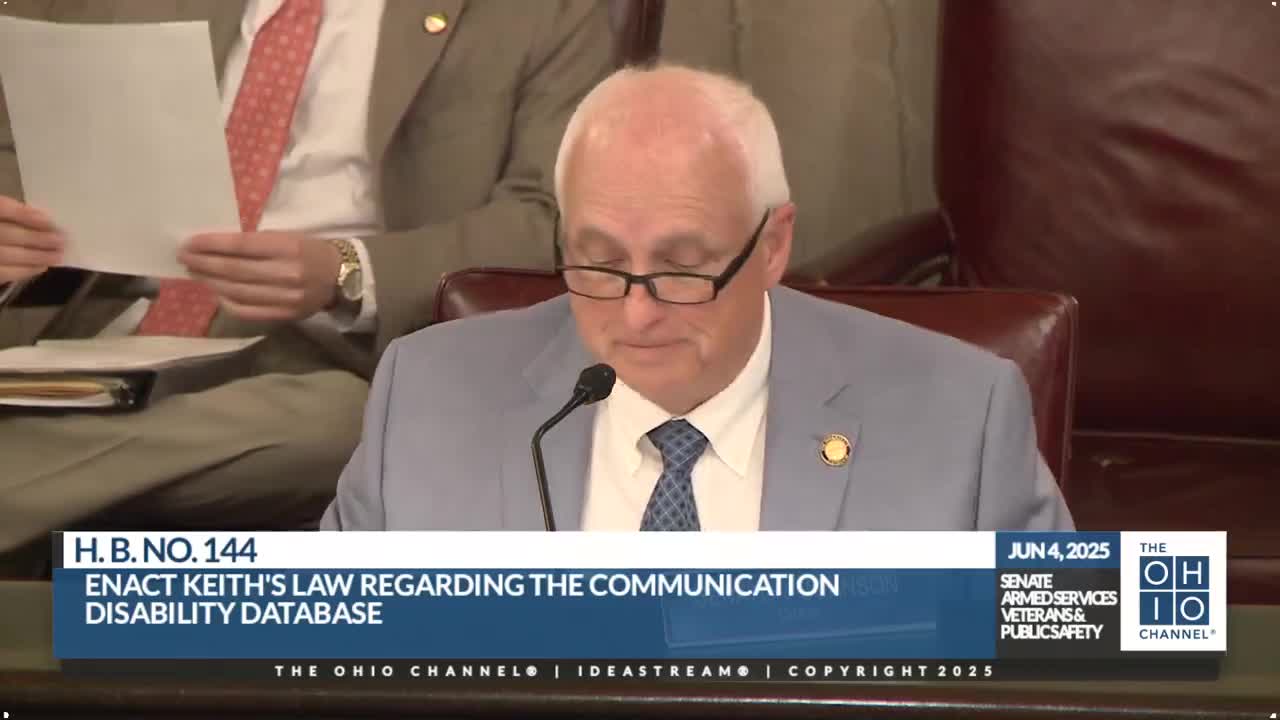
Sponsors urge statewide voluntary special-needs registry for first responders in House Bill 144
Summary
House Bill 144 would create a voluntary statewide registry to allow 911 dispatchers and first responders to know when an individual has a disability that may affect how responders interact with them.
House Bill 144 would authorize a voluntary statewide registry—developed by the Department of Public Safety with input from disability advocates—so that local 911 dispatchers and first responders could be informed when a person with a disability requires different handling during a traffic stop, wellness check or emergency response.
"It's all voluntary, and it will be set up through DPS, working with Ohioans with disabilities and others to create this statewide database," Representative Klick said in sponsor testimony. Klick and co-sponsor Representative Lorenz described personal experiences and constituent stories in committee testimony, saying the registry could prevent misinterpretation of disability-related behavior as intoxication or noncompliance.
Representatives described local examples such as Sandusky County and Delaware County, where county or municipal registries already exist, and they said the bill would make that functionality available statewide so that an officer or dispatcher encountering a person outside their home county could see relevant information. Lorenz cited the case of a teenage driver with cerebral palsy in Idaho as an example of how missing contextual information can lead to deadly outcomes in high-stress encounters.
When senators asked about costs, sponsors said the Legislative Service Commission (LSC) had reviewed the idea and reported the fiscal impact would be de minimis because existing personnel would be used. Senators also asked whether the bill’s scope covered a broad range of disabilities; sponsors said it was intentionally broad and would allow a licensed clinician to attest to a qualifying condition for inclusion. Witnesses and senators emphasized that the registry is voluntary and that the bill includes outreach and training to accompany implementation so first responders understand how to use the information.
No committee vote was taken during the session; sponsors requested the committee consider the bill and offered to work with agencies and stakeholders on any technical amendments.
Background: sponsors said the measure would permit local training schools and would not impose mandatory new costs on individuals; they characterized it as a public-safety measure intended to reduce tragic misunderstandings and improve outcomes for both responders and people with disabilities.
Next steps: sponsors invited the committee to refer the bill for further consideration and to vet any last-minute amendments with implementing agencies before a final vote.