Get Full Government Meeting Transcripts, Videos, & Alerts Forever!
Get email alerts on the Film Tax Credit topic
No spam. Unsubscribe anytime.
Ohio University dean urges $75 million statewide motion-picture tax credit with no sunset to grow local industry and retain graduates
Summary
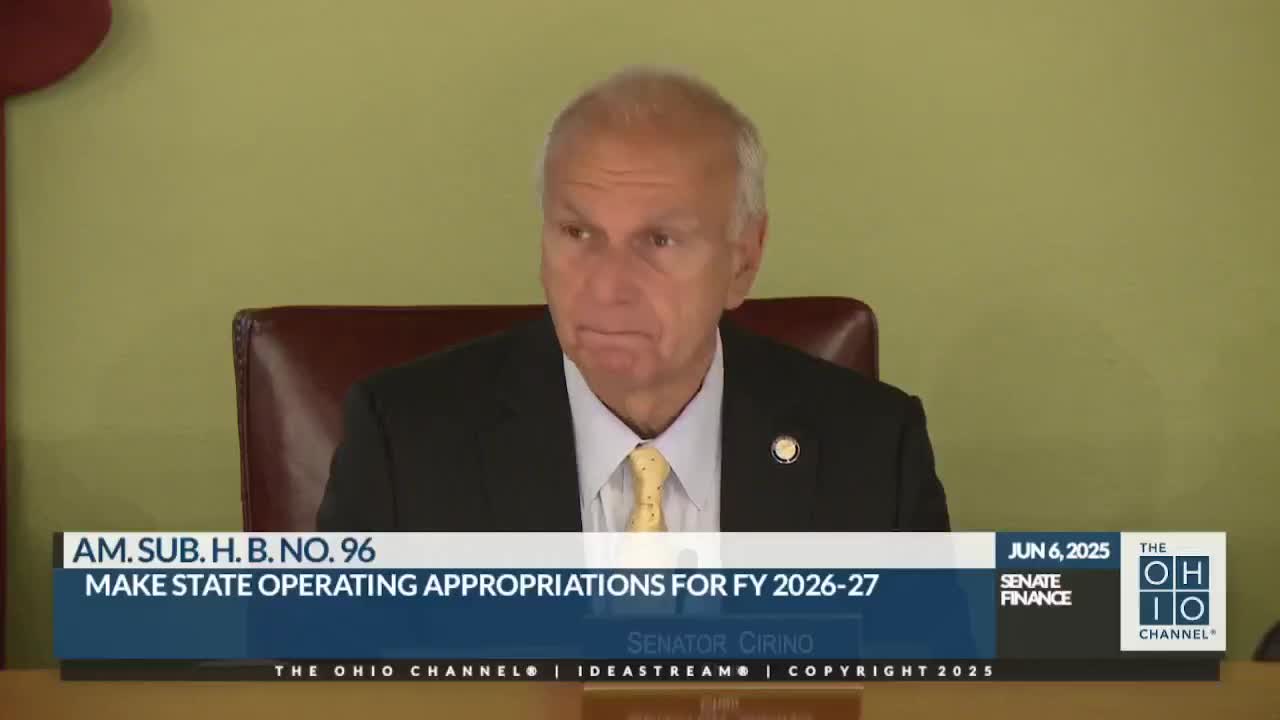
Scott Titsworth, dean of the Scripps College of Communication at Ohio University, urged senators to set the state's motion picture and entertainment tax credit at $75 million with no sunset, arguing the change would signal durable support to attract studios and keep graduates in Ohio.
Scott Titsworth, dean of the Scripps College of Communication at Ohio University, told the Senate Finance Committee he supports increasing Ohio's motion-picture and entertainment tax credit to $75 million per year with no sunset and expanding eligible production definitions and workforce-development components in section 122.85 of HB 96.
"Higher tax credit could unlock that," Titsworth said, describing Georgia's experience where an unlimited cap on entertainment credits helped develop large studio infrastructure and industry growth. He said Ohio could attract productions by signaling durable support and by pairing incentives with workforce development so graduates can find employment in-state.
Titsworth framed the proposal as both an economic-development and workforce issue: the Scripps College prepares roughly 200 students annually in motion-picture-related fields and he said many alumni relocate to Los Angeles to find work. He told senators the tax-credit change would be an important signal to studios and post-production firms that Ohio is committed to long-term industry growth.
Committee members asked about Georgia's studio development, the effect of artificial intelligence on the industry, and the lack of large-scale studio investment in Ohio despite 16 years of incentives. Titsworth said sustained, uncapped or long-term incentives help industry-scale infrastructure investment, while acknowledging that AI will alter some workflows but will not replace major production demands for human talent.
Ending: Titsworth urged the committee to adopt the higher, non-sunset credit to promote infrastructure and workforce development and to create more local career opportunities for Ohio graduates.