Get Full Government Meeting Transcripts, Videos, & Alerts Forever!
Get email alerts on the Developmental Disabilities Funding topic
No spam. Unsubscribe anytime.
County developmental-disabilities boards urge repeal of new budget-commission authority they say risks local levies
Summary
The Ohio Association of County Boards of Developmental Disabilities asked senators to remove language that would give county budget commissions new authority to reduce voter-approved millage, saying the change could jeopardize set-aside reserves used to fund long-term services for people with developmental disabilities.
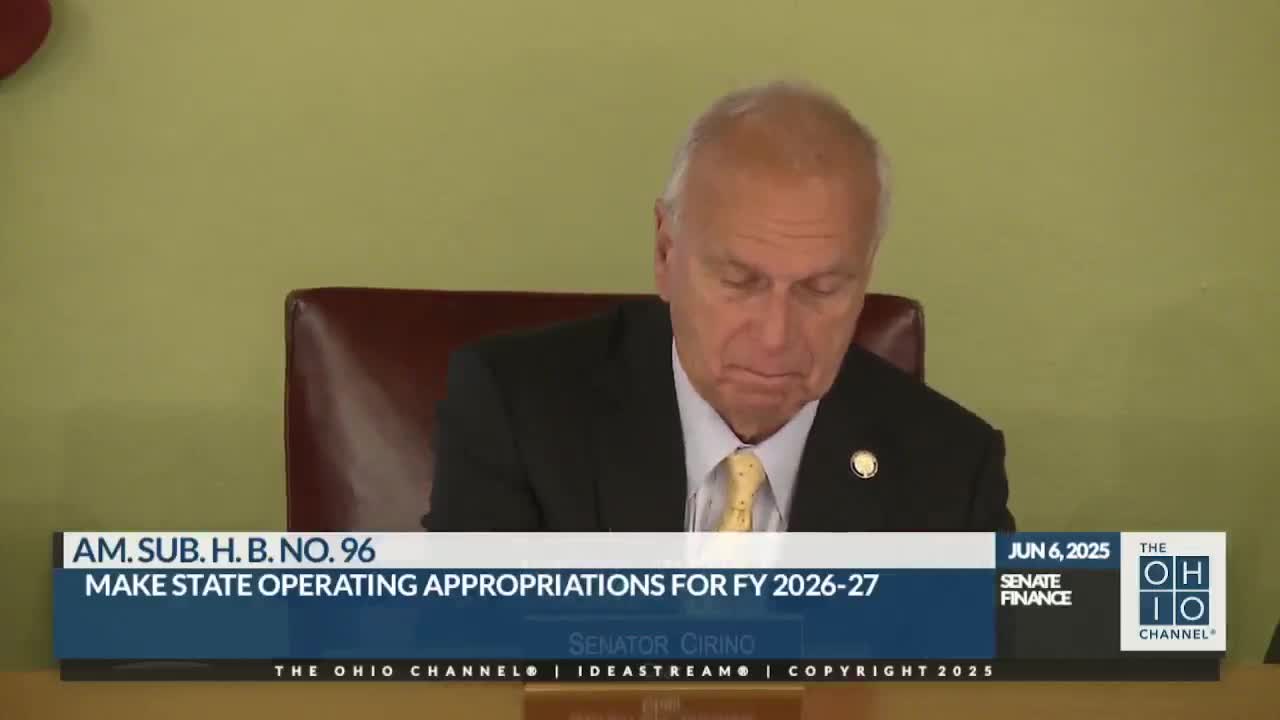
The Ohio Association of County Boards of Developmental Disabilities told the Senate Finance Committee the budget bill contains language that would allow county budget commissions to reduce voter-approved millage levies in a way that threatens long-term funding stability for people with developmental disabilities.
"This provision is overly vague," testified Adam Herman on behalf of the association, explaining the bill’s language would permit county budget commissions to reduce millage "if the commission finds it reasonably necessary or prudent to avoid unnecessary, excessive, or unneeded property tax collections." The association said that would remove a prior protection preventing commissions from considering DD board reserve accounts when setting acceptable resource levels.
Why it matters: County boards said the reserves are statutorily required set-asides that protect lifetime supports for individuals with developmental disabilities. They said county boards use local property taxes to fund roughly half of the state's Medicaid match for those services and that an arbitrary reduction authority could either jeopardize essential supports or force the state to cover lost local match commitments.
The association asked senators to adopt amendment SC 2924 to remove the language or, as a compromise, to accept an exemption amendment that would protect entities required by statute to fund part of the state's federal Medicaid match.
Discussion vs. decisions: Senators questioned how many local entities and how much revenue was at stake; witnesses provided numbers showing the county boards historically fund a substantial portion of the local Medicaid match (the testimony cited a $567 million figure for an earlier fiscal year). No change was made on the floor during the hearing.
Ending: Advocates asked the Senate to either remove the provision or carve out explicit statutory protections to prevent unintentional erosion of long-term service funding for people with developmental disabilities during budget negotiations.