Get Full Government Meeting Transcripts, Videos, & Alerts Forever!
Get email alerts on the Long Term Care Reimbursement topic
No spam. Unsubscribe anytime.
Nursing home groups urge statutory fix to PDPM conversion to avoid steep reimbursement cuts
Summary
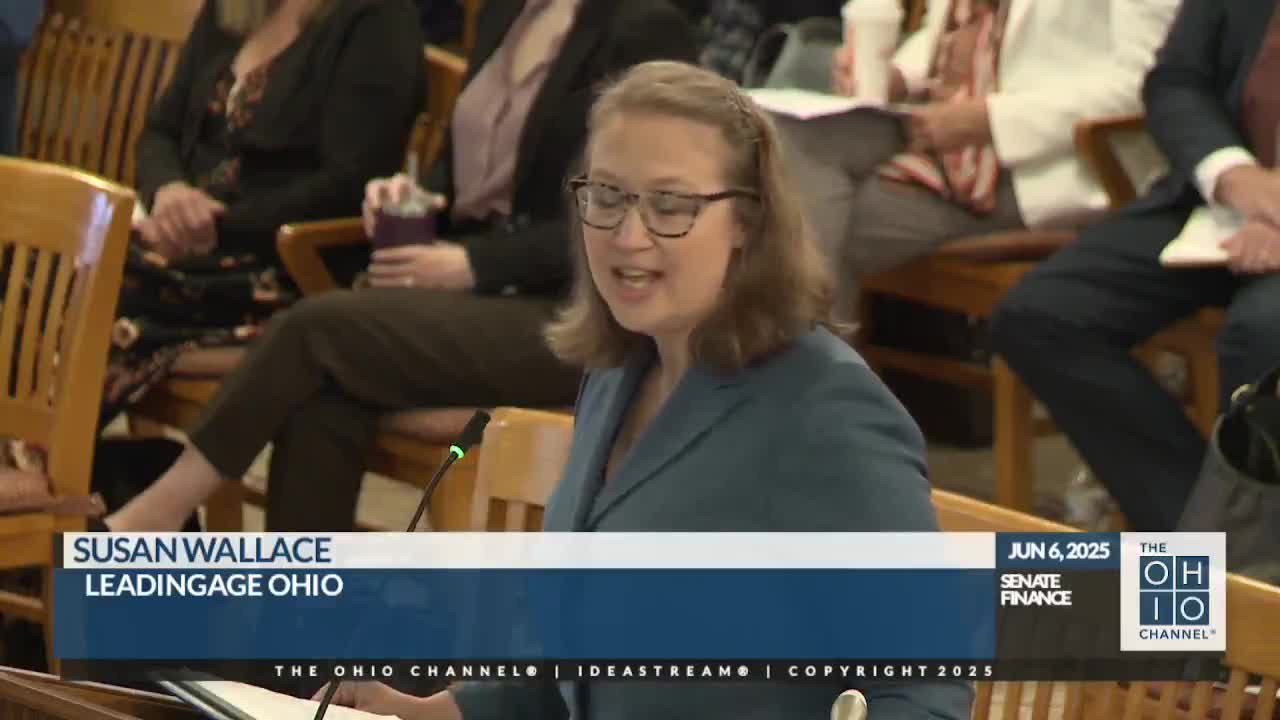
LeadingAge Ohio and other nursing facility advocates told the Senate Finance Committee that a technical omission tied to the shift from RUGs to PDPM could cut nursing facility reimbursements statewide unless the legislature enacts a conversion adjustment now.
LeadingAge Ohio told the Ohio Senate Finance Committee that a technical change tied to the federal move from RUGs to PDPM will produce a de facto cut to nursing facility reimbursements unless the legislature enacts a statutory conversion factor.
The change arises as Ohio updates the case-mix measurement used to set Medicaid nursing home payments. Susan Wallace, president of LeadingAge Ohio, said the average statewide case-mix score under RUGs is about 3, while the average under PDPM would be about 1.4 — a difference that, without a conversion multiplier, would reduce reimbursement levels for many providers.
Wallace urged senators to adopt an omnibus amendment (technical-fix amendment cited in testimony as 2858) that would let the Department of Medicaid apply a conversion or multiplier to translate PDPM scores into funding comparable to prior RUGs-based rates. "It would be about $70 on average, across the state, to nursing homes," she said, describing the effect as an immediate, effective cut. She and other witnesses said the omission looks unintentional and that leaving it unresolved could produce "hundreds of millions of dollars" of change in nursing facility payments.
LeadingAge Ohio described other policy options it previously advanced — a blended rate (for example, 70% nursing, 20% speech/language, 10% ancillary), and stop‑loss/stop‑gain protections to smooth transitions — but said those were not included in the current budget drafts and that this single technical fix should be prioritized to "prevent harm." Wallace told senators the Department of Medicaid currently must follow language in the Ohio Revised Code for nursing facility reimbursement, which limits agencies' flexibility to correct the omission administratively.
Senators pressed for detail about how the conversion factor would be set and whether it could be reassessed in future rate settings. Wallace said the amendment would allow the department to develop the conversion based on its data, and that the factor could be reassessed with subsequent rate-setting cycles as providers and coders adapt to PDPM.
Why it matters: nursing facility reimbursements are both a major component of Medicaid spending and the primary revenue for many long‑term care providers. Committee testimony described the change as a technical but potentially large fiscal shift; advocates asked the legislature to act now so providers are not forced into sudden revenue losses.
Questions remain about the exact multiplier and whether administrative rulemaking could address the change instead of statute; LeadingAge Ohio said it was unclear whether the administration has the legal authority to do so under current code language.
Ending: Witnesses asked the committee to adopt the technical statutory amendment and noted other transition proposals remain available for later consideration if lawmakers want additional smoothing protections.