Get Full Government Meeting Transcripts, Videos, & Alerts Forever!
Get email alerts on the Childcare Workforce Policy topic
No spam. Unsubscribe anytime.
Child‑care providers push peer‑review and free‑care pilot for workers in budget hearings
Summary
Multiple child‑care operators and CEO Project representatives urged senators to include a peer‑review appeal process and Senate Bill 177 (free childcare for child‑care workers) in the budget to stabilize the workforce and reduce closures.
Child‑care owners and advocates urged the Senate Finance Committee to add two workforce‑focused proposals into the operating budget: (1) restoration of a peer‑review appeal process for licensing decisions and (2) adoption of Senate Bill 177, which would provide free child care for child‑care workers in exchange for work.
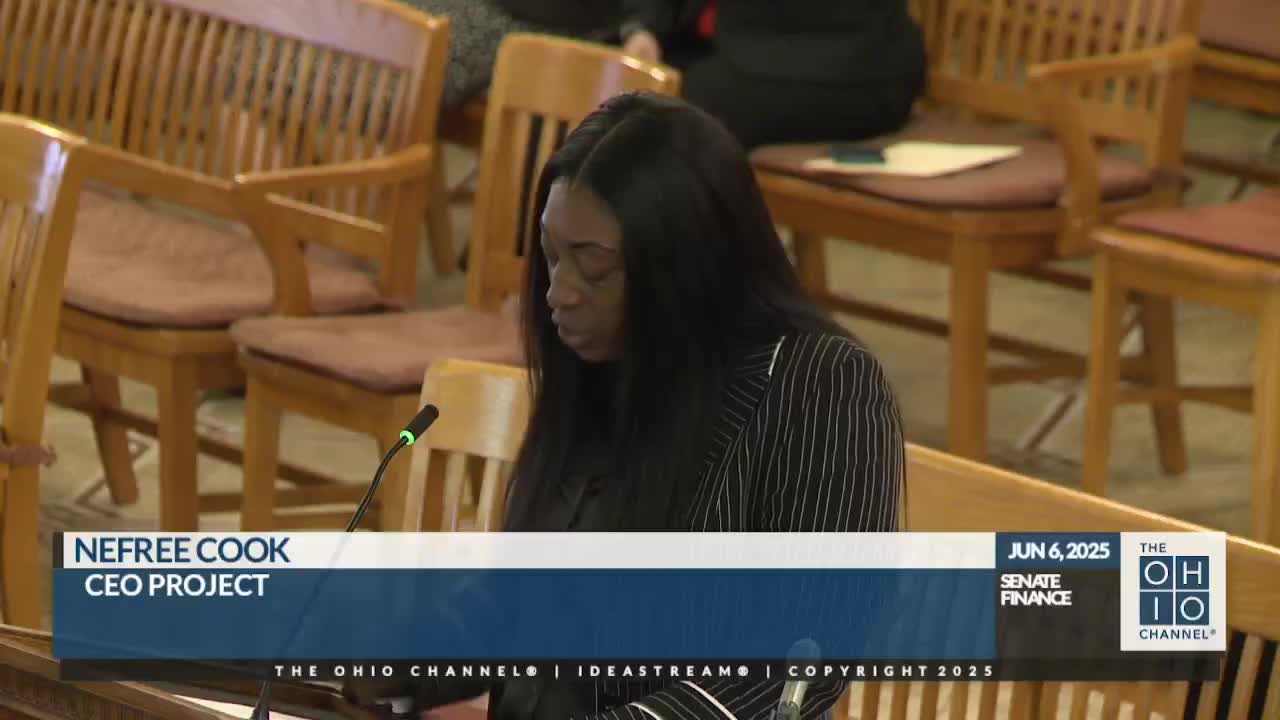
Multiple witnesses — including Nafree Cook (CEO Project), Sandra Phillips (Pitter Patter Learning Center), and Tashianna Quachie (owner of multiple centers) — described low pay and the high cost of care for staff as drivers of workforce shortages. "Currently, in my Columbus program, 80% of our child‑care employees are in need of child care," Quachie told senators. Cook urged reinstating a peer‑review appeal mechanism so centers can challenge licensing actions they consider arbitrary; Cook said the process would not cost the state but would reduce unplanned closures.
Sponsor‑backed Senate Bill 177 would allow child‑care employees to receive free slots for their own children in exchange for their work, the witnesses said, creating a retention tool and opening additional slots for other families. Phillips called the proposal a "game changer" for recruitment and retention. Witnesses said combining the workforce subsidy with procedural protections for providers would keep programs open, increase classroom staffing, and expand access for families in communities with provider shortages.
Committee members asked for details on cost and implementation mechanics. Witnesses said the employer‑funding exchange is structured so the state covers the worker’s child care slot while the employee still receives wages; the state would collect payroll tax revenue on wages. Witnesses also asked the committee to preserve language related to peer review in the budget that had been removed from the Senate draft.
No formal vote was taken. Senators requested more information on fiscal impacts and program design before considering incorporation into the omnibus budget.