
Plymouth planning board makes Tenney Mountain overlay its top priority, seeks detailed review of last-minute edits
Get AI-powered insights, summaries, and transcripts
Subscribe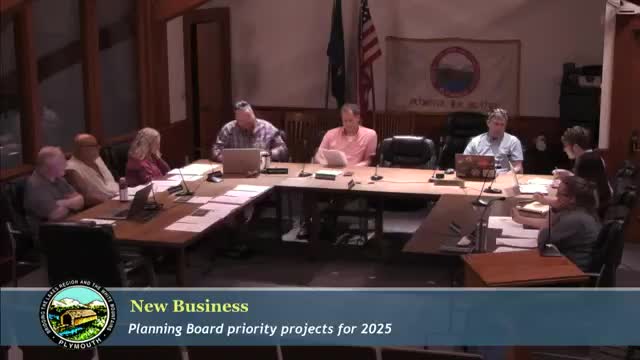
Summary
The Planning Board made the Tenney Mountain Overlay District its top priority after renewed discussion about last-minute edits that broadened housing allowances and adjusted height limits; staff will prepare a compare-and-contrast of the original and revised drafts for the next work session.
The Plymouth Planning Board on Thursday elevated the proposed Tenney Mountain Overlay District to the top of its planning priorities while directing staff to prepare a focused analysis of changes made between earlier and later drafts.
Board members said the overlay addresses how large properties around Tenney Mountain could be developed and gives the board more control than a subdivision-only approach. Members also raised concerns about two substantive changes made late in the drafting process: limited housing allowances beyond the village core and a change tied to building heights.
The board emphasized why the overlay is being considered: allowing a planned-unit development (PUD) within an overlay would let the board shape site design, open-space preservation and visual impacts rather than cede development to subdivision rules that offer less board oversight. Board members said the overlay includes requirements tied to conservation and open‑space preservation for PUDs and that those provisions are intended to respond to public concerns about viewshed and mountain-top development.
Discussion focused on several practical questions the board asked staff to research and present at the next work session: a highlight of the exact edits made between the two versions, the practical effects of allowing limited housing outside the village core compared with the original village‑core‑only approach, and any technical differences in the height limits between drafts. Board members asked staff to model how the revised language would change the district’s outcomes.
Developers’ financing incentives and economic drivers drew attention in the discussion. Several members described how large research or biotech facilities — identified as permitted uses in the overlay — can make a large PUD financially viable. One board member explained the role of Opportunity Zones and investor funds that can defer capital gains taxes to incentivize investment in designated areas, noting that such financing often requires job‑creating commercial uses alongside housing.
The board also debated scale and permitted commercial uses in the overlay. Members asked whether very large facilities (the draft lists manufacturing/laboratory uses and referenced a 200,000‑square‑foot threshold in conversation) are realistic and whether the overlay should include clearer limits on building size and siting. Some members said the overlay’s PUD requirements — open‑space preservation and building siting on buildable land — mitigate visual and environmental impacts.
Action and next steps: board members agreed by consensus to make the Tenney Mountain Overlay District the top priority for the year and scheduled a work session to review a compare‑and‑contrast memo of the pre‑ and post‑revision drafts. Staff was directed to prepare a short brief about the likely regulatory and design implications of the changes and to flag any outstanding public comments and developer requests that were not incorporated.
The discussion did not adopt the overlay as final zoning language; it was a prioritization and instruction to staff for follow‑up work. The board indicated it intends to return to the overlay in a future work session and to bring the proposal to voters only after the board has resolved outstanding edits and public concerns.