
Council defers vote on expanding mayor’s access to fiscal-stability fund amid oversight concerns
Get AI-powered insights, summaries, and transcripts
Subscribe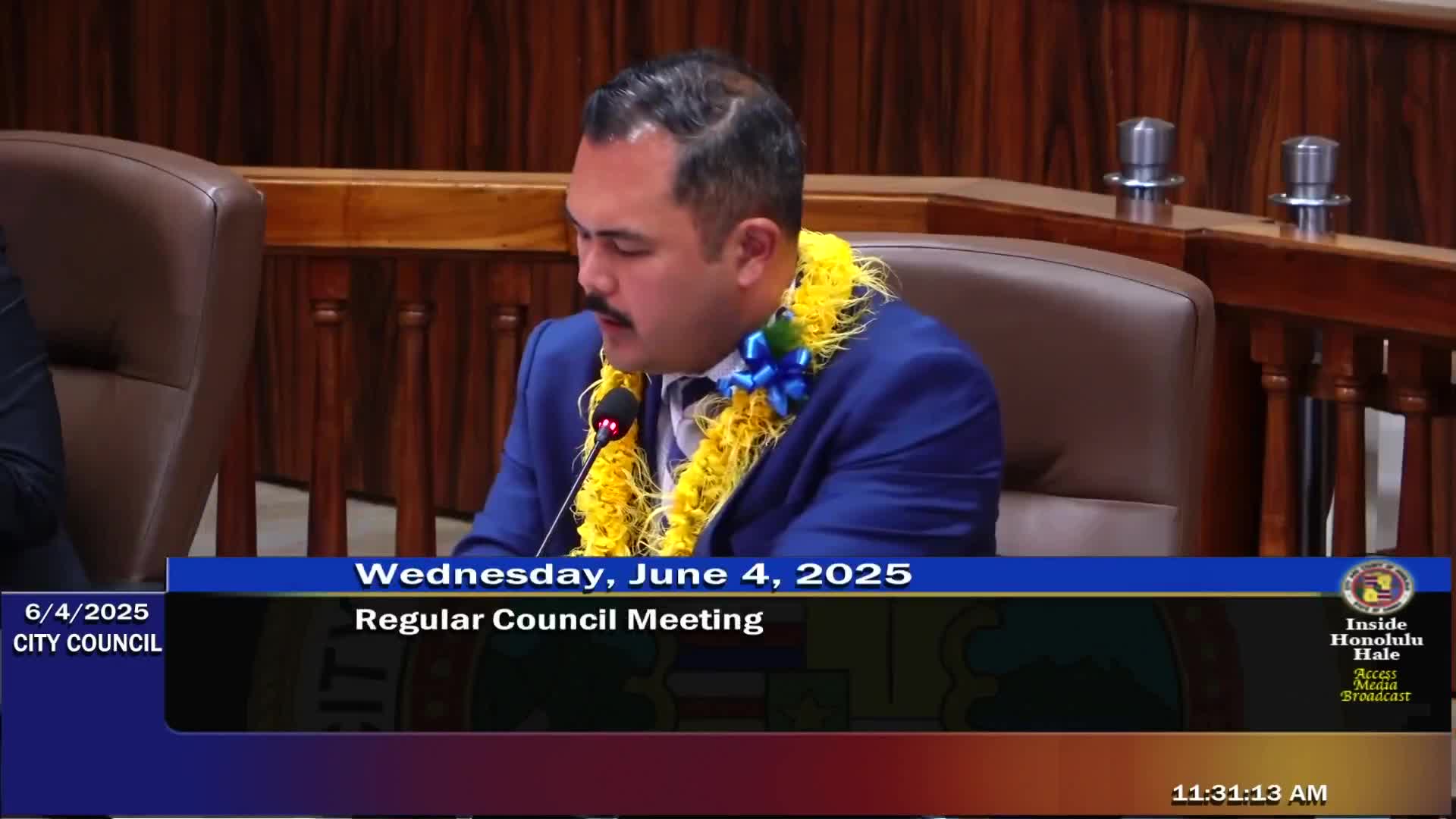
Summary
The Honolulu City Council deferred consideration of Bill 36, a proposal to expand when the mayor may use the city’s fiscal‑stability (rainy‑day) fund if federal funding is cut, after heated debate over oversight, reporting and credit‑rating risks.
The Honolulu City Council debated a proposal (Bill 36) that would broaden circumstances allowing the mayor to use the city’s fiscal stability fund — commonly called the rainy‑day fund — if significant federal funding were reduced or lost. After lengthy discussion about oversight, reporting and the consequences of tapping the fund, the council deferred the measure to the end of the calendar for additional drafting and review.
Councilmember Weier, the bill’s introducer of the committee amendment, said the change was intended to create a mechanism that would allow the city to react quickly if federal funds were cut, rather than reopening the entire budget at a pace that could delay critical expenditures. “The purpose was to provide a criteria where we wouldn’t have to reopen the budget if funds are needed,” Weier said.
Budget Director Andy Kawano testified about the practical and credit implications of using the stability fund. He said the fund had not been accessed historically and played a role in maintaining Honolulu’s credit rating. “The rainy day fund has never been accessed... The rating agencies look at our commitment to build that fund up and reallocate interest from our investment pool to the fund,” Kawano said, and added that reopening budgets and supplemental processes “will take time” in an emergency.
Other council members expressed concern about executive discretion without timely council oversight. Councilmember dos Santos Tam said the mayor could theoretically tap the fund and spend on purposes the administration deemed necessary if the bill passed. He urged tighter reporting requirements and quarterly reports from Budget and Fiscal Services (BFS) identifying savings and transfers the administration considered before using the fund.
Councilmember Tupelo and others pushed for built-in guardrails. Tupelo explained that she had proposed amendments in committee to create stronger oversight but that corporation counsel advised that some forms of council oversight might be legally problematic. The floor debate included an FD1 amendment that incorporated corporation counsel language (including reporting and notice requirements), and an outline of required deliverables was read into the record: for expenditures above certain thresholds, the mayor must file notices with the city clerk and submit detailed expenditure reports including line‑item budgets, anticipated impact and measurable outcomes; for aggregated expenditures above $500,000 an aggregate resolution by council would be required to continue beyond an initial 90‑day period.
After a prolonged exchange and procedural motions, Councilmember Tupelo moved to defer the bill to the end of the calendar so members could resolve remaining language and obtain firm corp‑counsel drafts. The chair placed the bill at the back of the calendar for further work.
The debate highlighted three central tensions: the desire for rapid executive action in the face of sudden federal funding cuts, the council’s need for oversight and transparency of emergency spending, and protection of the city’s long‑term credit rating by avoiding unnecessary draws on the fiscal stability fund. The council directed staff and counsel to return with refined language and reporting requirements before the measure is reintroduced for a vote.