Get Full Government Meeting Transcripts, Videos, & Alerts Forever!
Get email alerts on the Mps Budget Fy26 topic
No spam. Unsubscribe anytime.
MPS proposes $1.5 billion FY26 budget with targeted investments and warns of a large structural deficit
Summary
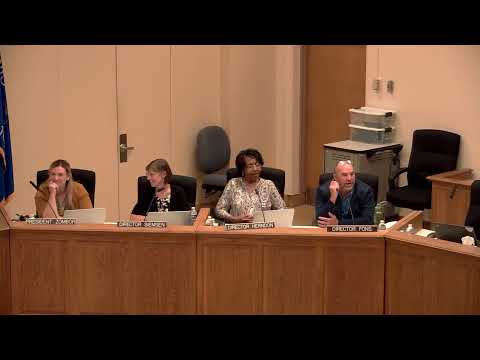
Dr. Brenda Cassellius, superintendent of Milwaukee Public Schools, presented the district's FY26 proposed budget at an informational committee hearing, saying the plan centers students while acknowledging a looming shortfall.
Dr. Brenda Cassellius, superintendent of Milwaukee Public Schools, presented the district's FY26 proposed budget at an informational committee hearing, saying the plan centers students while acknowledging a looming shortfall. "I am very proud of this budget," Cassellius said, adding that the plan seeks to "fill vacancies within our schools" and prioritize English-learner and special education services.
The administration's proposed revenue-and-expenditure plan covers roughly $1,500,000,000 in combined funds and supports more than 9,500 educators and staff serving nearly 66,000 students. Budget director Nick Synram told the committee the document shows revenues across multiple funds — operations, nutrition, grants and the Long Term Capital Improvement Trust — and that the district's largest source is the school operations fund.
Why it matters: Cassellius and Synram said the district faces structural pressure from declining enrollment, rigid state funding formulas and inflation. The superintendent warned the board is likely facing a $75 million to $110 million deficit in the next fiscal year if additional revenue is not secured. In that context, the administration framed the FY26 proposal as a set of targeted, short-run investments intended to stabilize operations and support student outcomes while longer-term corrective actions are developed.
Key investments and numbers: The proposal includes a roughly $16,000,000 allocation from the Long Term Capital Improvement Trust for lead abatement and facility work; creation of eight "academic superintendent" positions (about $2,500,000) and four managers of operations to support principals; a $13,000,000 increase to pass-through funding for private schools tied to the Special Needs Scholarship Program; 10 additional ESL/English-learner classroom teachers (the administration cited an approximate $1,200,000 cost); funding for 16 new special-education classroom seats; a $3,250,000 inflation adjustment for transportation contracts; $3,500,000 for the common school fund (library materials); $2,800,000 for school operations (including 20 additional building service helpers); a $2,000,000 investment in a "safe schools hub" and $2,000,000 for occupational therapy and other special-education practitioner salaries; $775,000 to implement a state law requiring school resource officers; $650,000 to improve salad bars in high schools; $400,000 for a surge remote-learning program; and a $350,000 increase for finance-office positions to support corrective action work.
Vacancies and staffing: Cassellius said the district currently has about 143 classroom positions open and 134 paraprofessional vacancies; she also said 62 of the classroom vacancies are in special education. In committee discussion a later speaker read the proposed budget's line-item summary noting "approximately 391 school vacancies, including 43 classroom teaching positions," and 62 special-education vacancies, demonstrating differing vacancy tallies in the materials and remarks. Nick Synram said the Excel line-item budget posted online contains the detailed counts and that staff can provide a school-by-school grant and vacancy breakdown on request.
Operational context and follow-up: Synram and the superintendent stressed that FY26 is intended as a transitional budget with a shorter runway for public engagement this year; the administration plans a longer public process for FY27 beginning in October. The proposed adoption schedule: public hearings June 2 and June 12, an additional public hearing June 17 (public testimony only), and board consideration on June 24. The superintendent said the administration will continue to study options to increase revenue, reduce costs, and change how vacancy savings are anticipated in the budget.
Administration comments on other issues: Cassellius said the district will continue community-school work and is coordinating with United Way to transition leadership so core community-school services remain in place despite some partner funding losses. She also confirmed menstrual product dispensers and supplies are included in the FY26 proposal as an equity and student-support measure. On food services, the superintendent said the district plans to expand salad bar access and explore more scratch-cooked and farm-to-school options.
Public involvement and next steps: The committee treated the budget presentation as informational; no vote was taken at the hearing. The administration invited public comment and provided an email inbox (budget25@milwaukee.k12.wi.us) for written submissions. Synram said staff can produce more user-friendly breakdowns of federal grants by school site and other line-item details if the board or public requests them.
Ending: The superintendent emphasized the need to balance short-term investments with longer-term fiscal stability, saying the district must "put the dollars where they are needed the most to ensure the academic success [and] wellness of our students" while planning for corrective actions to close the projected gap.