Get Full Government Meeting Transcripts, Videos, & Alerts Forever!
Get email alerts on the Public Safety topic
No spam. Unsubscribe anytime.
Malibu fire officials back on‑site water tanks to meet fire‑flow requirements for rebuilds
Summary
Los Angeles County fire staff told the Malibu City Council they will accept on‑site water tanks as a solution to meet minimum fire flows for post‑fire rebuilds in areas lacking adequate municipal supply; the council asked staff to return with formal parameters.
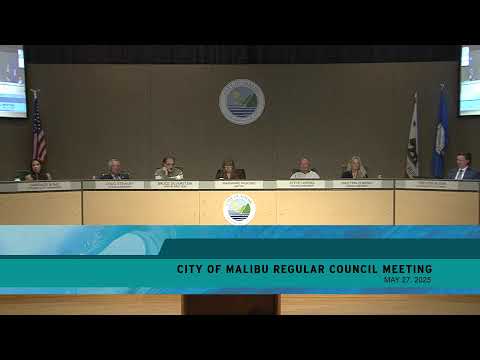
Los Angeles County fire officials told the Malibu City Council on May 27 that on‑site water tanks will be accepted as a way for homeowners to meet required fire flows when municipal supply is inadequate, a move that could speed rebuilding for properties damaged in recent wildfires.
“We are absolutely supportive of the use of water tanks where necessary for people to meet the minimum fire flows,” Deputy Fire Chief Nick DiVale said during the council meeting, outlining three commonly sized options staff will use for guidance: approximately 7,500, 10,000 and 12,500 gallon tanks.
The council heard that tanks can be engineered, signed and plumbed so the fire department can draft water in an emergency and that the department will provide specifications and procedures for applicants. The chief said tanks should include monitoring or alarms and be marked with signage that identifies a draft hydrant and the available volume, so responding units know what water is available.
City and county staff also discussed draft hydrants tied to private pools as a potential supplemental source. DiVale said the fire department is willing to provide technical details for pools that property owners wish to make available as draft sources, but cautioned that the department still needs to identify monitoring, maintenance and reliability protocols before adopting pools as an equivalent substitute for purpose‑built tanks.
City staff said the initial implementation will focus on fire‑rebuilds in the Palisades area, where many properties lost supply or require alternative measures, and that the council asked staff to return with a formal agenda item that spells out scope, eligibility and any limits — for example whether the policy should apply only to properties rebuilding after a declared disaster rather than to all new construction.
Public speakers and several council members urged the city to expand the approach to other fire‑affected neighborhoods, including Woolsey victims, and to make the guidance clear and easy to use so homeowners are not forced into expensive and lengthy design studies. Deputy Chief DiVale said the department will work with City staff, water districts and applicants to produce a clear, site‑specific list of requirements and a process for approval.
What this means: For owners rebuilding homes lost to a wildfire who cannot meet minimum flow from the local system, properly sized and installed on‑site tanks will be an accepted compliance path for fire flow — removing a potentially significant obstacle in many rebuild projects. Staff indicated the policy and technical guidance will be returned to council for formal direction and that some approvals may require coordination with Los Angeles County agencies.
Ending: Councilmembers asked staff to return quickly with a written proposal that defines where tanks will be allowed, minimum technical standards, inspection/monitoring requirements and whether the policy applies only to disaster rebuilds or to all development in low‑flow areas.