
Scott County officials weigh ordinance to allow street-legal utility vehicles on county roads
Get AI-powered insights, summaries, and transcripts
Subscribe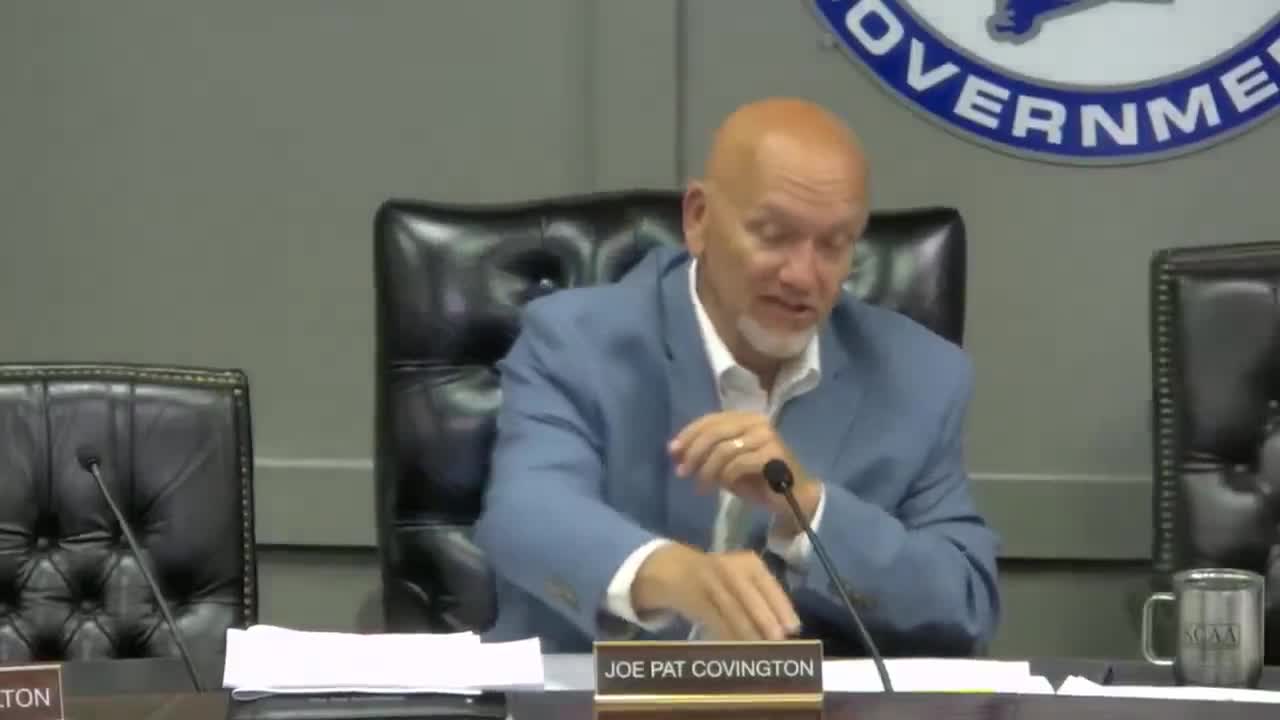
Summary
Scott County Judge Crickett told the court on Friday that the meeting would include a presentation on “SLSPVs.” “In case you don't know what that acronym means, it's street legal special purpose vehicles,” he said, and asked county staff to explain the law’s options for the county.
Scott County Judge Crickett told the court on Friday that the meeting would include a presentation on “SLSPVs.” “In case you don't know what that acronym means, it's street legal special purpose vehicles,” he said, and asked county staff to explain the law’s options for the county.
Why it matters: Kentucky’s new law allows counties to adopt ordinances that permit certain off-road vehicles to be made street legal and used on county highways. Scott County faces a near-term timeline: state rules were discussed as being effective June 27 and staff recommended the court prepare a local ordinance draft and wait for Kentucky Transportation Cabinet guidance before finalizing rules.
County staff summarized the state framework and local options. A staff member identified three choices: take no action (which would bar SLSPVs in Scott County), adopt a countywide ordinance permitting them, or adopt a limited ordinance permitting SLSPVs only on enumerated roads. The presenter noted some state-set parameters discussed in the packet and said the statute calls out a 20-mile limit for travel "at a given time on the county highway" and specific equipment and safety requirements such as headlights, brakes, mirrors, seat belts and insurance.
Local law-enforcement and business perspectives were also heard. Sheriff Nettles was invited because his office would handle inspections and enforcement; he told the court the sheriff’s office could certify authorized inspectors but enforcement and inspection capacity must be considered. Mark Smith, owner of MLS Powersports, urged the court to permit an ordinance and explained the local economic context, saying MLS has grown into a regional destination and that dealers commonly outfit machines to meet other states’ on-road rules. "We're completely Scott County grown and built business," Smith said. "We sell our machines into 44 states at this point."
Magistrates raised practical questions about enforcement and equipment standards. They asked how the county would handle vehicle inspections, whether licensed dealerships could be certified as inspectors and whether local registration fees would cover inspection workload. The group discussed the difference between this law and existing low-speed vehicle (LSV) and golf-cart rules, with staff and stakeholders clarifying that LSVs and golf carts are governed under separate statutory categories.
The court also discussed geographic limits. Magistrates emphasized the need to exclude city streets and private roads and to coordinate with the county’s three cities. Several magistrates said language should make clear city-incorporated streets and private subdivision roads are excluded unless the city/HOA opts in. As one magistrate said, "We gotta exclude private bridal streets. Let that...and incorporated city streets." (phrase as spoken)
Next steps and scheduling. The court directed staff to draft a model ordinance and share it with the sheriff, dealers and other stakeholders, then to return to the fiscal court for discussion at a rescheduled July work session. The court moved its July work session to July 3 to allow time for the Transportation Cabinet to issue implementation guidance and for staff to circulate a draft. County staff also said the clerk’s office could give registrants a notice that operating a plated SLSPV in Scott County may not be legal until the court adopts an ordinance.
No final ordinance vote was taken at the meeting. Instead, the court set an action plan: staff will draft language, consult with the sheriff and stakeholders, and present a recommended ordinance after the Transportation Cabinet issues its guidance.
What’s unresolved: the court did not adopt specific road-by-road limits, a speed-limit threshold for allowed roads, or a final inspection fee schedule. Staff noted the Transportation Cabinet could modify technical specifications when it issues guidance. Sheriff capacity, insurance tracking, and exact fee levels were left for follow-up.
Community and administrative context: Magistrates said they want to avoid confusing the public when state registration starts; one magistrate urged the clerk to provide a handout to new registrants explaining Scott County is still considering an ordinance. Staff also flagged a public webinar hosted by the Kentucky County Clerks Association on July 9 featuring the bill sponsor as a resource for drafting decisions.
Ending note: The court instructed staff to produce a draft ordinance for review at the July 3 work session and to return with clarifying materials from the Transportation Cabinet and the county clerk’s office so magistrates can consider a formal first reading later in July.