Get Full Government Meeting Transcripts, Videos, & Alerts Forever!
Get email alerts on the Local Agriculture topic
No spam. Unsubscribe anytime.
Homesteaders propose county farm-stand hub at McKay Spring; organizers ask for county permission, no county funding
Summary
Founders of Homesteaders of Warren County asked supervisors to allow the county to make the McKay Spring property available as a centralized, county-approved hub where local homesteads could reserve plots for temporary farm stands. Organizers said no county funds are requested and vendors would sign waivers and follow Virginia cottage food laws.
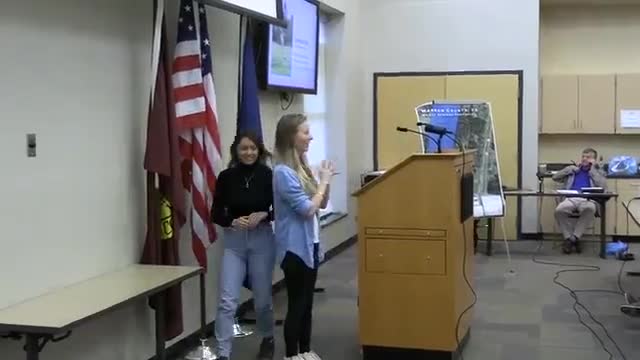
Amber Martin, founder of Homesteaders of Warren County, asked the Warren County Board of Supervisors to allow use of county-owned McKay Spring property as a centralized farm-stand hub for local homesteads and small-scale producers.
Martin told the board the project would require no county financial investment; participants would provide their own temporary stands, sign liability waivers and comply with Virginia cottage food laws. She said the proposed site, at the intersection of Route 522 and Reliance Road, offers high visibility, existing driveway access and flat fields suited for several stands with minimal site work.
"We have a need. Warren County is home to a growing number of small-scale family homesteads," Martin said. "The development of a county approved site for homesteaders and small-scale producers can reserve individual land plots to place farm stands to sell their farm goods." Martin added the hub could support agritourism, provide low-cost market access for new producers and create educational opportunities with local schools, FFA and 4‑H programs.
Board members asked operational and land‑use questions. Supervisor Klein (identified during the meeting) said he supports the idea but raised zoning and infrastructure concerns, noting industrially zoned property can require paved parking and other site improvements. "I fully support you. I love the idea… but is that agriculture zone or industrial?" Klein asked; the board’s discussion indicated McKay Spring is commercially/industrially zoned and would need to comply with applicable ordinances.
Martin and co‑founder Sarah said organizers would work with Parks and Recreation and county staff to develop rules for scheduling, hours (e.g., dawn-to-dusk or set market hours), liability waivers and an administrative contact the county would authorize to manage reservations. They reiterated that the proposers did not seek county funding and intended the model to be a low-overhead space that homesteaders manage themselves.
Why it matters: proponents said the hub would make local farm goods more accessible to county residents, encourage small-business growth and provide a venue for hands-on agricultural education. Supervisors asked about liability, parking, historic‑site considerations and zoning compliance; staff said the county would need a designated entity or agreement for use of county property and that site-specific ordinance and historic‑preservation requirements would have to be addressed.
Next steps and board reaction Board members expressed general support for the concept and asked staff to work with the proposers and Parks and Recreation to evaluate site suitability and regulatory requirements. No formal board vote was taken at the meeting; supervisors indicated that formal permission to use county property would be required before any hub operations could begin.
Martin requested that access and scheduling be flexible for homesteaders while preserving county oversight for safety and liability; supervisors said they would expect a written agreement and a county designee to manage reservations and compliance with zoning and other ordinances.
If the board directs staff to proceed, the proposal would return to the board for any required approvals related to use of county property and compliance with zoning, historic‑site rules and parking/surface standards.