Get Full Government Meeting Transcripts, Videos, & Alerts Forever!
Get email alerts on the Fence Variance topic
No spam. Unsubscribe anytime.
Board deadlocks on fence height at 4600 Nevada Avenue; case continued after safety arguments from neighbor and homeowner
Summary
A variance request to keep a six‑foot opaque fence within the street setback at 4600 Nevada Avenue resulted in a tie vote and will return to the board’s June 20 session. The homeowner said the preexisting fence provides safety and privacy; neighbors said the fence obstructs turning visibility at a nearby intersection.
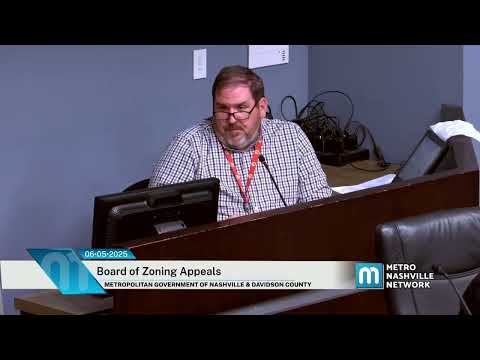
The Board of Zoning Appeals on June 5 did not reach a majority decision on a request by the owner of 4600 Nevada Avenue to retain a solid fence within the city’s 10-foot street setback. The board recorded a tie vote and left the item on the June 20 agenda for further consideration.
Metro zoning administrator Joey Hargis described staff’s position: a solid (opaque) fence in the first 10 feet of the city right of way must be no taller than 30 inches; open (see-through) fences may be taller and up to six feet at the property line. Hargis said the wooden opaque fence at 4600 Nevada appears to sit within the 10-foot zone and is taller than the 30-inch limit; the property owner’s wrought-iron (open) fence section is compliant.
Homeowner Karen Robbins testified she purchased the renovated, 100+-year-old house in 2019 and said the preexisting solid fence contributed to her decision to buy because it provides privacy and security on heavily trafficked 40th Avenue: “this fence affords me some privacy from traffic that is sitting on the roadway.” Robbins said she passed fire-marshal and environmental-health inspections for her intended property use and provided neighborhood support affidavits and written endorsements from a nearby neighbor and a council member.
Opponents said the wooden fence blocks sightlines for drivers turning left at a nearby intersection and creates a public-safety concern. Mary Stodgrass, who lives a block away, said the fence makes turning left difficult after bike-lane striping was installed and that the fence “turns into a solid fence for me” from the approach lane. She provided photographs and crash-cluster evidence for the nearby corridor.
Board members weighed two safety arguments: Robbins’ privacy and security concerns and neighbors’ turning-visibility concerns. Some members said the pole in the right-of-way and bike-lane changes also affect sightlines and that traffic engineering review (NDOT) might be appropriate; other members argued the wooden fence predated the current homeowner and that hardship for preexisting conditions can warrant relief.
One motion to approve the variance was made and seconded; the board’s vote resulted in a tie, so the case remains on the board’s June 20 agenda for a non-public reconsideration where members who missed June 5 may view the recording and participate. Hargis said no new public testimony or evidence will be accepted at the June 20 proceeding.