Lifetime Citizen Portal Access — AI Briefings, Alerts & Unlimited Follows
Debate grows over landowner big-game licenses: commission proposals vs. calls to allow marketing and transfers
Loading...
Summary
The Game and Fish Commission has put forward definition and eligibility changes for landowner licenses; private proponents urged allowing landowners to market or assign landowner tags, prompting opposition from hunting and conservation groups.
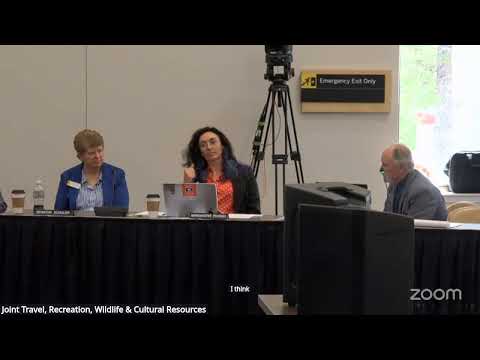
Commission and department leaders briefed the committee on ongoing work about landowner big-game licenses and the broader debate over who should qualify and whether landowner tags should be transferable or marketable.
Director Angie Bruce described a multi-year task-force and commission effort on how “landowner” is defined where limited big-game licenses are at issue. The department summarized four proposed changes currently out for comment: increase the acreage requirement for ranch land from the current 160 acres to 640 acres; raise a minimum ownership-percentage threshold (the department said it proposed a 20% minimum ownership in some drafts); adjust the definition of “immediate family” to explicitly include stepchildren; and raise the animal-use-stays threshold from 2,000 to 3,000 for qualifying by use. Bruce and staff said a recommendation to consider a landowner cap (a percentage of hunt-area allocations reserved for landowners) was discussed by the wildlife task force but would require legislative action if adopted — the commission can change definitions but not impose a statutory cap.
On the same subject, private proponents including Casper resident Dave True told the committee he supports letting qualifying landowners market or assign their landowner tags to others. True said his proposal would not expand the number of landowner licenses but would allow landowners who meet a higher threshold (he proposed at least 2,000 deeded acres in the hunt area) to market tags; he suggested grandfathering existing owners who hold between 160 and 640 acres so the change would not remove an existing qualification for those landowners. True proposed that monetized tags be contingent on landowners allowing public access to their property (walk-in programs, hunter-management agreements or similar) to mitigate impact on public access. He noted that four neighboring states (Idaho, Utah, Nevada and Colorado) allow some form of assignment or transfer of comparable permits.
Public commenters and several conservation and sportsmen organizations — including Backcountry Hunters & Anglers, Wyoming Mule Deer Alliance and Wyoming Wildlife Advocates — strongly opposed transferring or marketing landowner tags, calling it a form of privatization of wildlife and saying it would disadvantage resident hunters and undermine public ownership principles. Several ranching and farm organizations (Wyoming Stockgrowers Association, Wyoming Farm Bureau, county commissioners) voiced conditional support for changes that protect landowners who host wildlife, but urged careful statutory and administrative design to avoid unintended winners and losers.
Committee members and witnesses flagged implementation issues: how transfers would affect limited-draw units with many eligible landowners, how to treat irrigated small-parcel owners who nonetheless host and ‘‘feed’’ wildlife, how to ensure fair compensation and whether forfeiture of damage claim rights should be required when landowner tags are monetized. Several speakers suggested a task force or intercommittee working group to craft more detailed, fair proposals before drafting legislation.
Ending: The committee voted to ask LSO for draft bills to explore “nonresident native” options and related license concepts; members signaled a desire to continue work and coordinate with the Ag Committee and the Game and Fish Commission rather than rush statewide statutory changes at once.