Get Full Government Meeting Transcripts, Videos, & Alerts Forever!
Get email alerts on the Contracts Real Estate topic
No spam. Unsubscribe anytime.
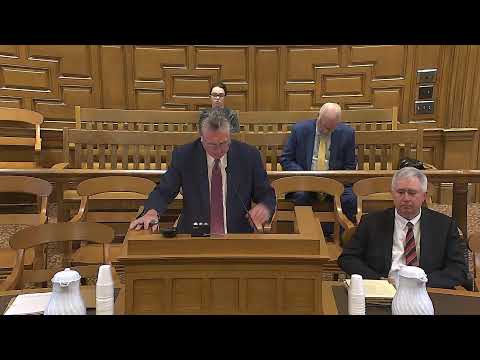
Appeals Court hears oral-contract dispute over alleged $2 million sale of Salisbury properties and pizza business
Summary
On June 6 the Appeals Court considered whether a jury could reasonably have found an oral $2 million agreement to buy certain businesses and real estate, and whether the statute of frauds or evidentiary rulings required judgment for the estate.
The Massachusetts Appeals Court on June 6 heard argument in Capalupo v. Daley (docket 24P0751), a dispute over whether the decedent made an enforceable oral contract in September 2018 to sell a package of business interests and real-estate assets for $2,000,000.
Plaintiff counsel Bill Sheehan told the panel the alleged oral deal covered four items: all stock in Christie's Beach Pizza Inc.; all membership interest in 11 Broadway Holdings LLC; the real estate at 5 Broadway in Salisbury; and real estate at 24'6 North End Boulevard in Salisbury. Sheehan argued the parties partially performed the agreement (keys and alarm codes were delivered and signage and other acts followed) and that later appraisals placed the combined value of the properties at just under $2.5 million, supporting the plausibility of the $2 million package price.
Defense counsel Michael Feynman, representing the personal representative of the Paredna estate, told the panel the statute of frauds bars enforcement because two of the four components were transfers of real estate and the written rule should control. He further argued the alleged agreement was an indivisible package and that it would be improper for the court to sever the real-estate components from the remainder of the deal and enforce only the nonreal-estate pieces for the same price.
Sheehan emphasized corroborating evidence he says supported a jury finding of a contract: keys and alarm codes introduced at trial; testimony that the decedent had previously tried to engage the plaintiff; and the postmortem appraisals of the properties. Feynman replied that the jury reasonably could find no meeting of the minds because the parties knew any sale of real estate typically requires a signed writing, and the evidentiary record included testimony and admissions the jury could accept that no binding agreement was reached.
The parties also disputed evidentiary rulings at trial, including whether post-death appraisals were admissible to help a jury infer the objective reasonableness of the price and whether portions of a marked-up will and related attorney-client communications were properly admitted or were privileged. Feynman argued the trial court erred in denying summary judgment and that admission and waiver issues undermined the plaintiff's case.
Ending: After extended argument and questioning, the panel took the matter under advisement. No bench decision was announced at the close of argument.