Get Full Government Meeting Transcripts, Videos, & Alerts Forever!
Get email alerts on the Criminal Justice Firearms topic
No spam. Unsubscribe anytime.
Appeals Court presses prosecutors, defense over jury instructions in Commonwealth v. Nunez gun case
Summary
A three-justice panel at the Massachusetts Appeals Court on June 6 heard argument in Commonwealth v. Nunez about whether a trial instruction on joint venture liability was legally defective after the Supreme Judicial Court's post-Guadado decisions and whether sufficient evidence of constructive possession can sustain the conviction.
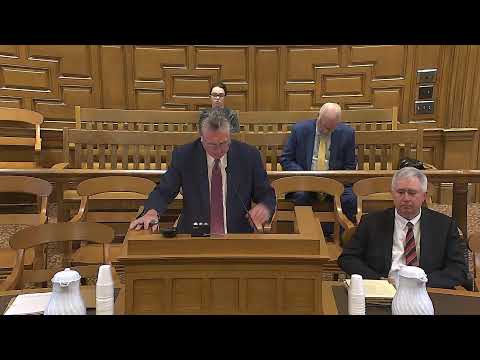
A three-justice panel of the Massachusetts Appeals Court heard arguments June 6 in Commonwealth v. Francisco Nunez (24P1211) over whether a trial court's instructions on joint venture liability were legally defective and, if so, whether the conviction can nonetheless stand on an alternative theory of constructive possession.
The issue arose after defense counsel Edward Crane told the court the trial had been tried after the Supreme Judicial Court's decision in Commonwealth v. Guadado and that, under that case, "to prove a possessory firearm offense under a joint venture theory of liability, the Commonwealth must now establish the principal's lack of licensure and that the defendant knew the principal was not licensed." Crane said the Commonwealth had effectively conceded the joint-venture instruction was erroneous and pressed the panel to reverse because the jury might have relied on that flawed instruction.
Why it matters: The case tests how courts should treat unpreserved instructional error in dual-theory trials (aided/abetted joint venture and principal constructive possession) and whether the evidence of constructive possession here was "so overwhelming" as to render the instructional error harmless.
Counsel and the panel focused on whether the evidence permitted an "ineluctable" inference that the defendant had constructive possession. Justice John Englander and his colleagues repeatedly pressed counsel on the factual record: the courtroom heard that video evidence showed another man holding the firearm and then entering an apartment and that the defendant was driving the vehicle that transported the shooter. Justice Englander said the court has "an independent obligation'to make that determination on our own as to whether there's sufficient evidence on constructive possession."
The defense argued the record lacks evidence that the principal'whose identity was never established at trial'was unlicensed or that the defendant knew of any lack of licensure. Crane told the panel there was "no evidence whatsoever with regard to the principal," and that the jury instruction on joint venture therefore could not support a conviction. He added that his client had at one point conceded constructive possession and then sought to withdraw that concession at oral argument, saying, "can I take back the concession?"
Assistant Attorney General Catherine Jansen, arguing for the Commonwealth, countered that there was sufficient evidence to support principal liability through constructive possession and that the jury had been properly instructed on constructive possession. Jansen told the court she was "arguing essentially there's no substantial risk of a miscarriage of justice due to the instructional error" because the evidence supported principal liability and because the Commonwealth had a stipulation on license evidence, she said.
The panel and counsel debated appellate precedent including Commonwealth v. Desiderio, Commonwealth v. Romero, Commonwealth v. Jackson and cases the parties cited dealing with when an unpreserved instructional error requires reversal. The justices asked whether Zanetti (as cited in briefs) and related authority mean joint-venture and principal liability should be treated as a single sufficiency inquiry on appeal or whether an instructional error in one pleaded theory can require reversal regardless of sufficiency on another theory.
The justices also questioned factual inferences the jury could permissibly draw from the video and the 911 call. Crane asked the court to reverse and enter a judgment of acquittal if the panel finds the evidence insufficient; the Commonwealth urged affirmance, arguing the trial record and instructions permitted the jury to convict on principal constructive-possession grounds.
The panel indicated it would review the arguments, cited the complexity of the legal questions, and gave counsel leave to submit any further authorities the court requests. No decision was announced from the bench.
Ending: The court concluded oral argument after extended questioning of both sides. The justices signaled they would take the briefs and the contested authorities under advisement before issuing a written decision.