Senate Judiciary hearing spotlights dispute over ABA access, Federalist Society and Senate holds on U.S. Attorneys
Get AI-powered insights, summaries, and transcripts
SubscribeSummary
Senate Judiciary Committee members debated the Justice Department's changed cooperation with American Bar Association ratings, the role of the Federalist Society and the effects of possible blanket holds on U.S. Attorney confirmations.
Senate Judiciary Committee members used part of the nominations hearing to debate broader confirmation-process changes: the Justice Department's decision to end special access for the American Bar Association's judicial rating process, the role of the Federalist Society and related professional networks, and the potential use of Senate holds that could slow confirmation of U.S. Attorneys.
Ranking Member Dick Durbin told the committee that the ABA's evaluation history has long included peer outreach and that the Justice Department's change in cooperation ''is a mistake,'' arguing those evaluations helped surface concerns under prior administrations. Durbin noted that in President Trump's first term a number of nominees the ABA rated unqualified nevertheless reached the bench, and he cited the ABA's peer-review process as valuable for vetting.
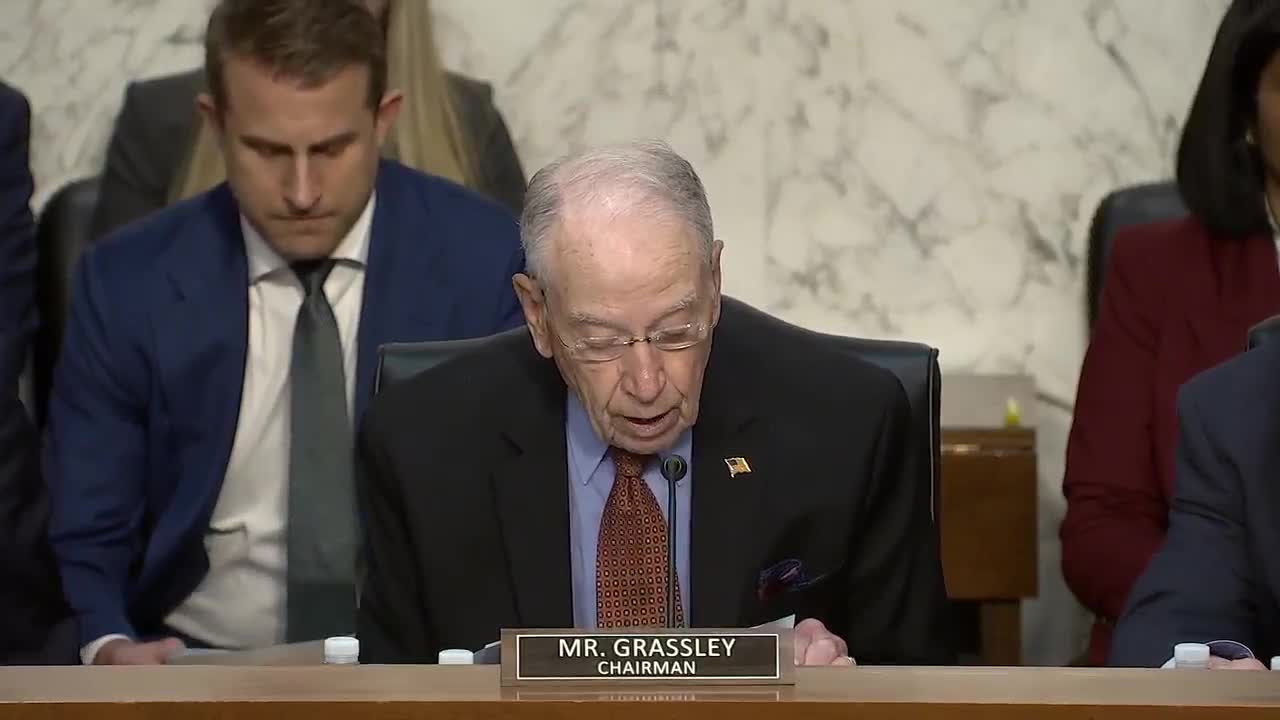
Chairman Chuck Grassley said he understood partisan concerns but urged that holds and other procedural tools be used selectively. He warned that confirming 93 U.S. Attorneys by roll call would consume substantial floor time (he said more than ''230 hours'') and that long blanket obstruction would undermine the Senate's advice-and-consent role.
Other senators disputed the ABA's neutrality. Supporters of ending privileged ABA access argued the association has become politically captured and that the department should treat it like any other advocacy organization. Several senators also discussed the Federalist Society and a new 'Teneo network' as parts of the modern judicial pipeline; one senator quoted public remarks from President Trump criticizing Leonard Leo and the Federalist Society, and witnesses said they had limited or no role in any recommendation process.
Senators emphasized the practical consequences of procedural changes: Durbin warned that if one side established a precedent of extended floor delays for confirmations, later control of the Senate would be similarly affected. Chairman Grassley and others said they remained committed to some traditional practices (including blue-slip deference) while resisting blanket obstruction.
The committee did not take any procedural action in the hearing; the debate was framed as part of broader confirmation norms and prospective Senate floor scheduling.