Lifetime Citizen Portal Access — AI Briefings, Alerts & Unlimited Follows
Senate Judiciary Committee questions Whitney Herrondorfer on clerkships, historical briefs and judicial independence
Loading...
Summary
Whitney Herrondorfer, President Trump's nominee to the U.S. Court of Appeals for the Sixth Circuit, appeared before the Senate Judiciary Committee for questioning on her record, clerkships and legal philosophy.
Whitney Herrondorfer, President Trump's nominee to the U.S. Court of Appeals for the Sixth Circuit, appeared before the Senate Judiciary Committee for questioning on her record, clerkships and legal philosophy.
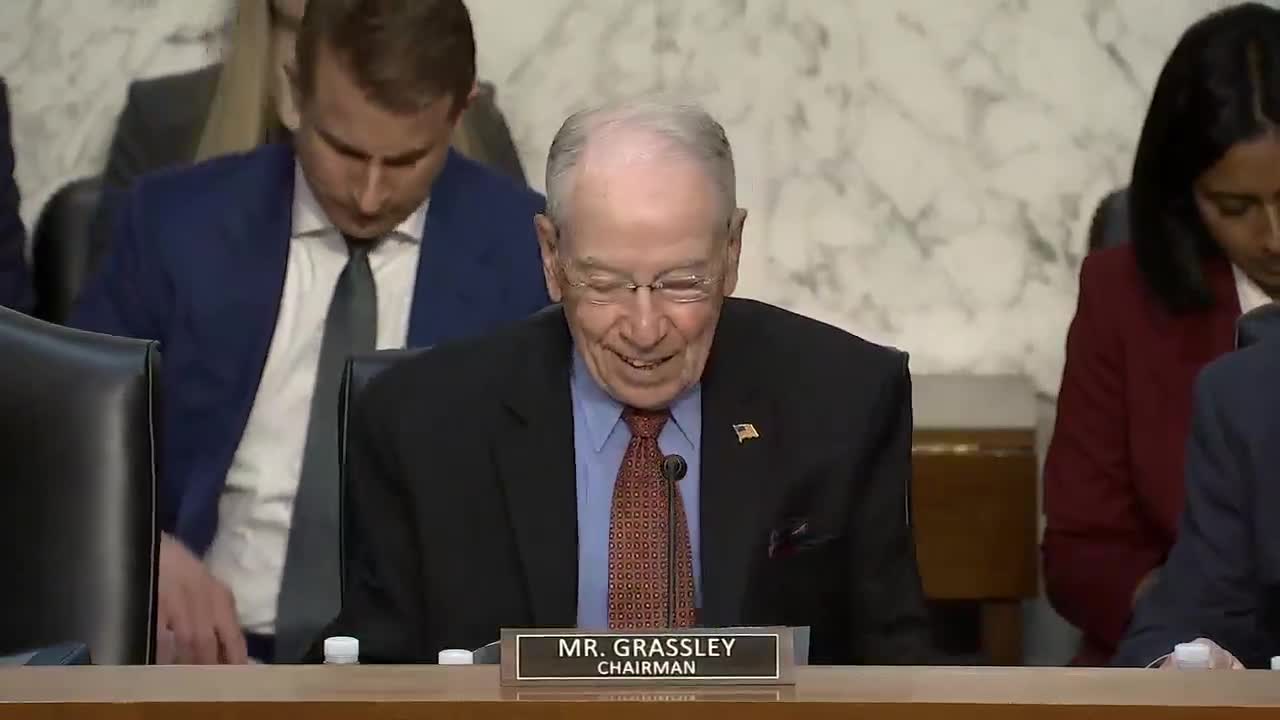
Committee Chairman Chuck Grassley opened the hearing noting the importance of Article III judges and introduced Herrondorfer as ''uniquely impressive'' for having clerked for three sitting Supreme Court justices and serving as director of the strategic litigation unit in the Tennessee Attorney General's Office.
The hearing centered on three themes: Herrondorfer's credentials and courtroom experience, her office's litigation choices (including a Tennessee amicus brief in litigation about birthright citizenship), and her membership in professional networks.
Herrondorfer detailed her experience as a clerk and litigator and said she has served as counsel in ''probably about 80 to 90 cases'' across state and federal courts, most often in federal courts of appeals. She told senators that clerking taught her ''the importance of the judicial process'' and the need to follow a deliberative, adversarial procedure so the correct rule of law emerges.
Ranking Member Dick Durbin and others pressed Herrondorfer about several politically charged topics. Durbin questioned the decision by the Justice Department to change its relationship with the American Bar Association's rating process and asked about the nominee's role in a Tennessee amicus brief in litigation challenging an executive order on birthright citizenship. Herrondorfer said the brief sought to present contemporaneous historical sources to the court and that the office did not take an ultimate position on the executive order's merits but aimed to ensure relevant evidence was before judges.
Senators also asked about professional affiliations. Durbin raised the Federalist Society and the newer 'Teneo network.' Herrondorfer said she is a member of the Federalist Society (joined in law school) and that she had only recently accepted a Teneo network invitation and had not participated in its events before her nomination.
On judicial independence and interpretive method, Herrondorfer said judges are ''accountable to the Constitution and the rules that bind judicial power,'' describing an approach that looks first to the enacted text and its contemporaneous meaning, then to statutory structure, history and precedent when necessary. She said personal policy preferences must not govern judicial decisions.
Several senators raised her courtroom experience. Senator Sheldon Whitehouse and others noted her appellate background and asked about trial and evidentiary experience; Herrondorfer said as an appellate specialist she had not conducted bench or jury direct examinations and estimated she had participated in four federal oral appellate arguments and been counsel of record in Supreme Court filings.
Throughout the hearing senators from both parties pressed her on whether the executive branch must follow court orders; Herrondorfer and others responding in the hearing said the ordinary rule is that orders bind the parties and that the proper paths to contest an order are stays or appellate review, while acknowledging narrow, historically recognized exceptions (for example, lack of jurisdiction or impossibility).
No committee action or votes occurred during the hearing; the session moved afterward to consider additional district-court nominees.
Herrondorfer concluded by thanking her family and mentors and stressing respect for judicial process and the responsibility of an Article III judge to follow the law.
The hearing record shows extended questioning about outside evaluations and vetting (the ABA and professional networks), the scope of an AG's office amicus work, and the nominee's appellate-heavy background. The committee did not act on the nomination during this session.