Get Full Government Meeting Transcripts, Videos, & Alerts Forever!
Get email alerts on the Otc Monograph Reauthorization topic
No spam. Unsubscribe anytime.
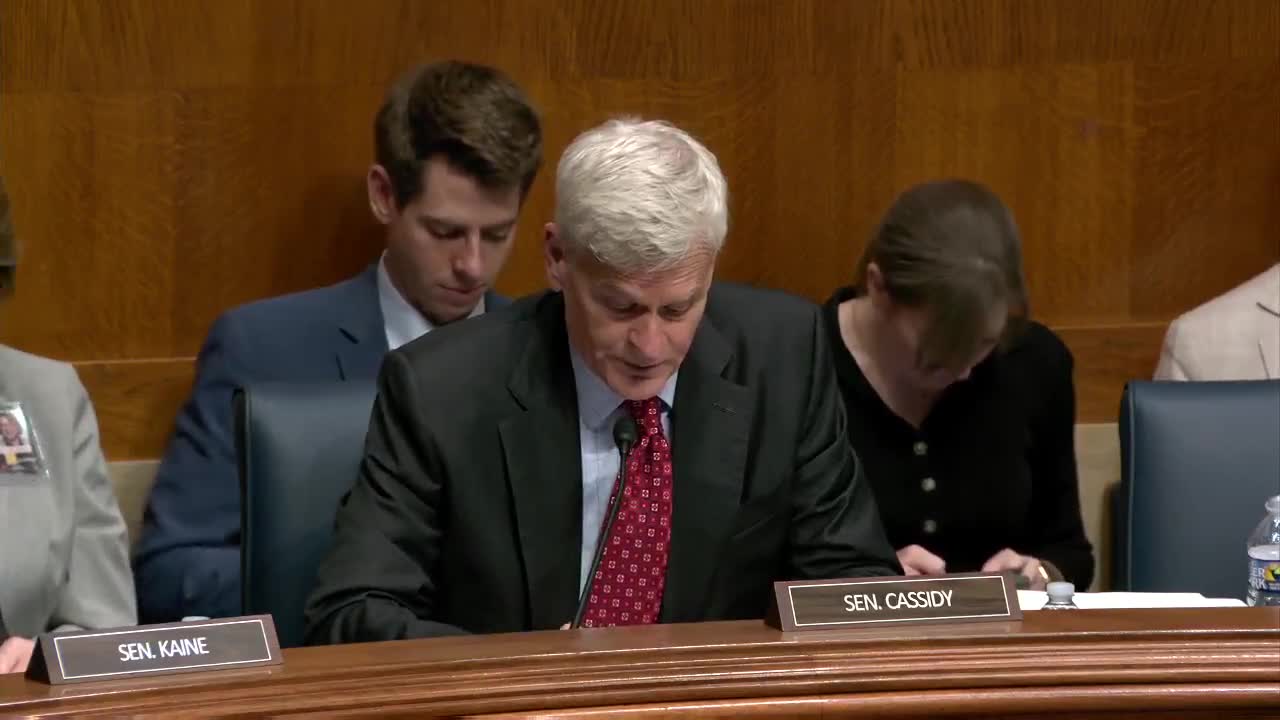
Senate HELP hearing presses for reauthorization of OTC monograph user fee program
Summary
Acting CDER director Jacqueline Corrigan urged reauthorization of the OTC Monograph User Fee Program (AMUFA), saying the program modernized review of over‑the‑counter drugs but must be renewed to preserve staff and momentum.
The Senate Committee on Health, Education, Labor, and Pensions heard testimony urging Congress to reauthorize the Over‑the‑Counter (OTC) Monograph User Fee Program, commonly referred to in testimony as AMUFA, before it expires at the end of the fiscal year.
Acting director Jacqueline Corrigan of the Food and Drug Administration's Center for Drug Evaluation and Research (CDER) told the committee the program has helped modernize OTC review and bring new tools to consumers. "These are the products that millions rely on every day," Corrigan said, and argued that AMUFA'funded staff and processes are needed to maintain safety and continue innovation.
Why it matters: Senators from both parties framed AMUFA as a public‑health and consumer‑protection tool that also affects drug cost and availability. Supporters said the reauthorization would preserve staffing and the new administrative‑order pathway that allows FDA to clarify what is required to market OTC drugs, while opponents and questioners pressed the agency on its pace and resource needs.
Corrigan summarized accomplishments under the program: electronic submission pathways, five guidance documents, 33 final orders and five proposed administrative orders posted to date, and 85 staff hired to support OTC work. She said AMUFA enabled consideration of new dosage forms (chewables, orally dissolving tablets, films) and an administrative order pathway that can permit new sunscreen ingredients to be reviewed under an OTC framework. "If Congress does not authorize a MUFA this year, the momentum would come to a grinding halt," Corrigan testified.
Committee members asked how AMUFA would be used going forward and pressed for measurable accountability. Senator Roger Marshall (R) asked whether the agency uses a dashboard of performance metrics; Corrigan responded that the agency tracks commitments and timelines and plans a three‑year agenda and public forecast to show progress. Several senators asked for specifics on AMUFA commitments, including staffing targets in a previously negotiated commitment letter; Corrigan cited a hiring freeze but said FDA leadership was working to permit hiring of needed reviewers.
Discussion also focused on how AMUFA could expand Rx‑to‑OTC switches. Corrigan described a forthcoming rule permitting conditions of use beyond the Drug Facts label (for example, an app or screening questions) when labeling alone is insufficient to ensure safe self‑selection. She said that such a rule could broaden the set of drugs eligible to go OTC without Congress changing statutes.
Several senators highlighted the tradeoff AMUFA addresses between faster OTC access and safety. Senator Tim Kaine (D) noted the program's role in cost savings and cautioned that OTC medications can cause adverse events: "Older adults represent one third of over the counter drug users and over 65 percent of these adverse drug events," he said, pressing the need for oversight.
What's next: Corrigan asked Congress for timely reauthorization and described voluntary agency commitments in a negotiated AMUFA agreement designed to expand transparency, meeting management with sponsors, and investments in product quality and safety. Committee members requested follow‑up materials, including performance metrics and clarification of timelines for priority items such as pediatric acetaminophen weight‑based dosing.
Ending: The committee set a written question deadline for follow ups and indicated interest in marking up bipartisan reauthorization language that would renew and refine AMUFA oversight.