Get email alerts on the Student Behavior Code Of Conduct topic
No spam. Unsubscribe anytime.
District adopts new student code of conduct framework and expands school support roles for behavior interventions
Summary
Cache County School District leaders presented a new student code of conduct and shifts in intervention roles intended to increase consistency in discipline and behavioral supports, including wider use of SafetyCare training and redefined RTI facilitator duties.
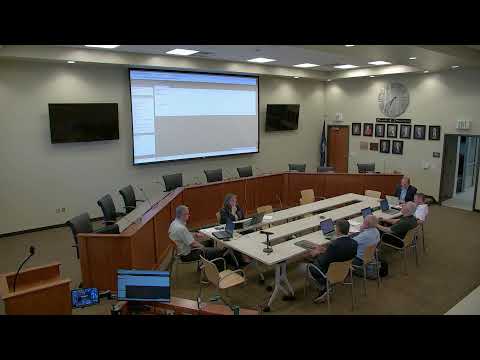
Stephanie Adams, presenting with Alvin Jack for the district, outlined a new student code of conduct and related changes to support teachers and administrators in responding to disruptive or challenging student behavior.
The code of conduct is intended to be both public-facing and an administrative tool: the public portion describes five levels of behavior with examples and possible interventions, while the administrative portion provides a disciplinary framework to promote consistent responses across schools.
Adams said the district moved an elementary RTI facilitator role into a new school support leader assignment to allow those staff to help principals manage both academic and behavioral interventions. “The thinking is that in addition to looking at interventions for academics, we also need support with interventions for behaviors,” she said, adding the district wants the roles to “stop thinking about academic and behavior intervention as two separate things.”
The district also implemented SafetyCare training to broaden staff options for emergency interventions and said each school now has a trained SafetyCare team. Adams said the district is hiring additional school psychologists so those staff can play a greater consulting role rather than focusing solely on evaluations.
Adams described the code’s levels of responsibility: level one incidents are teacher-managed; level two are teacher-managed with possible admin consultation; level three is admin-managed with potential director support; level four falls to principal and district level; and level five goes directly to a director for the most severe cases. The code includes an appendix with supporting documents and a technology/acceptable‑use section added after the printed booklets were produced.
Board members praised the committee work that produced the document and asked clarifying questions about implementation. The district said principals had reviewed the draft and that edits discovered during that review had been incorporated. The presentation was informational; no formal action or vote occurred that night.
AI generated
The text on this page is AI generated. Summaries, highlights, analysis, and video transcripts are all produced from the original source material.
AI can make mistakes, so if you spot one, and we will fix it for everyone.
Note: the source content is unaltered by us. Any content source we link to, be it a video, an audio recording, or a document, is presented exactly as its publisher released it. That publisher is usually a government body, sometimes an individual official or another organisation.