Get Full Government Meeting Transcripts, Videos, & Alerts Forever!
Get email alerts on the Archives And Heritage topic
No spam. Unsubscribe anytime.
Volunteer outlines plan to expand Corte Madera town archives with rotating exhibits and digital access
Summary
A volunteer who responded to the town's volunteer fair proposed rotating exhibits, short video essays and a community-facing GPT to make Corte Madera's archives more accessible; staff said resources and a small budget are available and the volunteer will receive town support.
A volunteer who found the opportunity at Corte Madera's volunteer fair presented a plan to expand the town archives on June 3, saying his goal is to move materials out of storage and into public view.
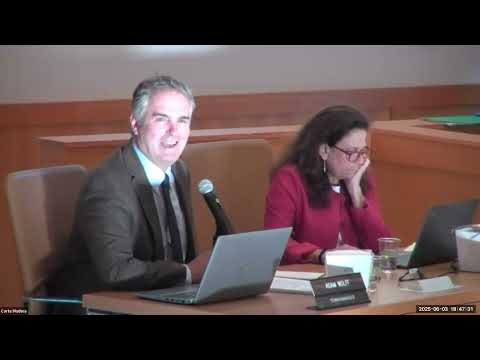
Richard Block, a longtime Corte Madera resident, told the Town Council he envisions rotating displays in town hall and other community venues, short photo‑essay videos for a YouTube channel, live presentations and a public forum to discuss local history. "For many people, history is research. It's kind of dry. But I want our history to come alive in the form of engaging stories," Block said.
Town staff described steps already taken to support the effort. A staff member said a town email account and a laptop have been provided, IT access to older town files has been arranged, and town and community foundation volunteers have set up shelving in a downstairs area intended as the archives' future home. "We're giving him the resources he needs to start to develop these ideas," the staff member said.
Longtime volunteer Johnna Hale attended the meeting; the conference room is named for her in recognition of years of local history work. Hale said she and others "have a similar vision" and that school programs previously used local history as part of second‑grade curriculum. She encouraged outreach to second‑grade classes if school curriculum still supports it.
Council members and public commenters suggested partnerships and sources of materials. Patty Stoller, speaking during public comment, offered the town's annual age‑friendly event as a way to collect short biographies and photos of older residents. Council members noted the community foundation's willingness to help and suggested a modest budget for outreach and exhibit materials.
The council did not take formal action; staff said the volunteer will be titled "program director" for the effort, will receive a town email and limited equipment, and that the town will consider a small budget for travel and display costs as the program develops. Staff said any additional funding or formal program changes will come back to the council for approval.
What happens next: Richard Block said he will start cataloging materials, produce sample video photo essays and reach out to local businesses and organizations for rotating exhibit sites. Staff asked to be kept informed so the town can publicize events and consider modest line‑item funding in a future budget report.