Get Full Government Meeting Transcripts, Videos, & Alerts Forever!
Get email alerts on the Infrastructure Roofing topic
No spam. Unsubscribe anytime.
Freestone County hears bid options for Garland Company roof replacement on leaking courthouse
Summary
County officials discussed not-to-exceed budgets and technical specifications for a 30- or 40-year roof replacement by Garland Company, reviewed warranty and bidding process options, and discussed logistics for minimizing noise and judicial disruption; no vote to finalize the contract appears in the transcript.
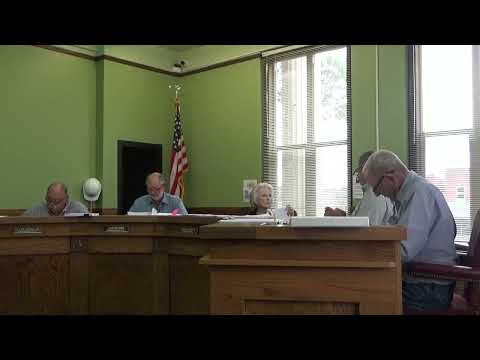
Freestone County Commissioners Court members discussed a proposed roof replacement for a leaking county building and reviewed not-to-exceed budgets and technical specifications from Garland Company during the meeting.
The matter matters because the county building is actively leaking, and Garland Company presented multiple lifecycle options and a planned public bid process meant to secure a long-term waterproofing system rather than a short-lived repair.
A Garland Company representative summarized the technical approach and legal constraints, saying, "By code, we can't just take a roof off and put one back on. There's two roofs there already. By code, we gotta take it back down to the deck." The representative described two longevity options — a 30-year and a 40-year system — and said the company would prepare design documents and specifications and hold a mandatory pre-bid for contractors.
The representative described the membrane thickness and multi-layer approach: the system would be "multiple layers" totaling roughly "200 to 300 mils" for the 30-year option and up to "300, 400 mils" if the 40-year option is selected, with additional coating for the 40-year choice. The representative also noted the contractor portion of the work would include a five-year contractor warranty while Garland would provide material warranty coverage.
On cost, the representative referenced two budget figures when discussing the options, saying, "we have $2.99 and $3.60," and said a base bid with an alternate for the two options could be used so the court could compare final bid results. The transcript does not specify units (for example, thousands or millions) or provide an explicit final contract price; those amounts are recorded in the meeting text as stated and are listed here without added units.
Court members discussed scheduling and noise mitigation. The representative recommended a three- to four-week period of work in good weather for the noisier demolition and base-work phase, with the loudest first one to two weeks. The court discussed the possibility of scheduling disruptive work around jury trials and other court events; one member suggested acoustic panels over windows could reduce noise and backlighting problems in the courtroom during construction.
Garland said it would solicit three to five bids through the OMNIA Partners cooperative procurement program to satisfy county bid requirements and that Garland bears long-term material responsibility by providing materials and a warranty. The representative said, "we'll go out and solicit, you know, 3 to 5 bids, through the tips of the Omnia program." (OMNIA Partners is referenced in the transcript as the procurement vehicle; the transcript spells it "Omnia program".)
The meeting record includes discussion of whether the county should bid the 30- and 40-year options as a base and alternate so commissioners could compare costs when bids return. The transcript shows no recorded vote or signed contract for the roof project in the provided segment.
Next steps discussed in the meeting included approving a budget (the representative described the budget figures as "not to exceed" numbers), preparing bid documents, hosting a mandatory pre-bid meeting, and specifying allowable work days or quiet periods in the bid solicitation. The representative said Garland staff and a project manager would be on site multiple times per week and would provide weekly progress reports.
Court members asked about timing, noise and courtroom impacts, warranty length, and bid procedures; Garland offered to include day/time restrictions in the bid documents if the court prefers. No formal approval of a contractor or a recorded vote on awarding the work to Garland Company appears in the transcript excerpt provided.
County officials and vendors are expected to return the final design documents and bid package for the court to review before any formal contract award or budget appropriation.