Get Full Government Meeting Transcripts, Videos, & Alerts Forever!
Get email alerts on the Animal Control topic
No spam. Unsubscribe anytime.
Council approves first reading of trap-neuter-release ordinance after divided debate
Summary
The Muscatine City Council approved the first reading of an ordinance to allow registered organizations to conduct trap-neuter-release (TNR) for community cats, passing 6-1 after a lengthy public hearing and council debate about effectiveness, costs and animal control policy.
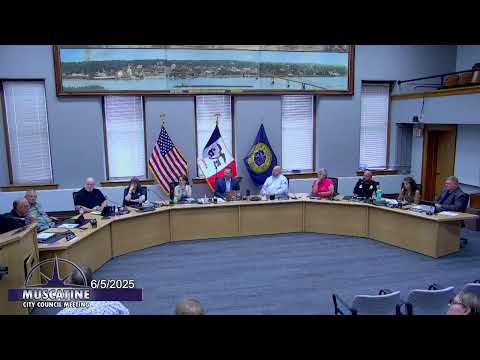
The Muscatine City Council on June 5 approved the first reading of an ordinance adding section 16, “community cats — trap, neuter, release,” to Title 6, Chapter 8 of the city code after public testimony and extended council debate.
Supporters and opponents used the public hearing to press starkly different views on TNR’s effectiveness. Resident William Veil, who spoke during the public hearing, cited national wildlife statistics and told the council, “An average feral cat is estimated to kill between 449 to 748 wild animals per year.” Richard Havel, another resident, said house cats should be controlled and licensed, arguing, “If you have a house cat, it should be licensed.”
Council members and city staff also debated the program’s likely short‑ and long‑term results. Courtney, the city’s animal control officer, confirmed that cats brought in from outside the city cannot legally be released in Muscatine, saying “It is not” legal. Assistant City Administrator Keyes and other staff told council members that annual intake at the Humane Society has been roughly steady at about 400 cats per year over recent years and that costs include intake plus kittens born at the facility.
Council member Gordon said TNR is “a tool in the tool belt” and noted the proposed ordinance would require organizations that perform captures and releases to register with the city and vaccinate animals for rabies. Council member Jendrick expressed strong opposition and called TNR ineffective for population control, saying the city needs a more restrictive licensing and containment regime and an “aggressive trapping program” combined with a euthanasia option.
The ordinance motion — to approve the first reading of the TNR code change — was made by Council member Gordon and seconded by Council member Conard. The first reading passed 6‑1: Council members Brockert, Conard, Lewis, Gordon, Osborne and Lampe voted yes; Council member Gendrick voted no.
No final adoption occurred at the June 5 meeting. The ordinance passed its first reading and will need to return to the council for subsequent consideration before it can be adopted. Council members said they expect further discussion and potential amendment in future meetings based on implementation experience and public input.
The matter drew substantial public interest and extended council discussion. Speakers, staff and council exchanged data and policy options about licensing, enforcement, euthanasia and costs; several council members encouraged trying TNR while monitoring results and reserving the right to change policy if outcomes do not meet city goals.