Get Full Government Meeting Transcripts, Videos, & Alerts Forever!
Get email alerts on the Housing Needs Study topic
No spam. Unsubscribe anytime.
Housing needs study: committee presents survey of 972 respondents; Habitat and HDA advisors outline tools for attainable housing
Summary
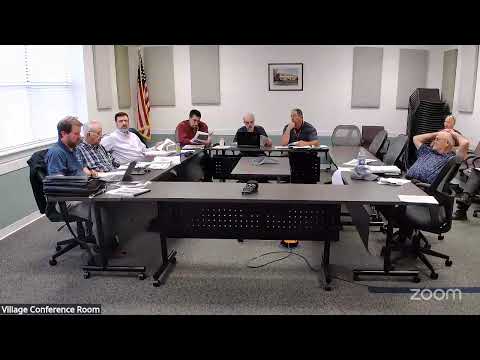
Members of the Powhatan County Citizens Work Group heard a housing-needs presentation describing a 972-response survey that found limited housing options for lower- and moderate-income renters and for first-time buyers; the study committee will work with HDA Advisors to draft recommendations for July.
Members of the Powhatan County Citizens Work Group heard a presentation from the Housing Needs Study Committee and a local Habitat representative on an online and paper survey the group carried out this spring.
The committee reported it collected 972 survey responses and that the dataset is demographically similar to county population figures. The study team said respondents identified a shortage of housing for lower- and moderate-income households and first-time buyers; the committee will use HDA Advisors to translate survey results into actionable recommendations, which the team expects to finalize in July.
Why it matters: county-level housing recommendations — when translated into zoning, incentives or land-use changes — determine whether tools to produce more attainable housing (for example, community land trusts, conservation subdivisions, accessory dwelling units or targeted infrastructure investments) are advanced for formal adoption.
Key results and next steps - Sample and timeline: committee members said the survey was launched March 12 and closed April 19; the stated threshold for statistical validity was roughly 400 resident respondents and 50 worker respondents. The study achieved 972 total respondents (the presenter read figures of 972 respondents, 899 residents and 460 workers as reported from the dataset). - Reported gaps: presenters said survey respondents identified insufficient housing options for renters earning about $45,000 and less, households earning $45,000'$80,000, and first-time homebuyers. The committee plans to combine the survey with other local data sources (Weldon Cooper Center, Community Action Agency, Virginia Employment Commission) and national best practices. - Timeline and assistance: Bob Adams, founder of HDA Advisors, will lead an effort to translate the results into recommendations; presenters said HDA will produce a final recommendations package in July.
Habitat and financing models
Susan, a committee member representing Habitat and the local housing effort, described models the nonprofit uses to keep mortgages affordable: a first mortgage at market rates (or below-market programs such as USDA-direct loans where used), plus a silent second that reduces the borrower's monthly payment. Habitat said its Powhatan affiliate currently builds or completes about three homes per year and focuses on households earning roughly 40% to 80% of area median income (AMI).
"We are able to keep that payment at about $1,200 for someone making about $45,000 because what we're doing is we're providing the affordable mortgage as a first mortgage," Susan said. She added that Habitat uses a silent second that remains in place and is only repaid on resale according to an agreed formula.
Presenters described the community land trust (CLT) and conservation-subdivision models as additional tools. In a CLT, the land is retained in trust and the homeowner finances only the structure, which helps keep monthly payments lower; the committee said the CLT model preserves affordability long-term but requires funding or a land-investment mechanism to be effective.
Constraints and resource needs
Speakers emphasized that programmatic and funding constraints limit how quickly affordable units can be produced. Habitat representatives said lots and funding are the primary constraints: current capacity was roughly two to three new Habitat homes per year, and scaling production requires land, financing and partnerships. Speakers also identified regulatory changes (e.g., allowing ADUs or more flexible lot-size rules) and county-supported tools (land banks, targeted capital for infrastructure) as mechanisms the committee will explore.
Questions from subcommittee members focused on income thresholds and qualification rules. When asked about the income range Habitat serves, presenters said the local affiliate focuses on households between about 40% and 80% AMI, and that USDA direct loans and other below-market mechanisms are sometimes used to lower interest costs for buyers.
Concluding direction
The housing study committee said it is completing subgroup work now, will refine recommendations with HDA Advisors and will return a formal recommendations package and supporting data to the board in July. No formal board action on the housing recommendations was taken at this subcommittee meeting.