Get Full Government Meeting Transcripts, Videos, & Alerts Forever!
Get email alerts on the Shannon Grant Youth Violence Prevention topic
No spam. Unsubscribe anytime.
Boston committee hears testimony on $1.735 million Shannon grant for youth violence prevention
Summary
For the record, Henry Santana, at-large city councilor and chair of the Boston City Council Committee on Public Safety and Criminal Justice, opened a June 5 hearing on docket 0394 on an order authorizing the City of Boston to accept and expend $1,735,107.39 in the form of the FY25 Senator Charles E. Shannon Jr. Community Safety Initiative grant awarded by the Massachusetts Executive Office of Public Safety and Security to be administered by the Boston Police Department.
For the record, Henry Santana, at-large city councilor and chair of the Boston City Council Committee on Public Safety and Criminal Justice, opened a June 5 hearing on docket 0394 on an order authorizing the City of Boston to accept and expend $1,735,107.39 in the form of the FY25 Senator Charles E. Shannon Jr. Community Safety Initiative grant awarded by the Massachusetts Executive Office of Public Safety and Security to be administered by the Boston Police Department.
The hearing brought direct testimony from 27 organizations that would receive Shannon funding and public commenters including students and neighborhood residents. Chair Santana said the grant supports “regional and multidisciplinary approaches to combat gang violence” and described the Shannon program as part of the city’s prevention and intervention strategy. Santana said the city has used a competitive RFP process since 2015 and that the city receives more than 50 applications per year.
Why this matters: The Shannon grant pays for youth programs, outreach, credible messenger and trauma-response work across Boston neighborhoods. Many witnesses told the committee that steady Shannon funding is essential for prevention work that community groups say reduces violence, connects young people to jobs and services, and supports victims and families.
Testimony themes and examples
- Workforce and paid stipends: Multiple witnesses urged using the funds for paid youth work and transitional employment. Michael Massey, a lifetime Roxbury resident and educator who read a statement from a young speaker, urged the council: “Please use it to create jobs, real jobs, and a way for teens to earn good money.” Youth-serving groups including Youth Guidance’s BAM, YouthBuild Boston, Youth Options Unlimited (YOU Boston) and YouthConnect emphasized paid work, job-readiness training and paths to longer-term employment.
- Prevention and mentoring models: Several organizations described mentoring, cognitive-behavioral programming and intensive case management. Demond Bills, project coordinator for the Charles E. Shannon Community Safety Initiative at the Boston Police Department, and program leads from Roca, Freedom House, Maverick Landing Community Services, Veronica Robles Cultural Center (VROC), Center for Teen Empowerment, and others summarized multi-year outreach and intervention work.
- Hospital-based response and clinical services: Elizabeth Dugan, clinical director of the Violence Intervention Advocacy Program at Boston Medical Center, said BMC’s program responds to people who have already been shot and that Shannon funds support a 24/7 trauma-response team that links victims to services, housing and mental health care.
- Site-specific and neighborhood programming: Witnesses from Madison Park Development Corporation (Roxbury), Maverick Landing (East Boston), Boston Housing Authority (Mildred C. Haley in Jamaica Plain), BCYF (citywide teen programming), and Sportsman’s Volley Against Violence described locally tailored work, summer jobs, after-school programming and youth centers.
Evidence cited by the committee chair
Santana said that since the Shannon initiative’s inception in 2006 through the end of 2023 the Boston Police Department recorded a 16% decrease in homicides, a 9% decrease in aggravated assaults and a 10% decrease in total violent crime, noting those changes in the context of an asserted investment of roughly $350 per young person. He also warned about uncertainty from federal funding changes and urged continuing local oversight.
Questions and requests for follow-up
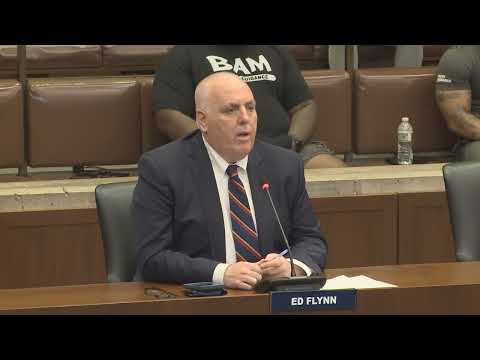
- Councilors asked for more detail about which agencies receive funds and how the grant is administered; Chair Santana said some city departments (for example, BCYF) already receive Shannon funds though the grant is distributed through the Boston Police Department. Councilor Flynn asked the committee to collect information about city substance-use services for young people; staff agreed to follow up.
- Several witnesses asked the council to consider increasing the program’s funding and to maintain multi-year stability so community organizations can retain staff and continue long-term work.
Committee action and next steps
No committee vote was recorded at the hearing. Chair Henry Santana said he intends to bring the order to accept and expend the FY25 Shannon grant (docket 0394) to the full City Council for discussion and a vote at the council’s next meeting and said he would recommend passage. The hearing record will include written testimony and pre-recorded videos submitted by organizations.
Ending
The hearing provided a broad overview of how the Shannon grant is used across Boston and a forum for program leaders, clinicians, and youth to describe needs and results. The council committee did not take a final vote; the matter will be presented to the full council for action next week.